


The government should push terrestrial and cable television stations to produce more children’s shows, among other measures, to promote locally made children’s programs, the Control Yuan said on Tuesday.
Control Yuan members Lai Ting-ming (賴鼎銘), Fan Sun-lu (范巽綠) and Yeh ta-hua (葉大華) made the recommendations after conducting a probe into government efforts to produce and broadcast children’s shows.
The Control Yuan launched the probe to review the government’s implementation of its obligation to protect children’s right to communication under the UN Convention on the Rights of the Child, the members said in a report.
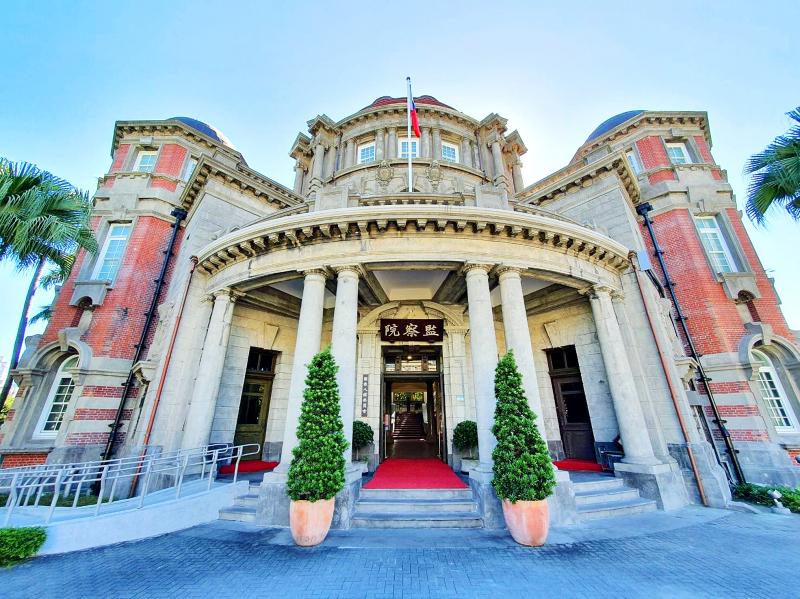
Photo: Hsieh Chun-lin, Taipei Times
Although not a UN member, Taiwan recognizes the covenants as legally binding under the Act to Implement the International Covenant on Civil and Political Rights and the International Covenant on Economic, Social and Cultural Rights (公民與政治權利國際公約及經濟社會文化權利國際公約施行法).
In August last year, children’s programming took up about 10 percent of the air time on 57 of the nation’s terrestrial, cable, generalist, child-centric, foreign and domestic TV channels, the report said, citing National Communications Commission (NCC) data.
Domestically produced children’s programs accounted for 6.53 percent of all such programs on terrestrial channels, 2.29 percent on cable variety channels and 25.63 percent on cable children’s channels, it said.
The NCC should spearhead a legislative effort to require terrestrial and cable channels based in Taiwan to produce children’s programs so as to increase their air time and share of domestic shows, it said.
Since 2017, various ministries have provided more than NT$200 million (US$7.2 million) in subsidies and capital injections to Public Television Service (PTS) and privately owned media companies to make children’s programs, the report said.
These measures have been somewhat effective, but funding needs to be better coordinated between the NCC and the ministries of culture, education, and science and technology, it said.
The Ministry of Culture is advised to propose laws that would change the legal formula for calculating PTS’ budget, as the current funding level is insufficient, the report said.
PTS receives NT$900 million in public funding a year, while Japan-based NHK receives the equivalent of NT$196.7 billion, the UK-based BBC receives NT$183.5 million and South Korea’s KBS receives NT$32.9 billion a year, it said.
The K-12 Education Administration should subsidize PTS Education and Learning — an initiative by the public station to make its programs available to teachers for use as classroom material, it said.
The infotainment industry does not provide an environment that offers enough jobs and career advancement opportunities in the field of children’s programming, resulting in a shortage of workers, it said.
This shortage has been exacerbated by an absence of professional training in the field at universities, it said, adding that the ministries of culture and education should take action to address the issue.
The Ministry of Science and Technology has encouraged the production of educational science films, but did not give sufficient thought to those catering to children, which it should, the report added.

The Centers for Disease Control (CDC) yesterday reported the first case of a new COVID-19 subvariant — BA.3.2 — in a 10-year-old Singaporean girl who had a fever upon arrival in Taiwan and tested positive for the disease. The girl left Taiwan on March 20 and the case did not have a direct impact on the local community, it said. The WHO added the BA.3.2 strain to its list of Variants Under Monitoring in December last year, but this was the first imported case of the COVID-19 variant in Taiwan, CDC Deputy Director-General Lin Ming-cheng (林明誠) said. The girl arrived in Taiwan on

South Korea is planning to revise its controversial electronic arrival card, a step Taiwanese officials said prompted them to hold off on planned retaliatory measures, a South Korean media report said yesterday. A Yonhap News Agency report said that the South Korean Ministry of Foreign Affairs is planning to remove the “previous departure place” and “next destination” fields from its e-arrival card system. The plan, reached after interagency consultations, is under review and aims to simplify entry procedures and align the electronic form with the paper version, a South Korean ministry official said. The fields — which appeared only on the electronic form
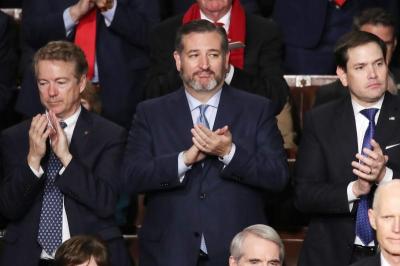
A bipartisan group of US senators has introduced a bill to enhance cooperation with Taiwan on drone development and to reduce reliance on supply chains linked to China. The proposed Blue Skies for Taiwan Act of 2026 was introduced by Republican US senators Ted Cruz and John Curtis, and Democratic US senators Jeff Merkley and Andy Kim. The legislation seeks to ease constraints on Taiwan-US cooperation in uncrewed aerial systems (UAS), including dependence on China-sourced components, limited access to capital and regulatory barriers under US export controls, a news release issued by Cruz on Wednesday said. The bill would establish a "Blue UAS

The Ministry of Foreign Affairs (MOFA) is suspending retaliation measures against South Korea that were set to take effect tomorrow, after Seoul said it is updating its e-arrival system, MOFA said today. The measures were to be a new round of retaliation after Taiwan on March 1 changed South Korea's designation on government-issued alien resident certificates held by South Korean nationals to "South Korea” from the "Republic of Korea," the country’s official name. The move came after months of protests to Seoul over its listing of Taiwan as "China (Taiwan)" in dropdown menus on its new online immigration entry system. MOFA last week


 RSS
RSS