


The Food and Drug Administration (FDA) yesterday said it is investigating the online sale of rapid COVID-19 testing products in contravention of rules against the unlicensed sale of medical equipment and “distance” commerce.
Testing kits are classified as medical equipment and therefore can only be sold by certified vendors and pharmacies, FDA Medical Devices and Cosmetics Division specialist Lin Hsin-hui (林欣慧) said.
At present, there are no permitted “distance” channels to buy medical equipment, such as through the Internet, telemarketing, Line, Instagram or other social media platforms, Lin added.
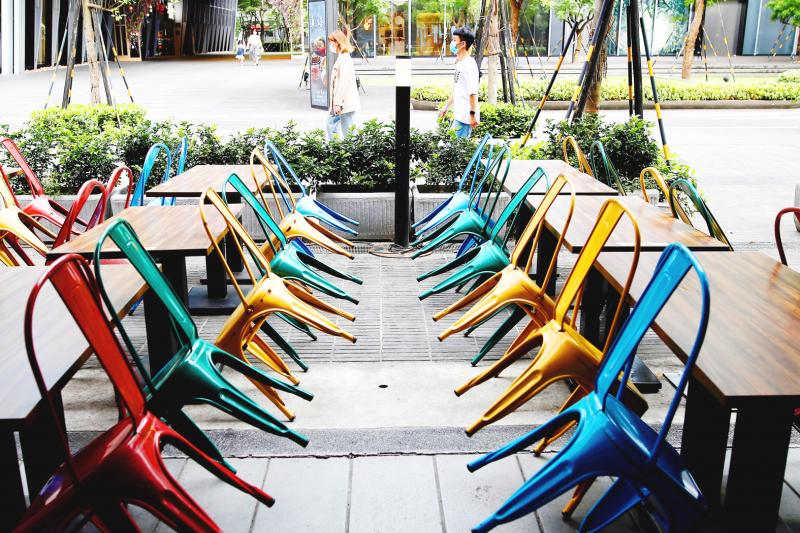
Photo: Ritchie B. Tongo / EPA-EFE
Online influencers and retailers are not certified vendors, she said, adding that perpetrators could be consecutively fined NT$30,000 to NT$1 million (US$1,073 to US$35,778) in accordance with the Medical Devices Act (醫療器材管理法).
For example, an unlicensed vendor who is fined the maximum NT$1 million could be fined another NT$1 million for contraventions of distance sale regulations, Lin said.
The FDA is still gathering evidence and has not yet issued any fines, she said, urging the public to contact the agency or local health bureaus with any relevant information.
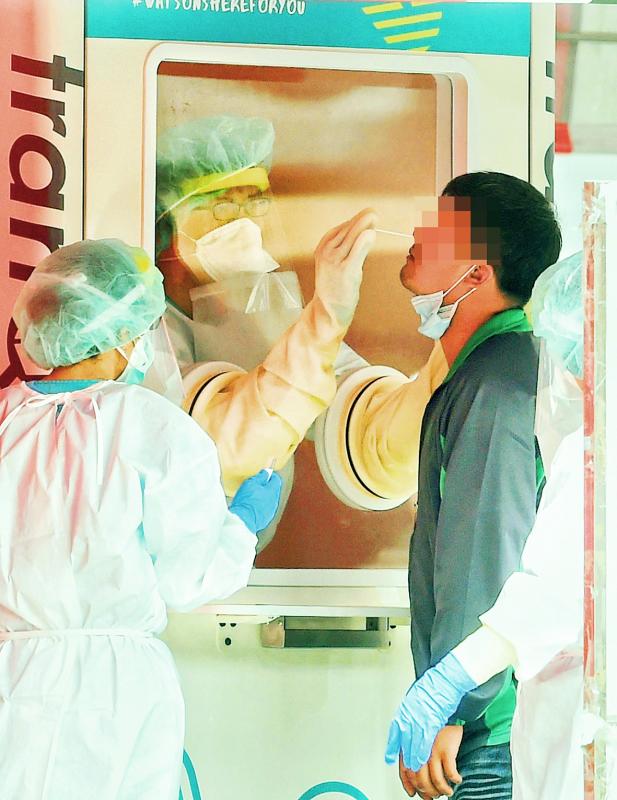
Photo: Fang Pin-chao, Taipei Times
While buying rapid testing kits from licensed vendors is not illegal, Lin advised against businesses purchasing them to test their employees, as the safety and accuracy of self-administered tests cannot be guaranteed.
Meanwhile, Vice President William Lai (賴清德) urged people who do not have any reason to suspect they might have contracted COVID-19 to stay away from rapid testing stations, as it could increase their risk of infection.
“In this battle, only the virus is the enemy,” Lai said on Facebook yesterday, before detailing current measures to fight the outbreak.
The rapid antigen test used to screen for COVID-19 does not test for the virus directly, resulting in some false positives and false negatives, and potentially either causing panic or missing cases, he said.
Rapid testing can therefore be used to screen hotspot areas, but more accurate nucleic acid testing must be used to formally diagnose cases to more accurately reflect trends, Lai said, calling on those without symptoms or a history of contact with COVID-19 cases to refrain from getting tested.
To relieve pressure on medical institutions, more screening stations and quarantine facilities are being set up nationwide, while thousands of physicians have responded to the call for help, he added.
Lastly, he thanked everyone for staying home over the past few days, leaving the usually bustling streets empty.
“These are not scenes of desolation, but demonstrate the people’s determination to resist the pandemic,” he said. “Thank you for staying home and working with the government to put a stop to the spread of this virus.”
As the incubation period of the UK variant is five to seven days, the effects of recent measures would begin to be apparent after this week, he said.
“There is no need for excessive worry,” he said. “As long as we continue wearing masks, practicing good hand hygiene, and avoiding unnecessary movement and gatherings, we can get through this and return to normal.”


South Korea is planning to revise its controversial electronic arrival card, a step Taiwanese officials said prompted them to hold off on planned retaliatory measures, a South Korean media report said yesterday. A Yonhap News Agency report said that the South Korean Ministry of Foreign Affairs is planning to remove the “previous departure place” and “next destination” fields from its e-arrival card system. The plan, reached after interagency consultations, is under review and aims to simplify entry procedures and align the electronic form with the paper version, a South Korean ministry official said. The fields — which appeared only on the electronic form
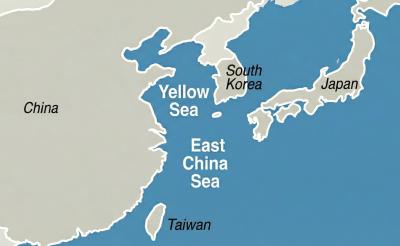
China has reserved offshore airspace in the Yellow Sea and East China Sea from March 27 to May 6, issuing alerts usually used to warn of military exercises, although no such exercises have been announced, the Wall Street Journal (WSJ) reported yesterday. Reserving such a large area for 40 days without explanation is an “unusual step,” as military exercises normally only last a few days, the paper said. These alerts, known as Notice to Air Missions (Notams), “are intended to inform pilots and aviation authorities of temporary airspace hazards or restrictions,” the article said. The airspace reserved in the alert is
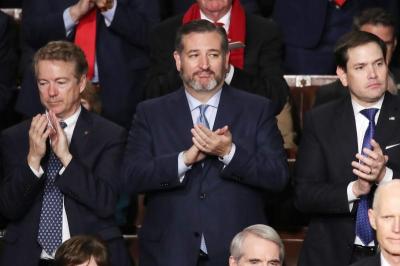
A bipartisan group of US senators has introduced a bill to enhance cooperation with Taiwan on drone development and to reduce reliance on supply chains linked to China. The proposed Blue Skies for Taiwan Act of 2026 was introduced by Republican US senators Ted Cruz and John Curtis, and Democratic US senators Jeff Merkley and Andy Kim. The legislation seeks to ease constraints on Taiwan-US cooperation in uncrewed aerial systems (UAS), including dependence on China-sourced components, limited access to capital and regulatory barriers under US export controls, a news release issued by Cruz on Wednesday said. The bill would establish a "Blue UAS
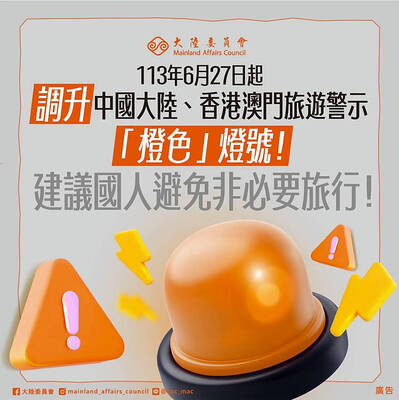
More than 6,000 Taiwanese students have participated in exchange programs in China over the past two years, despite the Mainland Affairs Council’s (MAC) “orange light” travel advisory, government records showed. The MAC’s publicly available registry showed that Taiwanese college and university students who went on exchange programs across the Strait numbered 3,592 and 2,966 people respectively. The National Immigration Agency data revealed that 2,296 and 2,551 Chinese students visited Taiwan for study in the same two years. A review of the Web sites of publicly-run universities and colleges showed that Taiwanese higher education institutions continued to recruit students for Chinese educational programs without


 RSS
RSS