


Surveys conducted by the Democratic Progressive Party (DPP) for internal reference have shown that most Taiwanese would refuse to take a vaccine made in China, a party source said yesterday.
A survey by the DPP last week showed that 86 percent of respondents would refuse a Chinese vaccine, the source said, adding that among them, 66 percent identified as Chinese Nationalist Party (KMT) supporters.
A DPP survey conducted in February showed that 60 percent of respondents were unwilling to take a Chinese vaccine, while 30 percent were willing to.
China has attempted to use vaccines to further its “united front” efforts, with Chinese state-run media recently reporting that Pfizer-BioNTech’s Chinese partner, Shanghai Fosun Pharmaceutical Group (上海復星醫藥集團), has obtained the right to market and distribute the BNT162b2 vaccine in Taiwan, China, Macau and Hong Kong, the source said.
However, Hong Kong on March 24 halted use of the Pfizer-BioNTech vaccine distributed by Fosun after the company told the Hong Kong government that one batch of the vaccine had defective packaging.
Fosun’s supply of the vaccine is also reportedly set to expire at the end of next month.
DPP Legislator Wang Ting-yu (王定宇) on Sunday criticized China for using the sale of vaccines as a “united front” tactic.
“China ceaselessly pressures Taiwan, but now it wants to appear benevolent — just as Taiwan is facing a worsening pandemic — by selling Taiwan vaccines with defective packaging that will expire soon,” he said.
Separately, DPP Legislator Chen Ting-fei (陳亭妃) yesterday criticized the KMT and the China Unification Promotion Party for exacerbating attempts by China to sow disorder in Taiwan by calling for imports of Chinese vaccines.
The two parties’ actions would hurt the government’s COVID-19 response measures, she said.
“We stand by efforts to protect the nation. I hope that some people making trouble do not cause the Central Epidemic Command Center to show even the slightest lenience,” she said.
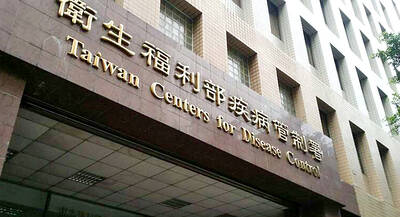
FUKUOKA SITUATION: Japanese media reported that the pathogen is expected to be identified by the summer, while the CDC downplayed the idea that it was hMPV A “mysterious cold-like illness” reported in Japan’s Fukuoka Prefecture does not seem to be a new disease, but Japanese authorities have been asked about the situation, the Centers for Disease Control (CDC) said yesterday. The Fukuoka Prefectural Medical Association on Wednesday told a news conference that a “mystery cold” that has become a hot topic on social media is “highly likely to be caused by some kind of viral infection,” Japan’s KBC News reported. “Many people are experiencing symptoms starting with a sore throat, followed by a runny nose, phlegm and a severe cough,” KBC News reported, citing association officials. Health authorities are

Nvidia Corp CEO Jensen Huang (黃仁勳) arrived in Taiwan yesterday ahead of upcoming AI and technology events, saying he plans to meet with clients and Taiwan Semiconductor Manufacturing Co Chairman C.C. Wei (魏哲家) during his visit. After landing at Taipei Songshan Airport, Huang posed for photos with fans and handed out Yakult drinks to reporters and supporters waiting at the scene, saying he has “a lot to do” during the trip. Asked about reports that Nvidia’s planned headquarters site in Taipei’s Beitou Shilin Technology Park could break ground on May 27, Huang said that if the company holds an event, he would

Carrefour Taiwan is to begin using a new name from the start of July, but it cannot divulge the name until then, the chairman of the supermarket chain's parent company said today. President Chain Store Co chairman Lo Chih-hsien (羅智先) was asked by reporters after a shareholders' meeting to confirm whether the company has settled on a new name for the supermarket brand. In March, the government-registered name of two Carrefour Taiwan branches was quietly changed to "Le Chia Kang" (樂家康) in Chinese, raising speculation that has been selected as the name. Lo said that because of local regulations and contractual obligations, the

The Philippines would likely be involved in any conflict over Taiwan due to its proximity to the democracy claimed by China, President Ferdinand Marcos Jr said, reiterating a stance that risks angering Beijing. “In the Philippines, we do not have a choice because Taiwan is so close to the Philippines and we have almost 200,000 Filipino nationals living and working in Taiwan,” Marcos said in an interview with Japanese media in Manila on Monday. The Philippine leader’s comments come ahead of a state visit to Japan next week, where he is to meet with Japanese Prime Minister Sanae Takaichi to discuss security


 RSS
RSS