


Penghu County Commissioner Lai Feng-wei (賴峰偉) yesterday asked people from Taiwan proper to suspend any plans to visit the islands following a surge in locally transmitted cases of COVID-19.
The Penghu County Government has suspended the Penghu Fireworks Festival and other tourism events until June 8, Lai said at a disease prevention meeting.
“We urge students, police officers, civil servants and military personnel who are from Taiwan proper, but currently study or work in Penghu, to consider postponing trips home until after May 28. Those returning to work or school from Taiwan proper should observe self-health management guidelines for 14 days,” Lai said.
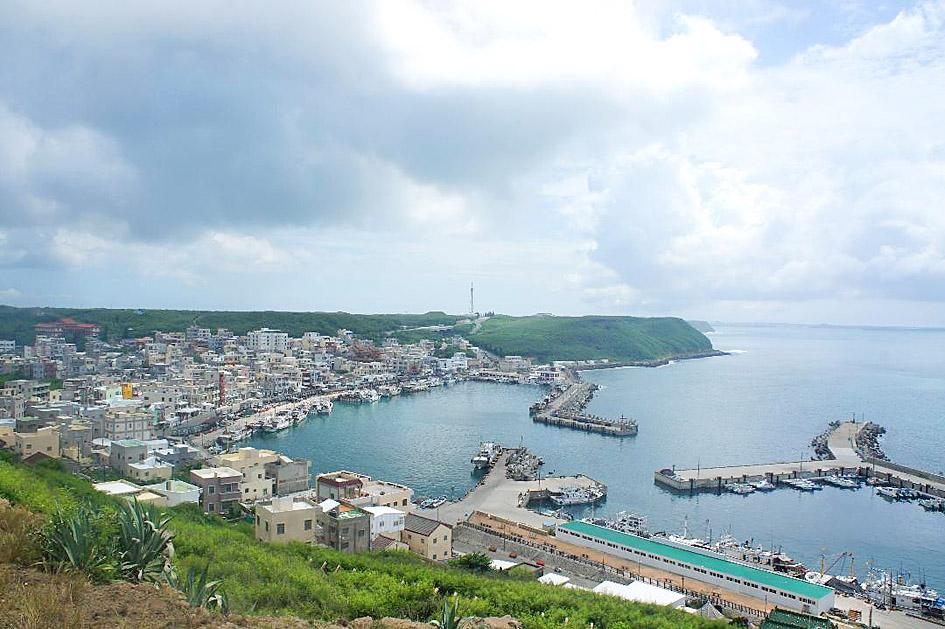
Photo: Liu Yu-ching, Taipei Times
Former Penghu County Government adviser Yu Kuo-lin (郁國麟) yesterday protested at Magong Airport and Seaport, telling travelers that they should focus on curbing the COVID-19 outbreak and that “Penghu does not want you to come now.”
The number of tourists visiting the islands has fallen by nearly 20,000 since May 13, the Penghu County Tourism Department said.
About 2,000 people arrived on Tuesday on domestic flights and 200 via ferry services, the department said.
About one-third of flights to Penghu have been canceled due to a sharp decline in the number of passengers, the Magong Airport Office said yesterday, adding that it has closed the airport’s northern entrance and one security screening line.
SERVICES CUT
Ferry services between Taiwan proper and the islands have been cut from three round-trip services per day to one per day, the county government said.
Airlines canceled 52 domestic flights to Penghu and 44 flights to Kinmen from Friday last week to Sunday, Civil Aeronautics Administration (CAA) data showed.
The average passenger load factor for flights to Penghu was at approximately 56 percent, the CAA said.
Prior to the surge in locally transmitted COVID-19 cases on Taiwan proper, nearly all flights departing for Penghu at the weekend were full, it said.
The average passenger load factor for flights to Kinmen has fallen from 80 percent to 51 percent, it added.
CANCELATIONS
“We have asked airlines to not charge passengers for canceling flights departing or landing at Taipei International Airport [Songshan airport] in light of the level 3 COVID-19 warning in Taipei and New Taipei City. Neither should airlines charge processing fees if passengers ask to change tickets or request refunds because of flight schedule adjustments,” the CAA said, adding that it has not received any complaints since Friday last week.
In related news, no lockdown is to be imposed on Orchid Island (Lanyu, 蘭嶼), the Lanyu Township Office said yesterday, following more than three hours of discussion with residents, hoteliers and tour operators.
Prior to the meeting, residents on Orchid Island had proposed a lockdown, with hoteliers having voluntarily canceled reservations in the past few days to contain the COVID-19 outbreak.
However, some residents said during the meeting that a lockdown would not only affect the local tourism industry, but it could also bring inconvenience to people’s lives and hurt their livelihoods, the office said.
“We have decided not to impose a lockdown, but we would urge hoteliers to stop accepting reservations,” Lanyu Township Mayor Chang Ching-lai (張慶來) said.
Ferry operators have canceled services to Orchid Island from Pingtung County’s Houbihu Port (後壁湖) and Taitung County’s Fugang Fishing Port (富岡漁港) from tomorrow until Friday next week, the East Maritime Affairs Center said yesterday.
Ferry services to Taitung County’s Green Island (綠島) are to continue as usual, it said.


South Korea is planning to revise its controversial electronic arrival card, a step Taiwanese officials said prompted them to hold off on planned retaliatory measures, a South Korean media report said yesterday. A Yonhap News Agency report said that the South Korean Ministry of Foreign Affairs is planning to remove the “previous departure place” and “next destination” fields from its e-arrival card system. The plan, reached after interagency consultations, is under review and aims to simplify entry procedures and align the electronic form with the paper version, a South Korean ministry official said. The fields — which appeared only on the electronic form
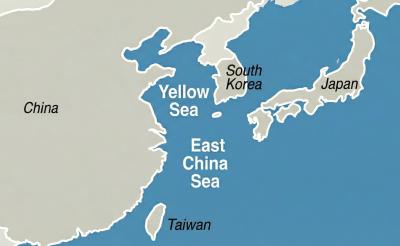
China has reserved offshore airspace in the Yellow Sea and East China Sea from March 27 to May 6, issuing alerts usually used to warn of military exercises, although no such exercises have been announced, the Wall Street Journal (WSJ) reported yesterday. Reserving such a large area for 40 days without explanation is an “unusual step,” as military exercises normally only last a few days, the paper said. These alerts, known as Notice to Air Missions (Notams), “are intended to inform pilots and aviation authorities of temporary airspace hazards or restrictions,” the article said. The airspace reserved in the alert is

A bipartisan group of US senators has introduced a bill to enhance cooperation with Taiwan on drone development and to reduce reliance on supply chains linked to China. The proposed Blue Skies for Taiwan Act of 2026 was introduced by Republican US senators Ted Cruz and John Curtis, and Democratic US senators Jeff Merkley and Andy Kim. The legislation seeks to ease constraints on Taiwan-US cooperation in uncrewed aerial systems (UAS), including dependence on China-sourced components, limited access to capital and regulatory barriers under US export controls, a news release issued by Cruz on Wednesday said. The bill would establish a "Blue UAS
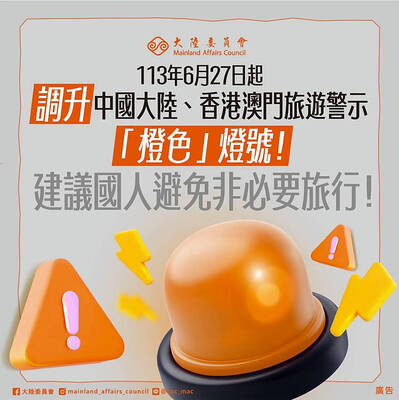
More than 6,000 Taiwanese students have participated in exchange programs in China over the past two years, despite the Mainland Affairs Council’s (MAC) “orange light” travel advisory, government records showed. The MAC’s publicly available registry showed that Taiwanese college and university students who went on exchange programs across the Strait numbered 3,592 and 2,966 people respectively. The National Immigration Agency data revealed that 2,296 and 2,551 Chinese students visited Taiwan for study in the same two years. A review of the Web sites of publicly-run universities and colleges showed that Taiwanese higher education institutions continued to recruit students for Chinese educational programs without


 RSS
RSS