


The Legislative Yuan on Friday passed an amendment to reduce the taxes artists pay on income from auctioned art.
The amendment — which replaces the Culture and Arts Reward Act (文化藝術獎助條例) with the Culture and Arts Reward and Promotion Act (文化藝術獎助及促進條例) — stipulates that proceeds from art sales are to be taxed on a per-transaction basis, and not reported as part of an artist’s annual income. Taxes would be calculated as 20 percent of 6 percent of the final transaction amount — which reduces the tax from the income of a sold artwork by 1.2 percent.
Advocates of the amendment have said that half of creative-content producers make less than NT$30,000 per month, and that most are not enrolled in health insurance or do not work under formal contracts.
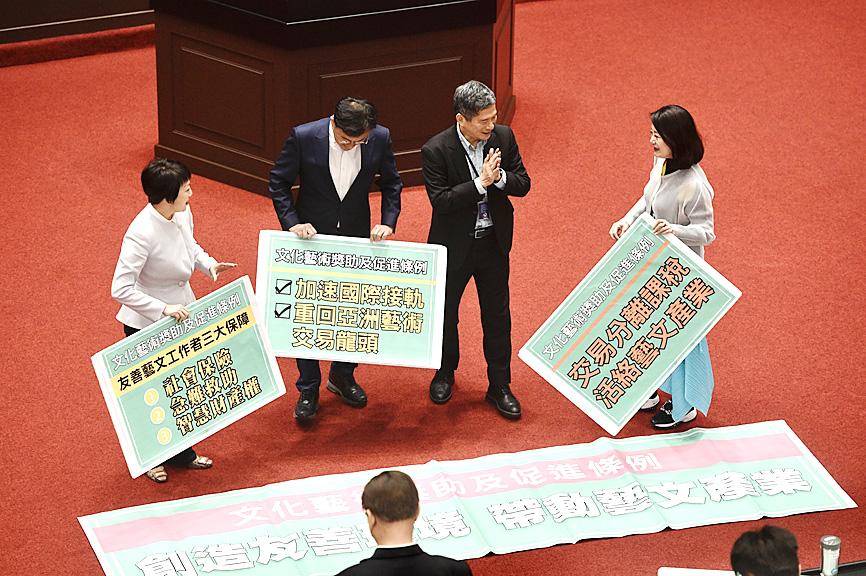
Photo: George Tsorng, Taipei Times
Taiwan People’s Party Legislator (TPP) Ann Kao (高虹安) on Wednesday last week said that the TPP hoped the amendment would bolster the rights of creative industry workers and increase their participation in the labor insurance program.
The amendment, which was the first to the act since it was introduced in 1992, also added a clause that guarantees social security for unionized creative industry workers, as well as assistance for those in emergency circumstances.
Companies providing cultural services for government agencies would also be required to have business insurance under the amendment.
The separate taxation clause of the act for sold artworks would remain in effect until 2031, as the government needs to observe the policy in practice before deciding whether to extend it, legislators said.
“Twenty years ago, Taiwan was the cultural trade center of Asia, but was replaced by Hong Kong due to tax issues,” Democratic Progressive Party (DPP) Legislator Huang Kuo-shu (黃國書) said.
The amendment brings Taiwan in line with international norms of separating taxation of cultural production from that of individual income, he said.
“I hope that this amendment will keep art transactions in Taiwan, and attract large auction houses and other professionals to come here,” he said.
DPP Legislator Rosalia Wu (吳思瑤) said the amendment would make government assistance more accessible to creative industry workers, who had previously been unable to access government aid during the COVID-19 pandemic.

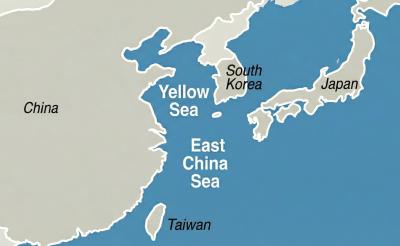
China has reserved offshore airspace in the Yellow Sea and East China Sea from March 27 to May 6, issuing alerts usually used to warn of military exercises, although no such exercises have been announced, the Wall Street Journal (WSJ) reported yesterday. Reserving such a large area for 40 days without explanation is an “unusual step,” as military exercises normally only last a few days, the paper said. These alerts, known as Notice to Air Missions (Notams), “are intended to inform pilots and aviation authorities of temporary airspace hazards or restrictions,” the article said. The airspace reserved in the alert is

South Korea is planning to revise its controversial electronic arrival card, a step Taiwanese officials said prompted them to hold off on planned retaliatory measures, a South Korean media report said yesterday. A Yonhap News Agency report said that the South Korean Ministry of Foreign Affairs is planning to remove the “previous departure place” and “next destination” fields from its e-arrival card system. The plan, reached after interagency consultations, is under review and aims to simplify entry procedures and align the electronic form with the paper version, a South Korean ministry official said. The fields — which appeared only on the electronic form
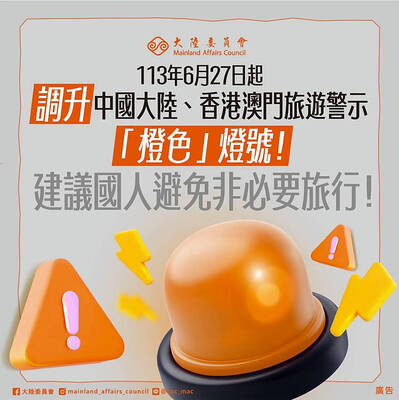
More than 6,000 Taiwanese students have participated in exchange programs in China over the past two years, despite the Mainland Affairs Council’s (MAC) “orange light” travel advisory, government records showed. The MAC’s publicly available registry showed that Taiwanese college and university students who went on exchange programs across the Strait numbered 3,592 and 2,966 people respectively. The National Immigration Agency data revealed that 2,296 and 2,551 Chinese students visited Taiwan for study in the same two years. A review of the Web sites of publicly-run universities and colleges showed that Taiwanese higher education institutions continued to recruit students for Chinese educational programs without
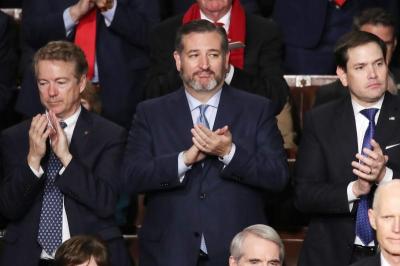
A bipartisan group of US senators has introduced a bill to enhance cooperation with Taiwan on drone development and to reduce reliance on supply chains linked to China. The proposed Blue Skies for Taiwan Act of 2026 was introduced by Republican US senators Ted Cruz and John Curtis, and Democratic US senators Jeff Merkley and Andy Kim. The legislation seeks to ease constraints on Taiwan-US cooperation in uncrewed aerial systems (UAS), including dependence on China-sourced components, limited access to capital and regulatory barriers under US export controls, a news release issued by Cruz on Wednesday said. The bill would establish a "Blue UAS


 RSS
RSS