


The National Communications Commission (NCC) has proposed an amendment that would mean channels and cable system operators would have to settle their disputes over content authorization fees through mediation and arbitration procedures stipulated by the commission, it said yesterday.
Channels or cable systems suspending broadcasts without a legitimate reason while still involved in mediation or arbitration procedures would be fined NT$100,000 to NT$2 million (US$3,517 to US$70,336), the commission said.
The commission proposed the procedures in light of rising disputes in the past few years between channels and cable system operators over content authorization fees, which cable operators pay to channels.
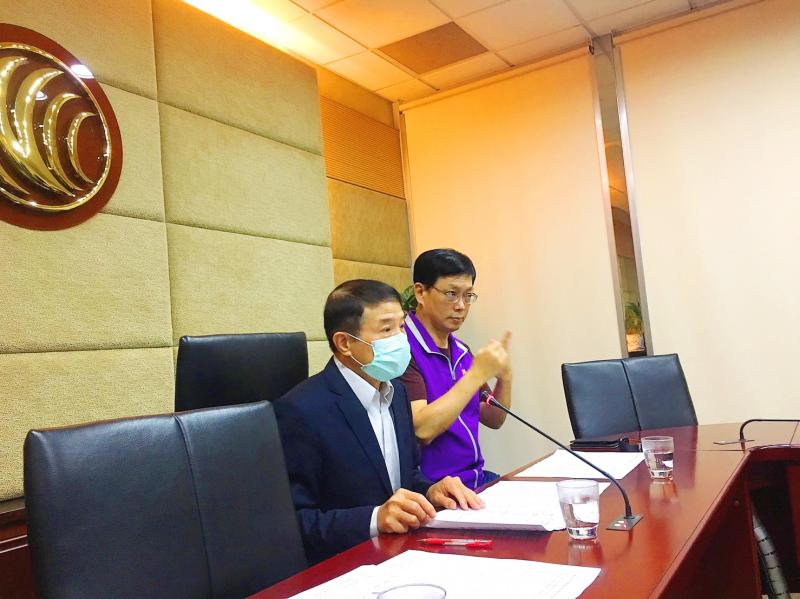
Photo: Yang Mien-chieh, Taipei Times
From 2018 to this year, the commission handled 61 arbitration cases, commission data showed.
Disputes arose when both sides had trouble settling on a reasonable amount, and they would often seek an arbitration from the commission first, it said.
However, arbitration organized by the commission was often time-consuming and had limited success. Channels and cable operators often threatened to terminate broadcasts, and would not be fined if they actually did so.
The commission then proposed amending the Cable Radio and Television Act (有線廣播電視法) by specifying that disputes between channel and cable operators would be handled in two stages, and holding them accountable if they suspended broadcasts while still in mediation or arbitration.
NCC Vice Chairman and spokesman Wong Po-tsung (翁柏宗) said that cable operators and channels would first seek to settle issues through mediation by the commission.
Should they fail to reach an agreement, they could settle the dispute through a civil lawsuit, change their business plans or enter the arbitration stage, he said.
Those seeking arbitration would have to file a request within 30 days after mediation procedures are completed, Wong said, adding that the commission could reject requests or agree to review them.
The commission would form an arbitration committee to review requests, Wong said.
The committee would be made up of two to three government officials or four to five experts in finance, law or media, the commission said, adding that the commission would be in charge of recruiting the committee members.
The committee would decide on a temporary fee that cable operators should pay to channels. If any of the parties in a dispute refuse to accept the result of the arbitration, they are entitled to seek judicial recourse through administrative courts, the commission said.
Two-phase procedures could take a maximum of nine months to complete, the commission said.
Channels and cable operators could file civil lawsuits while they are in mediation or arbitration, the commission said, adding that it would deem the rulings of the civil lawsuits as the final decision.
The commission would hold a hearing on the amendment, which must be reviewed by the Executive Yuan and Legislative Yuan, it added.
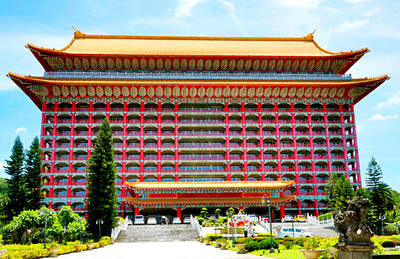
The Grand Hotel Taipei on Saturday confirmed that its information system had been illegally accessed and expressed its deepest apologies for the concern it has caused its customers, adding that the issue is being investigated by the Ministry of Justice Investigation Bureau. The hotel said that on Tuesday last week, it had discovered an external illegal intrusion into its information system. An initial digital forensic investigation confirmed that parts of the system had been accessed, it said, adding that the possibility that some customer data were stolen and leaked could not be ruled out. The actual scope and content of the affected data

DO THEY BITE IT? Cats have better memories than people might think, but their motivation is based entirely around the chance of getting fed Cats can remember the identity of the people who fed them the day before, Taipei-based veterinarians said on Friday, debunking a popular myth that cats have a short memory. If a stray does not recognize the person who fed them the previous day, it is likely because they are not carrying food and the cat has no reason to recognize them, said Wu Chou Animal Hospital head Chen Chen-huan (陳震寰). “When cats come to a human bearing food, it is coming for the food, not the person,” he said. “The food is the key.” Since the cat’s attention is on the food, it

A New York-based NGO has launched a global initiative to rename the nation’s overseas missions, most of which operate under the name "Taipei," to "Taiwan Representative Office (TRO)," according to a news release. Ming Chiang (江明信), CEO of Hello Taiwan, announced the campaign at a news conference in Berlin on Monday, coinciding with the World Forum held from Monday through Wednesday, the institution stated in the release. Speaking at the event, Democratic Progressive Party Legislator Huang Jie (黃捷) said she believed this renaming campaign would enable the international community to see Taiwan
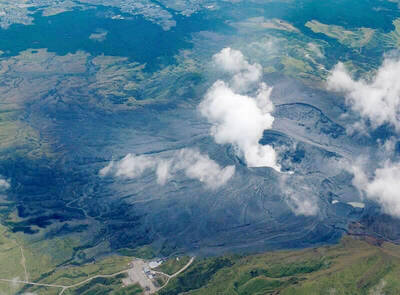
TOO DANGEROUS: The families agreed to suspend crewed recovery efforts that could put rescuers in danger from volcanic gases and unstable terrain The bodies of two Taiwanese tourists and a Japanese pilot have been located inside a volcanic crater, Japanese authorities said yesterday, nearly a month after a sightseeing helicopter crashed during a flight over southwestern Japan. Drone footage taken at the site showed three bodies near the wreckage of the aircraft inside a crater on Mount Aso in Kumamoto Prefecture, police and fire officials said. The helicopter went missing on Jan. 20 and was later found on a steep slope inside the Nakadake No. 1 Crater, about 50m below the rim. Authorities said that conditions at the site made survival highly unlikely, and ruled


 RSS
RSS