


Eligibility for COVID-19 vaccines was yesterday opened to an additional 125,000 people — including members of the central and local governments, and those working at hospital facilities who did not qualify under the first two priority groups — making 613,000 people eligible.
About 11,000 airline workers who fly internationally also became eligible, Centers for Disease Control Deputy Director-General Chuang Jen-hsiang (莊人祥), who is the Central Epidemic Command Center’s (CECC) spokesman, said yesterday.
About 90 percent of those airline employees are available to get inoculated as they are not on flights or under quarantine, he said, adding that the airlines can arrange vaccinations in line with work schedules.
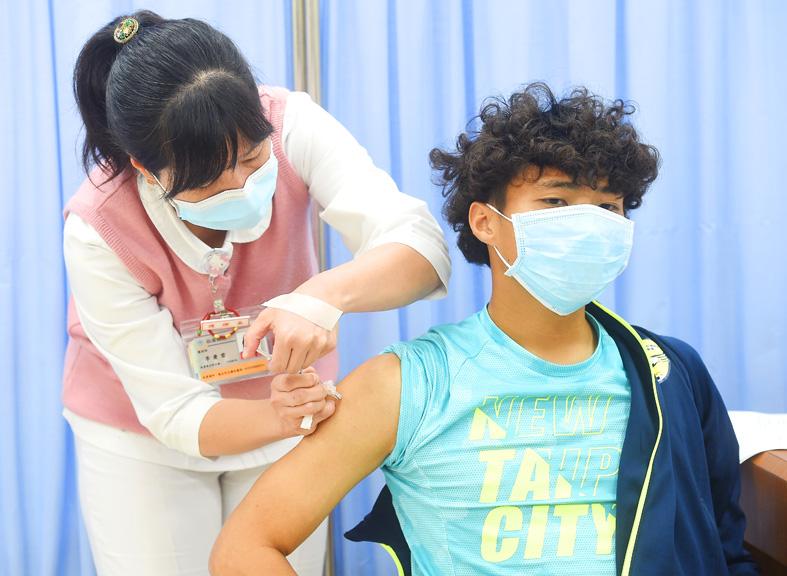
Photo: Chien Jung-fong, Taipei Times
The CECC is discussing how quarantine requirements might be eased for airline employees who have been vaccinated, he said.
The first batch of COVID-19 vaccines allocated to Taiwan through the COVAX global vaccine-sharing program, which arrived on April 4, yesterday passed inspection procedures and are to be distributed to local health authorities and hospitals tomorrow, he said, adding that the hospitals would be instructed to immediately begin vaccinations due to the earlier expiration date of this batch.
Among those vaccinated yesterday with doses of the earlier batch of AstraZeneca vaccines, which arrived last month, were Taipei Mayor Ko Wen-je (柯文哲), New Taipei City Mayor Hou You-yi (侯友宜), Taoyuan Mayor Cheng Wen-tsan (鄭文燦), Keelung Mayor Lin Yu-chang (林右昌) and Taichung Mayor Lu Shiow-yen (盧秀燕).
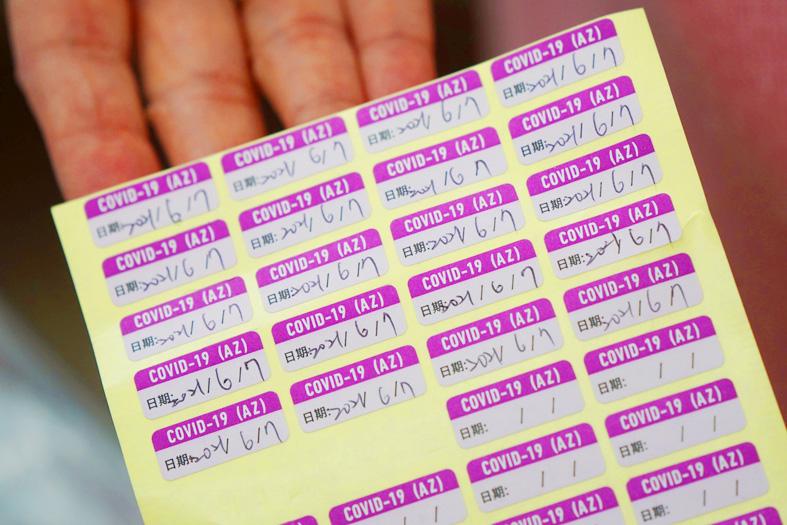
Photo: CNA
“We aren’t even sure if we’ll have other vaccines in the future, or when they’ll arrive if we get them. It’s better to do it now than to put it off,” Ko said, when asked whether he was concerned about the risks associated with getting vaccinated.
At Taipei City Hospital’s Heping branch, where he was vaccinated, Ko was joined by other city officials, as well as players on the Chinese Taipei Football Association representative team and Taipei taxi drivers who transport those headed into quarantine.
About 40 million COVID-19 vaccine doses are needed to vaccinate Taiwan’s population, but the nation has so far secured only 31 million doses, including those already received, Ko said.
Lin said that he respected the opinion of medical experts and that he would take whatever vaccine is available and advised by the experts.
“This is a necessary step toward slowing the spread of the pandemic, opening borders and returning to international normalcy,” he added.
Lin said he hoped that he and other officials getting vaccinated would help ease public concerns about the vaccine.
Lu said she felt that making the vaccine publicly funded would also help encourage more people to get vaccinated.
Additional reporting by Chen En-hui and Hsiao Yu-hsin

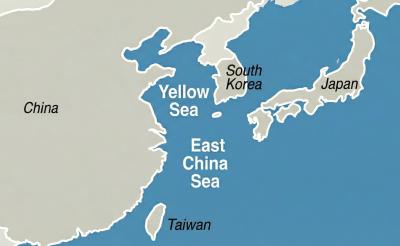
China has reserved offshore airspace in the Yellow Sea and East China Sea from March 27 to May 6, issuing alerts usually used to warn of military exercises, although no such exercises have been announced, the Wall Street Journal (WSJ) reported yesterday. Reserving such a large area for 40 days without explanation is an “unusual step,” as military exercises normally only last a few days, the paper said. These alerts, known as Notice to Air Missions (Notams), “are intended to inform pilots and aviation authorities of temporary airspace hazards or restrictions,” the article said. The airspace reserved in the alert is
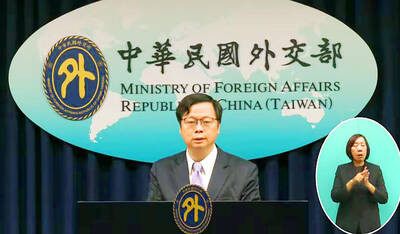
NAMING SPAT: The foreign ministry called on Denmark to propose an acceptable solution to the erroneous nationality used for Taiwanese on residence permits Taiwan has revoked some privileges for Danish diplomatic staff over a Danish permit that lists “Taiwan” as “China,” Eric Huang (黃鈞耀), head of the Ministry of Foreign Affairs’ Department of European Affairs, told a news conference in Taipei yesterday. Reporters asked Huang whether the Danish government had responded to the ministry’s request that it correct the nationality on Danish residence permits of Taiwanese, which has been listed as “China” since 2024. Taiwan’s representative office in Denmark continues to communicate with the Danish government, and the ministry has revoked some privileges previously granted to Danish representatives in Taiwan and would continue to review

More than 6,000 Taiwanese students have participated in exchange programs in China over the past two years, despite the Mainland Affairs Council’s (MAC) “orange light” travel advisory, government records showed. The MAC’s publicly available registry showed that Taiwanese college and university students who went on exchange programs across the Strait numbered 3,592 and 2,966 people respectively. The National Immigration Agency data revealed that 2,296 and 2,551 Chinese students visited Taiwan for study in the same two years. A review of the Web sites of publicly-run universities and colleges showed that Taiwanese higher education institutions continued to recruit students for Chinese educational programs without

A bipartisan group of US senators has introduced a bill to enhance cooperation with Taiwan on drone development and to reduce reliance on supply chains linked to China. The proposed Blue Skies for Taiwan Act of 2026 was introduced by Republican US senators Ted Cruz and John Curtis, and Democratic US senators Jeff Merkley and Andy Kim. The legislation seeks to ease constraints on Taiwan-US cooperation in uncrewed aerial systems (UAS), including dependence on China-sourced components, limited access to capital and regulatory barriers under US export controls, a news release issued by Cruz on Wednesday said. The bill would establish a "Blue UAS


 RSS
RSS