


Parents should pay attention to the quality of their children’s leisure time, the Child Welfare League Foundation (CWLF) said yesterday, adding that smartphone games should not be children’s only source of entertainment.
The foundation issued the call at a news conference in Taipei held to release the results of a survey it conducted ahead of Children’s Day on Sunday.
The foundation releases an annual survey to remind parents of the needs and concerns of children, foundation chief executive officer Pai Li-fang (白麗芳) said.

Photo: Lo Chi, Taipei Times
Although today’s parents are more attentive than in the past, they have little time to spend with or listen to their children, she said.
The survey of students in grades 4 to 6 was conducted through questionnaires distributed to 21 schools across the nation from Dec. 25 last year to Jan. 18, the foundation said.
It found that 65 percent of children aged 10 to 12 on average spend three hours per day with their parents, while 16.5 percent said they spend less than one hour with them.
Asked whether they spend “quality time” with members of their family, 8.5 percent of students said they did not, it found.
Nineteen percent disagreed with the statement that “my parents listen to me and take my opinions into consideration,” the survey found.
While 6.7 percent disagree with the statement “If I encounter a problem, my family will help me,” 4.5 percent disagreed with the statement “My family cares about me,” it found.
The survey showed that the children on average spent 13.2 hours per week playing smartphone games.
Twelve-year-old children on average spent 16 hours playing smartphone games — nearly twice the average of 10-year-olds (8.6 hours), it showed.
Asked what their main sources of worry and stress were, students’ top three responses were schoolwork and exams (82.5 percent), the COVID-19 pandemic (41 percent) and not having enough time to rest or engage in leisurely activities (33 percent), the foundation said.
COVID-19 has brought uncertainty to the lives of children, Pai said, adding that she hopes that after the pandemic, parents will re-examine their relationship with their children and think about how they can improve the quality of the time they spend with them.
Family interactions are closely related to the happiness of children, the foundation said.
It urged parents to hug their children for 30 seconds each day, to listen to and spend time with them for 30 minutes and to avoid working overtime.
The survey collected 676 valid responses and had a margin of error of 4 percentage points, it said.
Forty-nine percent of respondents were 12 years old, 16.6 percent were 11 years old and 34.3 percent were 10 years old, the foundation said.

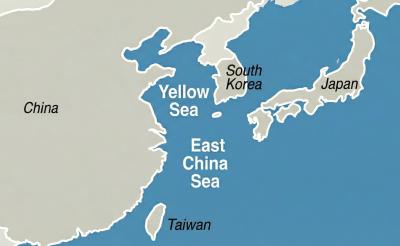
China has reserved offshore airspace in the Yellow Sea and East China Sea from March 27 to May 6, issuing alerts usually used to warn of military exercises, although no such exercises have been announced, the Wall Street Journal (WSJ) reported yesterday. Reserving such a large area for 40 days without explanation is an “unusual step,” as military exercises normally only last a few days, the paper said. These alerts, known as Notice to Air Missions (Notams), “are intended to inform pilots and aviation authorities of temporary airspace hazards or restrictions,” the article said. The airspace reserved in the alert is
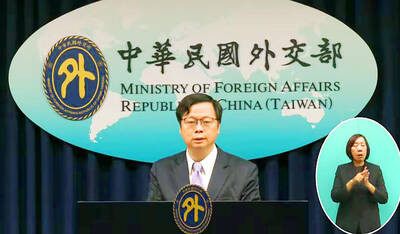
NAMING SPAT: The foreign ministry called on Denmark to propose an acceptable solution to the erroneous nationality used for Taiwanese on residence permits Taiwan has revoked some privileges for Danish diplomatic staff over a Danish permit that lists “Taiwan” as “China,” Eric Huang (黃鈞耀), head of the Ministry of Foreign Affairs’ Department of European Affairs, told a news conference in Taipei yesterday. Reporters asked Huang whether the Danish government had responded to the ministry’s request that it correct the nationality on Danish residence permits of Taiwanese, which has been listed as “China” since 2024. Taiwan’s representative office in Denmark continues to communicate with the Danish government, and the ministry has revoked some privileges previously granted to Danish representatives in Taiwan and would continue to review

More than 6,000 Taiwanese students have participated in exchange programs in China over the past two years, despite the Mainland Affairs Council’s (MAC) “orange light” travel advisory, government records showed. The MAC’s publicly available registry showed that Taiwanese college and university students who went on exchange programs across the Strait numbered 3,592 and 2,966 people respectively. The National Immigration Agency data revealed that 2,296 and 2,551 Chinese students visited Taiwan for study in the same two years. A review of the Web sites of publicly-run universities and colleges showed that Taiwanese higher education institutions continued to recruit students for Chinese educational programs without

A bipartisan group of US senators has introduced a bill to enhance cooperation with Taiwan on drone development and to reduce reliance on supply chains linked to China. The proposed Blue Skies for Taiwan Act of 2026 was introduced by Republican US senators Ted Cruz and John Curtis, and Democratic US senators Jeff Merkley and Andy Kim. The legislation seeks to ease constraints on Taiwan-US cooperation in uncrewed aerial systems (UAS), including dependence on China-sourced components, limited access to capital and regulatory barriers under US export controls, a news release issued by Cruz on Wednesday said. The bill would establish a "Blue UAS


 RSS
RSS