

The army has set up new battalions under the 6th, 8th and 10th corps to handle training of new recruits and reservists, the Ministry of National Defense said, denying reports that it is expanding forces.
Members of the battalions come from the corps’ officer training programs and are part of an ongoing project to increase training capacity for new recruits and reservists, the ministry said, adding that the battalions are under the direct command of the corps’ commanding lieutenant general.
The move is not an expansion of the army, Army Command Headquarters added.
Reform of the reservist system includes maintaining the combat readiness of reservists, who are grouped into three categories — coastal defense, urban garrison and key target defense forces, the ministry’s 2021 Quadrennial Defense Review says.
The newly established battalions are tasked with training new recruits and arranging reservist training, while serving as key target area defense forces in time of war, the military’s Youth Daily News said.
The second battalion under the Kinmen Garrison Force, which handles training of new recruits and reservists, will also be tasked with coastal defense in times of war, the ministry said.
Democratic Progressive Party Legislator Chao Tien-lin (趙天麟), a member of the Legislative Yuan’s Foreign Affairs and National Defense Committee, said that the move was in line with President Tsai Ing-wen’s (蔡英文) directive to ensure that combat-readiness training remains as close to real combat as possible.
Setting up the battalions was in line with what officer training camps would be like during wartime, he said, adding that how effective the training regimen is remains to be seen.
The new battalions are smaller and easier to maneuver than a brigade, and can better defend key areas, Institute for National Defense and Security Research postdoctoral researcher Sheu Jyh-shyang (許智翔) said.
The battalion’s composition — serving officers commanding new recruits or reservists — is less suited to direct assault missions and more suited to defense, he said.
Such battalions would require supporting forces if assigned to coastal defense roles, as they would not be suited to singlehandedly defend a coastal region, he added.

A Hualien pomelo farmer refused to sell to China after the country announced it would permit more Taiwanese pomelo imports, prompting widespread support from Taiwanese consumers, who rallied to buy his fruit. China’s Taiwan Affairs Office last month said that China’s General Administration of Customs registered an additional 79 Taiwanese pomelo orchards and packing facilities in Hualien County, allowing more Taiwanese producers to export pomelos to China. “I am a Hualien fruit farmer and I refuse to sell to China,” Liu Tzu-hao (劉子豪) from Ruisui Township (瑞穗) said in an online post. Liu is a well-known farmer in the community and has served
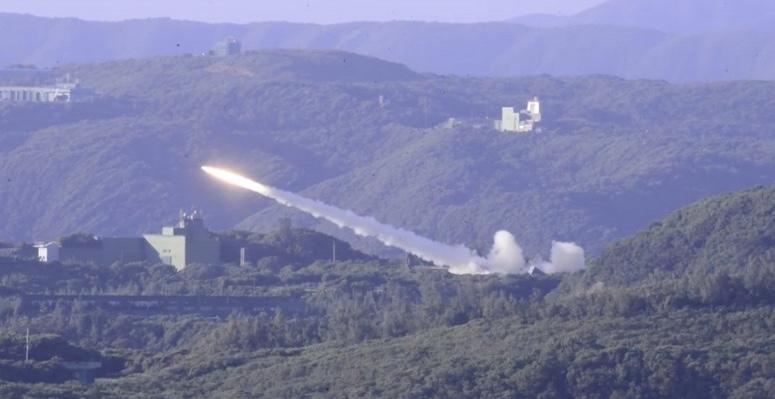
A Chinese military drone was spotted conducting reconnaissance off Taitung County as President William Lai (賴清德) visited Pingtung County this morning to inspect a drill of the armed forces’ precision-strike capabilities, prompting the military to closely monitor its actions. Today was the final day of a three-day military exercise at Jioupeng Base (九鵬基地) to test the joint combat capabilities of the armed forces and coast guard. The exercise began on Wednesday simulating air defense interception and yesterday tested long-range strike capabilities and new air defense weapons. This morning, the military conducted a final exercise involving air defense, anti-ship and drone operations. Military sources said

OCT. 31: The antiviral drugs Tamiflu and Eraflu have been distributed to about 4,000 medical facilities nationwide for people in seven groups who develop flu-like symptoms As the domestic influenza epidemic enters its peak season and continues to escalate, the Centers for Disease Control (CDC) yesterday announced that publicly funded influenza antiviral drugs for seven eligible groups have been extended to Oct. 31, allowing those who develop flu-like symptoms to receive the medication without undergoing a rapid influenza test. The CDC has extended the expanded use of flu antiviral drugs to seven groups: healthcare and influenza-prevention personnel; residents and staff at nursing homes, long-term care facilities and similar institutions; kindergarten and daycare workers and home-based caregivers; students from kindergarten through high school, vocational high school and the

Taiwanese Tsai Chin-shu (蔡金樹), who had been imprisoned in China for engaging in activity that “endangers national security,” said on Facebook on Friday that he has returned to Taiwan. Tsai, chairman of the Southern Taiwan Union of Cross-strait Relations Associations, had traveled frequently between Taiwan and China for years, and at one time ran a trading company in China’s Pingtan. In July 2018, he traveled to Quanzhou, Fujian Province, to attend a cross-strait food trade fair and stayed at a hotel in Xiamen. He checked out the following day and then disappeared. His family had made repeated appeals to the authorities


 RSS
RSS