


The Tourism Bureau is renting hotel rooms for the short term to increase the supply of rooms available to people who need to undergo quarantine after returning from overseas for the Lunar New Year holiday.
The availability of quarantine hotel rooms has come under scrutiny as Taiwanese returning home for the biggest holiday of the year have had trouble booking a room at a quarantine hotel.
Demand is expected to be strained further when the Ministry of Health and Welfare enforces a “one person, one room” quarantine policy on Friday.
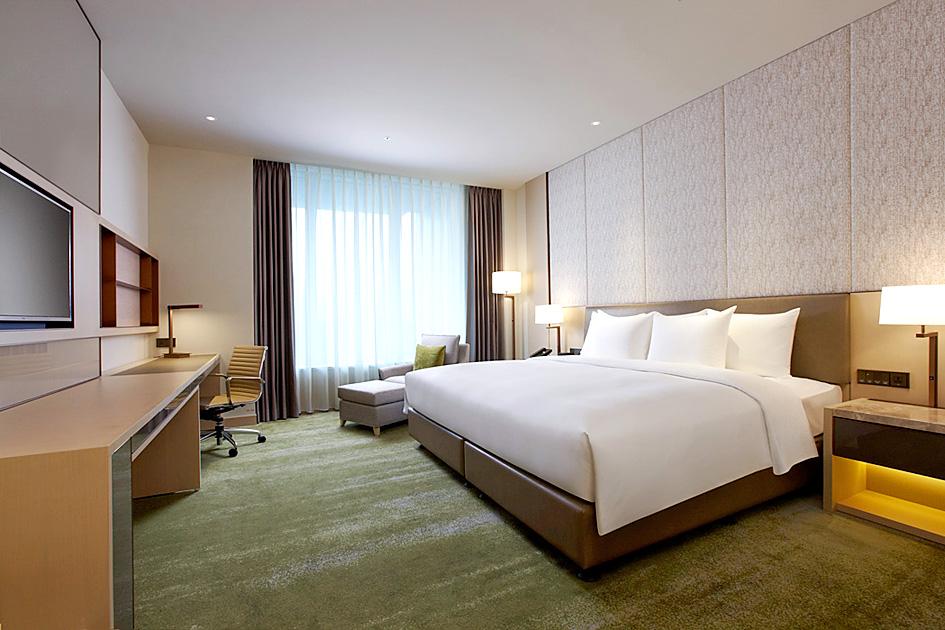
Photo courtesy of a quarantine hotel
The nation currently has about 16,000 hotel quarantine rooms, Tourism Bureau Director-General Chang Hsi-chung (張錫聰) told reporters yesterday.
To qualify to be a quarantine hotel, hoteliers should follow the guidelines stipulated by local health departments to secure their approval.
As the demand for quarantine hotel rooms is expected to rise ahead of the Lunar New Year holiday, the Tourism Bureau convened an emergency meeting with hoteliers nationwide to discuss the issue, Chang said.
The bureau decided to lease hotel rooms from operators, he said, adding that it is capping room rates instead of providing an NT$800 subsidy.
The bureau is renting about 1,400 hotel rooms, which would be available for use from tomorrow until Feb. 11, Chang said.
The scheme is not applicable in Yilan, Hualien, Taitung, Penghu, Kinmen and Matsu counties, he said.
The bureau’s scheme would help add about 4,600 quarantine hotel rooms by the end of this month, he added.
Prices of hotel rooms rented by the bureau are capped at NT$5,000 per day for hotels in Taipei and New Taipei City, the bureau said.
Rooms in other counties are capped at NT$3,000 per day, it said.
Hoteliers would still get paid even if the room is not used, it added.
Meanwhile, some large international hotels are offering discounts to families who decide to stay at the hotel so that a family member can quarantine at home.
That could provide an additional 6,950 hotel rooms, the bureau said.
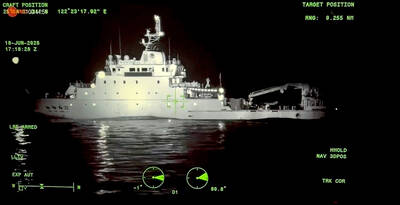
EXCUSES: Beijing is using government and research vessels as a pretext to harass the nation and enter its EEZ, and engage in ‘hegemonic expansion,’ the coast guard said The Coast Guard Administration yesterday said it drove away Chinese oceanographic research vessel Xiang Yang Hong 22 (向陽紅33) from restricted waters after warning it that it was in Taiwan’s exclusive economic zone (EEZ). The Chinese vessel entered restricted waters off the coast of Yilan County’s Suao (蘇澳) at 11:35pm on Thursday, the coast guard said, adding that it dispatched the Lanyu patrol vessel and the boat PP-10077 to shadow the Chinese ship and issue radio warnings ordering it to leave. China has no sovereignty over waters off Taiwan’s east coast, Lanyu’s crew told Xiang Yang Hong 22 over the radio, and demanded

BAIT AND SWITCH: Allowing KMT-run counties to sell to China while the threat of abrupt cancelations hangs overhead is another form of coercion, officials said Beijing is using agricultural purchase offers announced during the Straits Forum to deepen Taiwan’s dependence on the Chinese market, a Taiwanese official said yesterday as they criticized the Taitung County commissioner’s participation in the initiative. During the Straits Forum held in Xiamen on Saturday, Chinese officials announced a sales and purchase agreement for agricultural products from some counties led by the Chinese Nationalist Party (KMT). Taitung County Commissioner Yao Ching-ling (饒慶鈴), who was barred from attending the event in person by the Mainland Affairs Council, participated via video. Under the agreement, China would purchase atemoyas, pomeloes, tea and grouper harvested in Taitung,
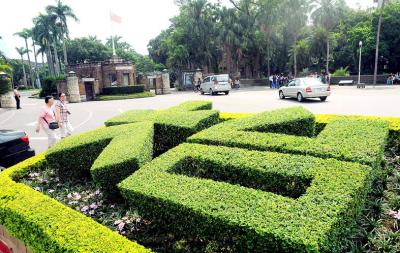
Four Taiwanese universities have been ranked among the world's top 200 institutions in the Quacquarelli Symonds (QS) World University Rankings for next year, the highest Taiwan has ever placed in the category, with National Taiwan University (NTU) achieving its best performance at 54th globally and 17th in Asia. The four Taiwanese institutions in the global top 200 are NTU (54th), National Tsing Hua University (142nd), National Yang Ming Chiao Tung University (177th) and National Cheng Kung University (191st), the rankings showed. All four universities achieved their highest-ever global rankings this year, QS data showed. National Cheng Kung University entered the top 200 for
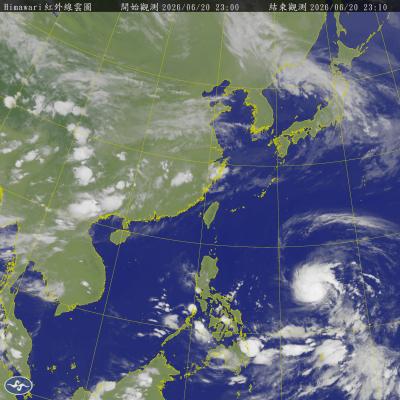
Tropical Storm Mekkhala is forecast to strengthen into a typhoon tomorrow and could come close enough to Taiwan later in the week to prompt a sea warning, the Central Weather Administration (CWA) said yesterday. As of 2 pm, the storm was located 1,870 kilometers southeast of Taiwan's southern tip and moving west- northwest at 23 km per hour. CWA forecaster Cheng Chieh-jen (鄭傑仁) said Mekkhala is expected to continue moving west-northwest through Tuesday under the influence of the Pacific high- pressure system before gradually turning north toward waters east of Taiwan or south of the Ryukyu Islands. The timing and angle of the


 RSS
RSS