


Four COVID-19 cases in Taiwan were confirmed to be infected with the new virus strain discovered last month in the UK, the Central Epidemic Command Center (CECC) said yesterday, as it also reported two new imported cases.
As the new COVID-19 variant is believed to be much more transmissible than other strains, the CECC in the past few weeks began genome sequencing of samples from confirmed cases with high viral loads.
Minister of Health and Welfare Chen Shih-chung (陳時中), who heads the center, said that in addition to the two previously announced cases, two more cases have been confirmed of the new est strain, and that all four cases arrived from the UK.
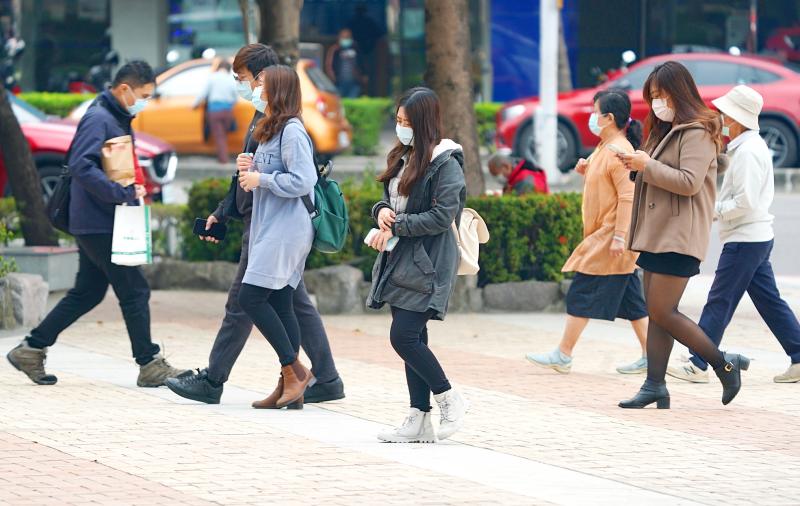
Photo: Huang Chih-yuan, Taipei Times
“The cases are Nos. 791, 792, 793 and 799, and they all stayed in centralized quarantine facilities after arriving in Taiwan, so thye situation is relatively safe for the local communities,” he said.
Samples of 33 confirmed cases were subject to genome sequencing, Chen said.
While four cases of the new strain were found, 18 cases were of other, previously known, strains and three had low viral loads so that the strain of COVID-19 could not be determined, he said, adding that the results for six cases are still pending.
The convener of the CECC specialist advisory panel, National Taiwan University vice-president Chang Shan-chwen (張上淳) said that among the 13 confirmed COVID-19 cases among travelers from the UK since November last year, 11 experienced mild symptoms, one developed mild pneumonia and one experienced severe pneumonia or acute respiratory distress syndrome.
The person with severe pneumonia is also the only confirmed case still hospitalized, and is relying on a ventilator, Chang said, adding that the man is among those found infected with the new strain.
However, symptoms and treatment of the new COVID-19 variant are the same as those of other known variants, Chang said.
The person on a ventilator has several risk factors, such as old age, cardiovascular disease and obesity, he added.
Chen said that a project to trace and test 216 inbound passengers, who were in the UK in the 14 days before returning to Taiwan between Dec. 13 and Dec. 22, have detected four positive cases — Nos. 342, 787, 791 and 799 — while 198 people tested negative, seven test results are pending and seven people are waiting to be tested.
Case No. 342 was an imported case confirmed in April, but the person stayed in the UK from July to December, completed home quarantine on Monday and was not tested positive again.
Moreover, Chen said that two imported cases were confirmed yesterday, bringing the total number of cases in Taiwan to 819.
One of the cases is an Indonesian fisher in his 30s, who came to Taiwan for work on Dec. 22, stayed in a centralized quarantine center and did not experience symptoms, he said, adding that he tested positive on Monday before finishing his quarantine.
Chen said the other case is a Filipino migrant worker in his 20s, who arrived in Taiwan on Dec. 13, stayed in a centralized quarantine center and did not experience symptoms.
The man tested negative when ending his quarantine on Dec. 26, but he tested positive in a paid test on Monday after ending self-health management, he said.
Meanwhile, Chang said that the advisory panel suggested that the CECC loosen standards for releasing people with COVID-19 from isolation in hospitals.
The panel suggested that people who initially tested positive with a cycle threshold (CT) value of 34 or higher, and subsequently tested negative be released from isolation wards, he said.
Chang said that analysis of confirmed cases shows that the virus is more likely to be cultivated if the person’s CT value is lower than 27 and symptoms appear within 10 days of infection.
Studies have suggested that the virus cannot be cultivated at a CT-value of 34 or higher, and such cases would not be able to transmit COVID-19, he said.
Centers for Disease Control (CDC) Deputy Director-General Chuang Jen-hsiang (莊人祥), who is CECC spokesperson, said that the panel’s suggestion is being reviewed and might take effect as early as next week.
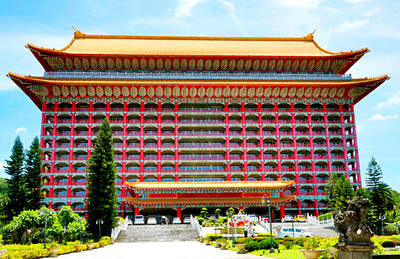
The Grand Hotel Taipei on Saturday confirmed that its information system had been illegally accessed and expressed its deepest apologies for the concern it has caused its customers, adding that the issue is being investigated by the Ministry of Justice Investigation Bureau. The hotel said that on Tuesday last week, it had discovered an external illegal intrusion into its information system. An initial digital forensic investigation confirmed that parts of the system had been accessed, it said, adding that the possibility that some customer data were stolen and leaked could not be ruled out. The actual scope and content of the affected data

DO THEY BITE IT? Cats have better memories than people might think, but their motivation is based entirely around the chance of getting fed Cats can remember the identity of the people who fed them the day before, Taipei-based veterinarians said on Friday, debunking a popular myth that cats have a short memory. If a stray does not recognize the person who fed them the previous day, it is likely because they are not carrying food and the cat has no reason to recognize them, said Wu Chou Animal Hospital head Chen Chen-huan (陳震寰). “When cats come to a human bearing food, it is coming for the food, not the person,” he said. “The food is the key.” Since the cat’s attention is on the food, it

A New York-based NGO has launched a global initiative to rename the nation’s overseas missions, most of which operate under the name "Taipei," to "Taiwan Representative Office (TRO)," according to a news release. Ming Chiang (江明信), CEO of Hello Taiwan, announced the campaign at a news conference in Berlin on Monday, coinciding with the World Forum held from Monday through Wednesday, the institution stated in the release. Speaking at the event, Democratic Progressive Party Legislator Huang Jie (黃捷) said she believed this renaming campaign would enable the international community to see Taiwan
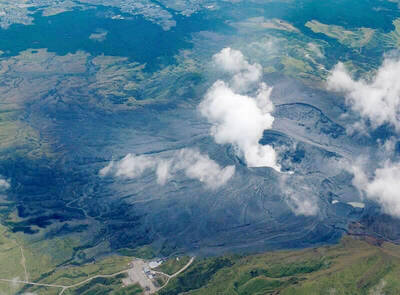
TOO DANGEROUS: The families agreed to suspend crewed recovery efforts that could put rescuers in danger from volcanic gases and unstable terrain The bodies of two Taiwanese tourists and a Japanese pilot have been located inside a volcanic crater, Japanese authorities said yesterday, nearly a month after a sightseeing helicopter crashed during a flight over southwestern Japan. Drone footage taken at the site showed three bodies near the wreckage of the aircraft inside a crater on Mount Aso in Kumamoto Prefecture, police and fire officials said. The helicopter went missing on Jan. 20 and was later found on a steep slope inside the Nakadake No. 1 Crater, about 50m below the rim. Authorities said that conditions at the site made survival highly unlikely, and ruled


 RSS
RSS