


Scientific and technological development over the next decade would strive to create a people-centered “smart society” that improves quality of life for all, President Tsai Ing-wen (蔡英文) said at the opening of the 11th quadrennial National Science and Technology Conference yesterday.
The three-day conference at the Taipei International Convention Center aims to collect opinions from industrial, academic and civic representatives to guide the nation’s tech policy over the next 10 years.
In their opening remarks, Tsai and Premier Su Tseng-chang (蘇貞昌) shared their vision for “innovative, inclusive and sustainable” technological development.
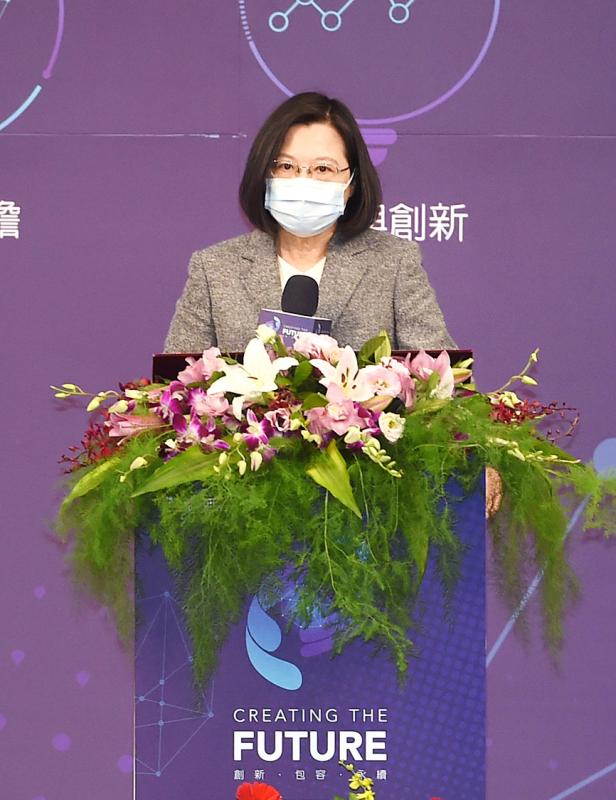
Photo: Fang Pin-chao, Taipei Times
As the COVID-19 pandemic alters the global political and economic order, the nation’s robust semiconductor industry is assuming its role as a global leader, Tsai said.
It is the government’s responsibility to create a suitable environment for scientific and technological innovation, she added.
To face the complex challenges of the future, different sectors must combine their strengths in the pursuit of common goals, Tsai said.
Such innovative thinking can build a diverse and inclusive society, and move the nation toward a new economic model driven by innovation, she said.
However, it is only through sustained investment and research that people can enjoy an ever-improving quality of life, Tsai said.
Through the government’s “six core strategic industries” policy, Taiwan would become a center for high-end manufacturing, research and development, advanced semiconductor processes and green energy development, Tsai added.
Su accredited the nation’s success in containing its COVID-19 outbreak to its technological prowess.
Technological development has a strong bearing on quality of life, as well as overall economic development, he said.
To create a society that meets the needs of the public and industry, it is necessary to not only leverage the nation’s existing competitive advantages, but also accelerate the development of emerging technologies while offering due consideration to humanistic concerns, he added.
The first keynote speech was given by former vice president Chen Chien-jen (陳建仁), who said that technological innovation must address the issues raised by the pandemic, including the need for advance preparation, so that it reflects concern for public welfare.
Minister of Science and Technology Wu Tsung-tsong (吳政忠) gave a speech on the conference theme of “Taiwan’s Vision for 2030,” saying that the goal of scientific and technological development is to continually move society forward.
In the face of an aging population, energy shortages, climate change and the complex challenges brought by the pandemic, Taiwan needs a long-term development plan that can meet societal and industrial needs a decade from now, Wu said.
Implementing development policy in advance while also incorporating investment by industrial, academic and civic players would enable the gradual realization of this vision, he added.
Tsai Zse-hong (蔡志宏), executive secretary of the Executive Yuan’s Board of Science and Technology, said that the conclusions reached during the conference would form the basis for the nation’s developmental policy over the next four years.
Discussions would focus on talent cultivation and value creation, research directions, economics and innovation, and “smart living,” he said.
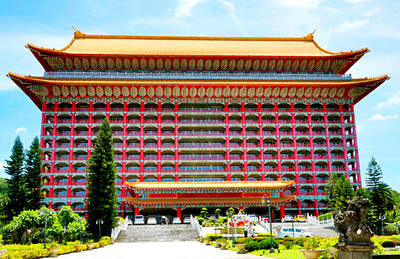
The Grand Hotel Taipei on Saturday confirmed that its information system had been illegally accessed and expressed its deepest apologies for the concern it has caused its customers, adding that the issue is being investigated by the Ministry of Justice Investigation Bureau. The hotel said that on Tuesday last week, it had discovered an external illegal intrusion into its information system. An initial digital forensic investigation confirmed that parts of the system had been accessed, it said, adding that the possibility that some customer data were stolen and leaked could not be ruled out. The actual scope and content of the affected data

DO THEY BITE IT? Cats have better memories than people might think, but their motivation is based entirely around the chance of getting fed Cats can remember the identity of the people who fed them the day before, Taipei-based veterinarians said on Friday, debunking a popular myth that cats have a short memory. If a stray does not recognize the person who fed them the previous day, it is likely because they are not carrying food and the cat has no reason to recognize them, said Wu Chou Animal Hospital head Chen Chen-huan (陳震寰). “When cats come to a human bearing food, it is coming for the food, not the person,” he said. “The food is the key.” Since the cat’s attention is on the food, it
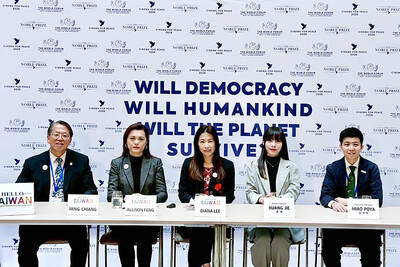
A New York-based NGO has launched a global initiative to rename the nation’s overseas missions, most of which operate under the name "Taipei," to "Taiwan Representative Office (TRO)," according to a news release. Ming Chiang (江明信), CEO of Hello Taiwan, announced the campaign at a news conference in Berlin on Monday, coinciding with the World Forum held from Monday through Wednesday, the institution stated in the release. Speaking at the event, Democratic Progressive Party Legislator Huang Jie (黃捷) said she believed this renaming campaign would enable the international community to see Taiwan
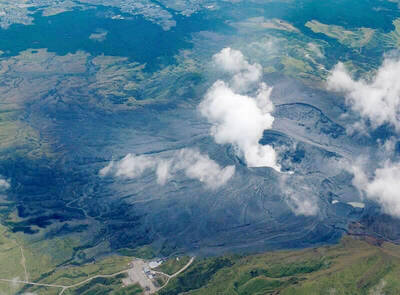
TOO DANGEROUS: The families agreed to suspend crewed recovery efforts that could put rescuers in danger from volcanic gases and unstable terrain The bodies of two Taiwanese tourists and a Japanese pilot have been located inside a volcanic crater, Japanese authorities said yesterday, nearly a month after a sightseeing helicopter crashed during a flight over southwestern Japan. Drone footage taken at the site showed three bodies near the wreckage of the aircraft inside a crater on Mount Aso in Kumamoto Prefecture, police and fire officials said. The helicopter went missing on Jan. 20 and was later found on a steep slope inside the Nakadake No. 1 Crater, about 50m below the rim. Authorities said that conditions at the site made survival highly unlikely, and ruled


 RSS
RSS