


Fans of Hello Kitty, a popular Japanese cartoon character, yesterday morning lined up outside the Taipei Beimen Post Office, as Chunaghwa Post and Sanrio Co launched a series of cobrand products featuring the cartoon cat.
Hello Kitty is a global superstar, whose popularity has already lasted for 45 years, Chunghwa Post chairman Wu Hung-mo (吳宏謀) said at the product launch ceremony, marking the company’s first cooperation with the Tokyo-based firm that designs, licenses and manufactures products featuring popular Japanese cartoon characters.
The secret to the character’s enduring popularity is that Sanrio continues to design products that keep up with the times, Wu said.

Photo courtesy of Chunghwa Post
Some who fell in love with Hello Kitty 45 years ago are now grandparents and share their passion with their grandchildren, he added.
Hello Kitty does not have a mouth, so she does not have to wear a mask during the COVID-19 pandemic, Wu said, adding that the cartoon character helps keep people happy and healthy.
Chunghwa Post and Sanrio have worked together to develop nine Hello Kitty-themed products that people can send as gifts to their relatives during the holiday season, Wu said.
The products include greeting cards, tote bags, thermo bottles, a cooking pot, sticky notes and tape.
“We hope that the products will draw younger people to our services, which few of them purchase nowadays,” he said.
Some Hello Kitty fans said that they started lining up outside Taiwan’s oldest post office before 6am to buy the entire set.
The company has only 888 sets available for sale, Wu said, adding that it hopes that the products would generate NT$35 million (US$1.23 million) in revenue.
More Hello Kitty merchandise would be introduced in the next few years, he said.
People can place orders for the Hello Kitty products at post offices, the Postal Museum in Taipei and on the company’s online stamp shop at stamp.post.gov.tw.
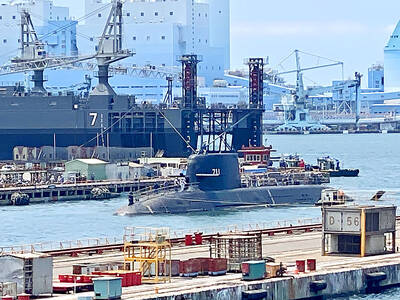
AGING: While Japan has 22 submarines, Taiwan only operates four, two of which were commissioned by the US in 1945 and 1946, and transferred to Taiwan in 1973 Taiwan would need at least 12 submarines to reach modern fleet capabilities, CSBC Corp, Taiwan chairman Chen Cheng-hung (陳政宏) said in an interview broadcast on Friday, citing a US assessment. CSBC is testing the nation’s first indigenous defense submarine, the Hai Kun (海鯤, Narwhal), which is scheduled to be delivered to the navy next month or in July. The Hai Kun has completed torpedo-firing tests and is scheduled to undergo overnight sea trials, Chen said on an SET TV military affairs program. Taiwan would require at least 12 submarines to establish a modern submarine force after assessing the nation’s operational environment and defense
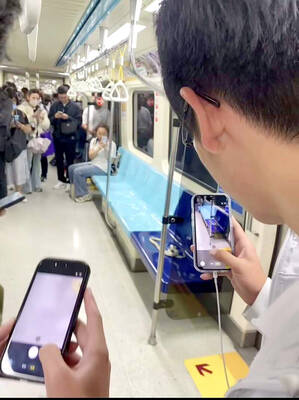
A white king snake that frightened passengers and caused a stir on a Taipei MRT train on Friday evening has been claimed by its owner, who would be fined, Taipei Rapid Transit Corp (TRTC) said yesterday. A person on Threads posted that he thought he was lucky to find an empty row of seats on Friday after boarding a train on the Bannan (Blue) Line, only to spot a white snake with black stripes after sitting down. Startled, he jumped up, he wrote, describing the encounter as “terrifying.” “Taipei’s rat control plan: Release snakes on the metro,” one person wrote in reply, referring
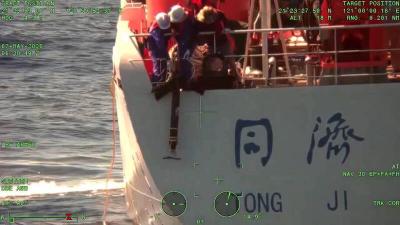
The coast guard today said that it had disrupted "illegal" operations by a Chinese research ship in waters close to the nation and driven it away, part of what Taipei sees a provocative pattern of China's stepped up maritime activities. The coast guard said that it on Thursday last week detected the Chinese ship Tongji (同濟號), which was commissioned only last year, 29 nautical miles (54km) southeast of the southern tip of Taiwan, although just outside restricted waters. The ship was observed lowering ropes into the water, suspected to be the deployment of scientific instruments for "illegal" survey operations, and the coast
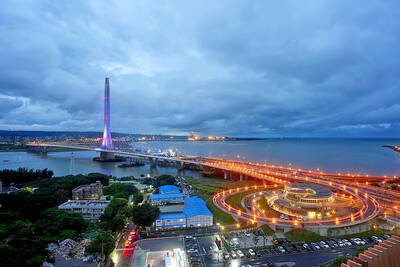
An inauguration ceremony was held yesterday for the Danjiang Bridge, the world’s longest single-mast asymmetric cable-stayed bridge, ahead of its official opening to traffic on Tuesday, marking a major milestone after nearly three decades of planning and construction. At the ceremony in New Taipei City attended by President William Lai (賴清德), Premier Cho Jung-tai (卓榮泰), Minister of Transportation and Communications Chen Shih-kai (陳世凱) and New Taipei City Mayor Hou Yu-ih (侯友宜), the bridge was hailed as both an engineering landmark and a long-awaited regional transport link connecting Tamsui (淡水) and Bali (八里)


 RSS
RSS