


An inspection of 25 restaurants near popular fishing harbors found that 80 percent did not meet sanitation standards, the Consumer Protection Committee announced on Tuesday.
Inspectors in October visited the restaurants near five major fishing ports: Jhuwei (竹圍漁港) in Taoyuan, Wuci (梧棲漁港) in Taichung, Cijin (旗津漁港) in Kaohsiung, Bisha (碧砂漁港) in Keelung and Wushih (烏石漁港) in Yilan County, it said.
The inspection consisted of six categories, including sanitation, fire and epidemic prevention, and laboratory testing of raw fish sold by 18 of the shops, the committee added.
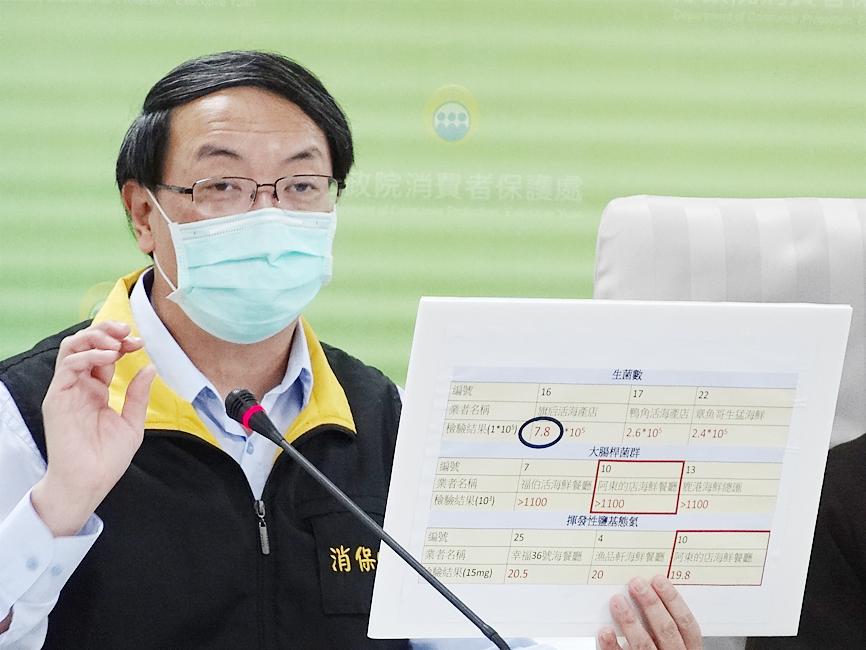
Photo: CNA
Only one restaurant — San Wei Chen Squid Noodles (三味珍小卷米粉) near the Port of Kaohsiung — passed every item, it said.
The committee has issued NT$560,000 in fines and is considering penalties for two additional restaurants, it added.
Committee ombudsman Wang Chih-hung (王志宏) said that 20 of the restaurants did not meet sanitation standards.
Inspectors found infestations of cockroaches, mosquitoes, flies and other disease vectors; food in contact with the floor; expired products; and employees who had not completed their annual health check, among other breaches, Wang said.
Fourteen of the 18 raw fish samples failed to meet food safety standards, he said.
Six of the samples exceeded acceptable levels of bacteria, while eight contained dangerous levels of E. coli and six had excessive volatile base nitrogen, which indicates freshness in seafood, Wang said.
Food with such levels of bacteria would likely trigger digestive distress if consumed, Wang added.
“The most important thing for a restaurant is sanitation,” yet inspectors even found food that had expired four years ago, committee ombudsman Wang Te-ming (王德明) said, adding that the offending product was found at Hsin Huan Kang Seafood Restaurant (新環港海鮮餐廳) in Keelung.
A Tung’s (阿東的店) in Taichung served raw fish full of E. coli, while Chi Hou Huo Seafood (旗后活海產店) in Kaohsiung served raw items with bacteria at 7.8 times the legal level, he added.
Wang Te-ming stressed the importance of public safety, as the gas canisters at 10 of the 25 restaurants failed to pass inspection.
Ching Tun Seafood Restaurant (鯨豚海鮮餐廳) in Yilan County was in particular risk of a gas explosion, with 450kg of gas hooked up without an automatic cutoff device, he said.
Of the NT$560,000 in total penalties issued, five restaurants were fined NT$420,000 for sanitation breaches and eight were fined NT$140,000 for safety breaches involving improper gas connection, Wang Te-ming said.
Additional reporting by CNA
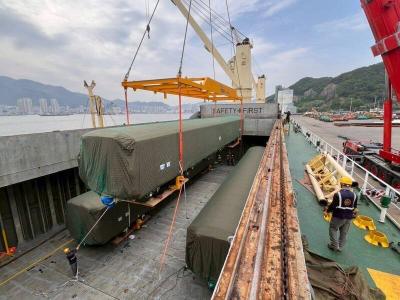
The first of 10 new high-capacity trains purchased from South Korea’s Hyundai Rotem arrived at the Port of Taipei yesterday to meet the demands of an expanding metro network, Taipei Rapid Transit Corp (TRTC) said yesterday. The train completed a three-day, 1,200km voyage from the Port of Masan in South Korea, the company said. Costing NT$590 million (US$18.79 million) each, the new six-carriage trains feature a redesigned interior based on "human-centric" transportation concepts, TRTC said. The design utilizes continuous longitudinal seating to widen the aisles and optimize passenger flow, while also upgrading passenger information displays and driving control systems for a more comfortable
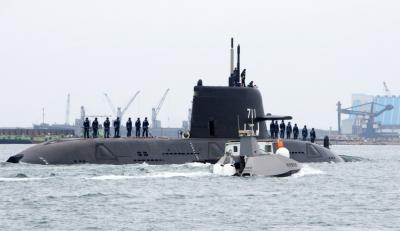
Taiwan's first indigenous defense submarine, the SS-711 Hai Kun (海鯤, or Narwhal), departed for its 13th sea trial at 7am today, marking its seventh submerged test, with delivery to the navy scheduled for July. The outing also marked its first sea deployment since President William Lai (賴清德) boarded the submarine for an inspection on March 19, drawing a crowd of military enthusiasts who gathered to show support. The submarine this morning departed port accompanied by CSBC Corp’s Endeavor Manta (奮進魔鬼魚號) uncrewed surface vessel and a navy M109 assault boat. Amid public interest in key milestones such as torpedo-launching operations and overnight submerged trials,
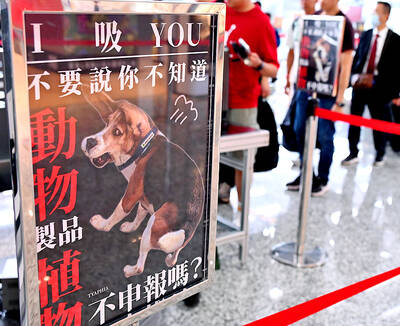
Quarantine awareness posters at Taiwan Taoyuan International Airport have gone viral for their use of wordplay. Issued by the airport branch of the Animal and Plant Health Inspection Agency, the posters feature sniffer dogs making a range of facial expressions, paired with advisory messages built around homophones. “We update the messages for holidays and campaign needs, periodically refreshing materials to attract people’s attention,” quarantine officials said. “The aim is to use the dogs’ appeal to draw focus to quarantine regulations.” A Japanese traveler visiting Taiwan has posted a photo on X of a poster showing a quarantine dog with a

Taiwan’s coffee community has launched a “one-person-one-e-mail” campaign, calling for people to send a protest-e-mail to the World Coffee Championships (WCC) urging it to redesignate Taiwanese competitors as from “Taiwan,” rather than “Chinese Taipei.” The call followed sudden action last week after the WCC changed all references to Taiwanese competitors from “Taiwan” to “Chinese Taipei,” including recent World Latte Art champion Bala (林紹興), who won the World Latte Art Championship in San Diego earlier this month. When Bala received the trophy, he was referred to as representing Taiwan, as well as in the announcement on the WCC’s Web site, until it


 RSS
RSS