


Health authorities on Saturday said that the level of obesity among Taiwanese has reached a record high, citing a study released last year that showed that 47.97 percent of adults were overweight.
Eating habits are a major reason for the increase, a Health Promotion Administration (HPA) official said, adding that many people have a habit of drinking sugary beverages or often share excessively large meals with family and friends.
The HPA said that it is alarmed by the development, especially since the agency together with the Sports Administration has for years been promoting active lifestyles, including regular exercise.
The obesity rate has increased steadily since 2009, when 38 percent of adults were overweight, HPA data showed. Last year’s study included data of 4,280 people throughout Taiwan.
The HPA classifies people with a body mass index of 24kg/m2 or greater as overweight and those with an index of 30kg/m2 as obese.
The WHO classified obesity as a chronic disease that increases the risk of cardiovascular disease, dyslipidemia, high blood pressure, diabetes, kidney and liver diseases, and metabolic syndrome.
Kuo Po-hsiu (郭柏秀), a professor of epidemiology and preventive medicine at National Taiwan University’s (NTU) College of Public Health, said obesity is a global phenomenon, adding that the main causes are diet, level of physical activity, lifestyle, and social and environmental conditions, with genetic factors also playing a role.
“The main contributing factor is people’s diet. For example, one cup of a tea beverage with the full amount of sugar could contain 80 percent of the daily recommended sugar intake. The food industry has increased the amount of sugar and fat in many products to attract customers. The popularity of fried donuts is one such example,” she said.
“Stress also affects hormone levels. Many people are working prolonged hours and do not exercise regularly, which can lead to a hormonal imbalance and result in them gaining weight,” Kuo said.
Lin Wan-yu (林菀俞), an associate professor at the same department, said that jogging is one effective way to lose weight, especially if it is combined with a balanced diet.
However, people with cardiovascular conditions should consult a doctor before taking up physical exercise, Lin said.
HPA Community Health Division head Lo Shu-ying (羅素英) said that the agency is planning to collaborate with local governments to provide incentives to the public to take up physical exercise and healthy lifestyles.


UPGRADE: The Kang Ding-class frigate is replacing its Chaparall missiles with Tien Chien II and Hua Yang VLS, which would provide it with long-range, 360° air defense Taiwan plans to produce 1,200 to 1,376 Hai Chien II missiles (海劍二, Sea Sword II) — also known as TC-2N — to serve as the standard air defense system of the navy’s surface combatant fleet, a source said yesterday. Last week, the Hai Chien II, the naval version of the Tien Kung II missile (天劍二, Sky Sword II), completed a live-fire test in waters off the National Chungshan Institute of Science and Technology’s Jiupeng facility (九鵬) in Pingtung County’s Manjhou Township (滿州). The MIM72 Chaparral and other dated air defense missiles that currently arm Taiwanese ships have inadequate range to combat Chinese

REASONS FOR TRAVEL: An assistant professor said that proposed amendments to penalize drivers if they used drugs overseas would not deter people from traveling People who operate a motor vehicle under the influence of marijuana would have their driver’s license revoked, even if they used the substance while overseas, the Ministry of Transportation and Communications said yesterday, citing proposed amendments to the Road Traffic Management and Penalty Act (道路交通管理處罰條例). The amendments would also authorize the government to revoke the licenses of people determined to have used Category 1 or Category 2 narcotics, even if they were not operating a vehicle while under the influence of drugs, as well as ban them from taking the license test for three years, the ministry said. People aged 18 or
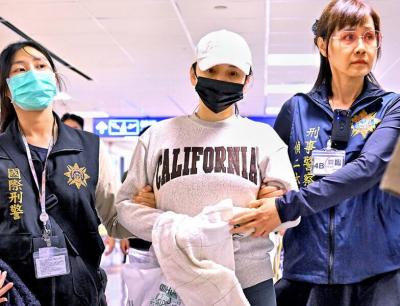
Johanne Liou (劉喬安), a Taiwanese woman who shot to unwanted fame during the Sunflower movement protests in 2014, returned to Taiwan last night after being deported from the US. She is to stand trial in Taiwan for charges involving embezzlement, fraud and drug crimes. The Criminal Investigation Bureau (CIB) said it took her into custody at Taiwan Taoyuan International Airport and would first question her before transferring her to the New Taipei District Prosecutors’ Office. She was arrested upon disembarking a flight from San Francisco that landed shortly before 7pm. Liou absconded to the US in 2019 after jumping bail
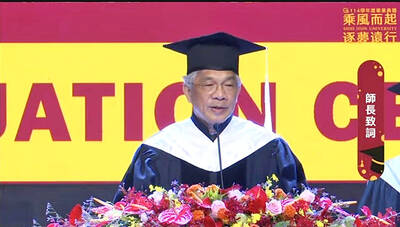
Shih Hsin University President Chen Ching-he (陳清河) yesterday issued a public apology for comments made in his commencement speech last week, stating that he has asked the school to suspend his duties and halt his wages for two months as a show of contrition. At the commencement ceremony on May 30, Chen said, “If you don’t manage your time well, or your own emotions, or your health, then I am telling every one of you — put a quick end to ‘you,’ because the world has no need for ‘you.’” The comments have sparked significant controversy online, and Chen through an open


 RSS
RSS