

Facebook users yesterday flooded the WHO’s social media page with creative expressions of support after discovering that the page was blocking comments that mentioned Taiwan, days after representatives to the World Health Assembly (WHA) in Geneva, Switzerland, were cut off for voicing support for the nation’s participation.
Starting on Wednesday night, some users reported seeing an error message when attempting to post comments containing “Taiwan” or “Formosa” on a livestream of the 73rd WHA meeting, which began on Monday and is to conclude tomorrow.
Commenters got creative in their efforts to bypass the censor, using special characters, foreign scripts and creative formatting such as “T@!wan c@n help.”
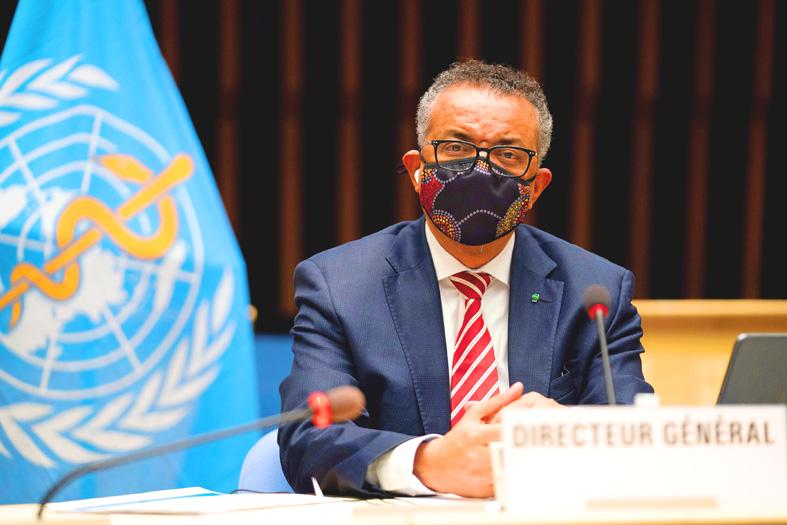
Photo: REUTERS
Local politicians also joined in with their own versions of the slogan.
Above a screenshot of his comment reading “T!a!i!w!a!n !C!a!n! H!e!l!p!” and “#Keelungcanhelp,” Keelung Mayor Lin Yu-chang (林右昌) said that Taiwan has performed better than other countries during the pandemic and has even donated supplies, only to have its name disappear.
Facebook in a statement told Agence France-Presse that it “did not take any action against a livestream on the World Health Organization’s Facebook Page earlier today (including restricting keywords or disabling comments).”
However, it also mentioned that page administrators have access to a range of moderation tools that include blocking certain words.
The nation has instructed its office in Geneva to lodge a complaint with the WHO and bitterly regrets the organization’s conduct, Minister of Foreign Affairs Joseph Wu (吳釗燮) told reporters at the Legislative Yuan in Taipei.
Support for Taiwan’s participation in the WHA is growing, Wu said.
From Europe, the US and Latin America to Africa, more than 1,700 legislators have stood up for Taiwan, he said, adding that this is the international consensus.
The nation would continue to strive for greater support, Wu added.
Asked about the incident at a news briefing, Ministry of Foreign Affairs spokeswoman Joanne Ou (歐江安) said that the WHO’s Facebook page is not only blocking comments about Taiwan, but also considers those containing “China,” “Wuhan” and “[Chinese President] Xi Jinping” to be spam.
“By blocking messages of protest, the WHO has already deviated from its professionally neutral stance,” she said. “Its censorship will certainly receive harsh international criticism, as will China’s undue influence on the organization.”
The WHO has repeatedly extorted the world to band together to fight the COVID-19 pandemic, but has refused to invite Taiwan to participate in the WHA out of political considerations, Ou said.
This not only disregards the right to health of 23.5 million Taiwanese, but also flies in the face of the WHO’s own charter, which ironically proclaims to strive for “health for all,” she added.
At the WHA on Tuesday, the chair of a session meeting interrupted representatives from Taiwanese allies Belize and the Kingdom of Eswatini after they praised the nation’s pandemic efforts and called for its participation, saying that the item was not on the agenda.
The chair also ordered the session moderator to stop playing a prerecorded message from Palau after the representative decried Taiwan’s exclusion, again citing its absence from the agenda.
As of yesterday, delegates of the US, Australia, Japan, New Zealand, Haiti, Belize, Eswatini, Nicaragua, St Kitts and Nevis, Honduras, Nauru, Guatemala, Palau, Tuvalua and the Marshall Islands have voiced support for Taiwan’s participation by speaking or submitting written statements at the assembly, the ministry said.
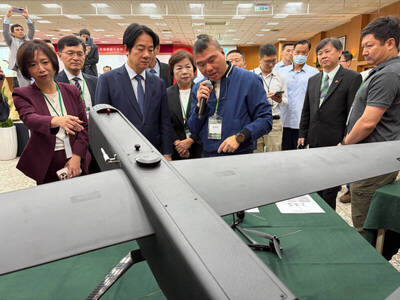
Two executives of drone supplier Jiin Ming Industry Co (錦明實業) have been detained and held incommunicado over the company's alleged use of prohibited China-made chips and camera lenses in drones supplied under recent military contracts, the Taoyuan District Prosecutors' Office said today. In a statement, prosecutors said they raided the offices of Jiin Ming — headquartered in Taoyuan — as well as those of its subsidiaries and its suppliers on Thursday last week. The raids followed a report that the company had breached its procurement contracts by putting the prohibited components into drones delivered to the military. During the raids, prosecutors summoned
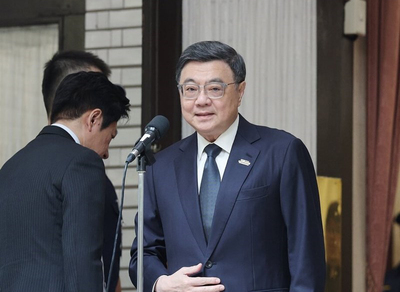
The government would continue monitoring online rumors that a pneumonic plague outbreak has spread from Russia into China and could enhance existing quarantine measures, Premier Cho Jung-tai (卓榮泰) said today. During a legislative meeting, Democratic Progressive Party Legislator Wang Ting-yu (王定宇) said rumors were circulating that the disease had spread across several Chinese provinces. He asked Cho whether the government was prepared to prevent the disease from spreading to Taiwan, given the frequent exchanges between Taiwan and China, and how concerned the government was about the alleged outbreak. The Ministry of Health and Welfare implemented border quarantine measures after briefing the Executive Yuan
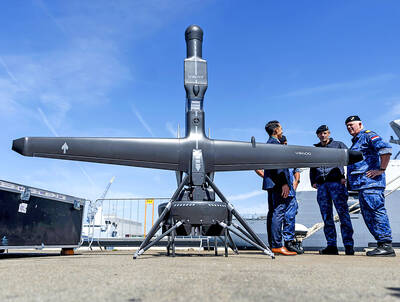
DEFENSE PROCUREMENT: Taiwan could become the largest operator of V-BAT drones outside the US once they are delivered, the Ministry of National Defense said The navy and the coast guard are acquiring 292 units of MQ-35A V-BAT vertical takeoff and landing (VTOL) surveillance drones manufactured by US-based defense technology company Shield AI, making Taiwan one of the largest buyers of the drone. The Coast Guard Administration budgeted NT$1.2 billion (US$37.1 million) to buy 12 drones, which have been delivered, Shield AI said in a report on Oct 13. The navy is planning to spend NT$36 billion under a four-year program code-named Project Yuan Xiao (遠鴞) to acquire 280 V-BAT drones, the Ministry of National Defense’s fiscal 2027 report showed. The combined procurement is expected

South Korean boy band BigBang drew 120,000 fans to three concerts at Taipei Dome from Friday through yesterday, as the band thanked them for their support over their 20-year career. The Taipei Dome concerts were part of BigBang's "2026-2027 World Tour XX: Cosmos." Friday's concert was BigBang's first performance in Taiwan in 11 years. During the encore, group leader G-Dragon (GD) shouted "I love you" in Chinese and said he was especially happy to perform in Taiwan with bandmates Taeyang and Daesung. "Taipei, I'm very grateful to you all," GD said in Chinese, asking fans to wait for the band's return. Daesung thanked


 RSS
RSS