


Chinese Nationalist Party (KMT) lawmakers have proposed amendments to the Criminal Code to bar offenders who have consumed alcohol or illegal drugs before their deeds from receiving acquittals or reduced sentences.
Citing the example of the High Court acquitting a man surnamed Liang (梁), who in 2018 stabbed his mother to death and decapitated her, KMT Legislator Wan Mei-ling (萬美玲) on Wednesday said that “Liang was convicted of murder, receiving a life term in the first ruling.”
“The High Court’s second ruling in August acquitted him, as the judges said that Liang had no control over his actions due to a drug-induced psychosis after consuming amphetamines,” Wan said.
The High Court ruling was based on Article 19 of the Criminal Code, which states that an offense is not punishable if the person who committed it has a mental disorder or disability that renders them unable or less able to judge their actions.
The High Prosecutors’ Office appealed the High Court ruling on Tuesday, citing four major flaws. The Supreme Court subsequently ordered a retrial by the High Court.
“The High Court’s acquittal led to a huge public outcry. People are worried that offenders will have impunity. If an offender gets drunk or takes drugs, and then kills someone, the courts would not convict them,” Wan said. “Article 19 of the Criminal Code needs to be fixed.”
KMT Legislator Hung Mong-kai (洪孟楷) also said that an amendment to the article is needed.
KMT Legislator Wen Yu-hsia (溫玉霞) said that she plans to propose an amendment to stipulate that conditions for an acquittal or a reduced sentence cannot be applied for offenders who carry out random attacks or kill public officials on duty.
“If mental disorders are considered a reason for an acquittal, offenders can kill people with impunity. It is like encouraging criminals to do so, to copy the behavior and carry out more crimes,” she said. “This loophole must be closed to put the public at ease.”
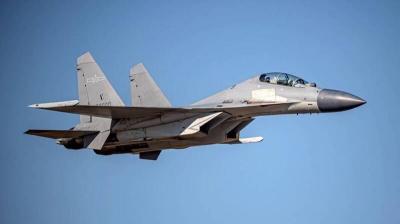
Eight Chinese naval vessels and 24 military aircraft were detected crossing the median line of the Taiwan Strait between 6am yesterday and 6am today, the Ministry of National Defense said this morning. The aircraft entered Taiwan’s northern, central, southwestern and eastern air defense identification zones, the ministry said. The armed forces responded with mission aircraft, naval vessels and shore-based missile systems to closely monitor the situation, it added. Eight naval vessels, one official ship and 36 aircraft sorties were spotted in total, the ministry said.
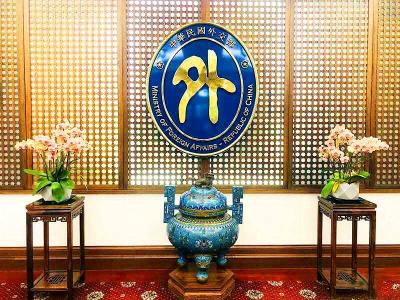
The Ministry of Foreign Affairs (MOFA) today said that if South Korea does not reply appropriately to its request to correct Taiwan’s name on its e-Arrival card system before March 31, it would take corresponding measures to alter how South Korea is labeled on the online Taiwan Arrival Card system. South Korea’s e-Arrival card system lists Taiwan as “China (Taiwan)” in the “point of departure” and “next destination” fields. The ministry said that it changed the nationality for South Koreans on Taiwan’s Alien Resident Certificates from “Korea” to “South Korea” on March 1, in a gesture of goodwill and based on the

Taiwanese officials were shown the first of 66 F-16V fighter jets purchased by Taiwan from the United States, the Ministry of National Defense said yesterday, adding the aircraft has completed an initial flight test and is expected to be delivered later this year. A delegation led by Deputy Minister of National Defense Hsu Szu-chien (徐斯儉) visited Lockheed Martin’s F-16 C/D Block 70 (also known as F-16V) assembly line in South Carolina on March 16 to view the aircraft. The jet will undergo a final acceptance flight in the US before being delivered to Taiwan, the
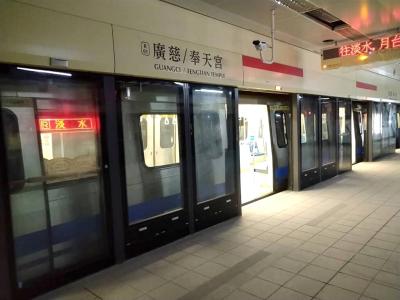
The New Taipei Metro's Sanyin Line and the eastern extension of the Taipei Metro's Tamsui-Xinyi Line (Red Line) are scheduled to begin operations in June, the National Development Council said today. The Red Line, which terminates at Xiangshan Station, would be connected by the 1.4km extension to a new eastern terminal, Guangci/Fengtian Temple Station, while the Sanyin Line would link New Taipei City's Tucheng and Yingge stations via Sanxia District (三峽). The council gave the updates at a council meeting reviewing progress on public construction projects for this year. Taiwan's annual public infrastructure budget would remain at NT$800 billion (US$25.08 billion), with NT$97.3


 RSS
RSS