


The Kuroshio Ocean Education Foundation yesterday held a news conference in Taipei to highlight the environmental dangers posed by fishing waste and urge the government to take swift and systematic action.
Forty environmentalists from the foundation and environmental consultancy IndigoWaters Institute surveyed 19 coastal communities to produce the nation’s first illustrated report on fishing waste, finding that gillnets pose a particularly urgent threat to marine ecology.
While the Environmental Protection Administration is in charge of onshore waste produced from daily consumption, there is no systematic disposal among government agencies of waste fishing gear that poses a danger to marine life, foundation executive director Chang Hui-chun (張卉君) said.
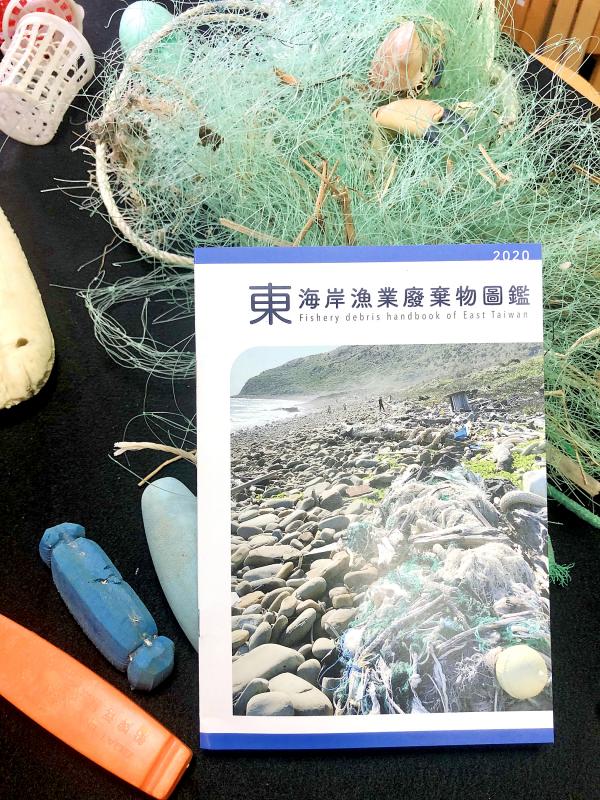
Photo: Lo Chi, Taipei Times
The Hualien-based foundation over the past year worked with IndigoWaters to document the fishing gear that is often discarded nationwide and interview fishers at ports in eastern Taiwan to produce the report, she said.
With the handbook, they hope to understand fishers’ use of the gear, raise public awareness about the impact of abandoned gear and prompt more government action to tackle the problem, Chang said.
About half of the nation’s fishing boats, including most independent fishers, practice near-shore gillnetting, with 7,662 boats engaged in the practice full-time and 2,524 boats using it part-time, the Ocean Conservation Administration (OCA) said.
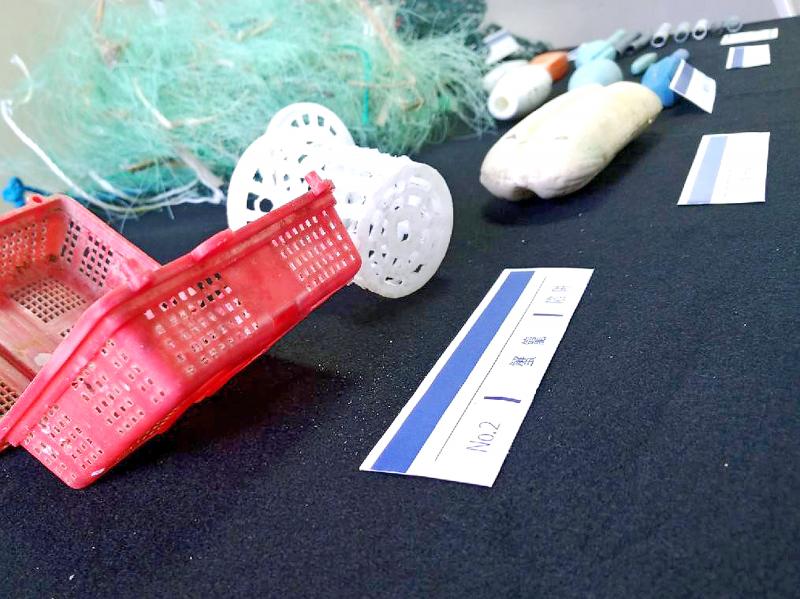
Photo: CNA
Discarded fishing gear could pose a threat to navigation safety or become “ghost nets,” trapping more marine animals that are attracted by fish stuck on the nets, institute executive director Yen Ning (顏寧) said.
They could also decompose into microplastic debris, absorb persistent organic pollutants or release toxic substances in the water, she added.
For the report, Yen interviewed fishers at 14 ports along the east coast who told her that some of their colleagues would purposefully throw old nets into the ocean, but most are concerned about environmental issues and told the researchers which nets were from Taiwanese fishers and which washed in from elsewhere.
Of more than 100 tonnes of garbage collected from waters near Taiwan last year, waste fishing gear made up 60 tonnes — the most among all garbage, she said, citing OCA data.
In January, a 24m-long dead blue whale washed ashore on Taitung County’s coast, and the creature was entangled in fishing nets and might have starved to death, she said.
Nearly 10 percent of sea turtles stranded on Taiwan’s shores were found entangled in fishing nets as well, she said, calling for better management of such marine trash.
Fisheries Agency Boats Administration Section chief Chiu Yi-hsien (邱宜賢) at the news conference said that the agency on Aug. 31 released draft regulations on gillnetting to be implemented in July next year.
According to the new measures, a fishing boat’s registration number must be displayed on each of the net’s buoys, which are placed at 50m intervals, Chiu said.
If fishers are unable to recover a net, they must notify government authorities, who would clear the debris and keep track of hotspot areas, he said, adding that the fisher would not be punished if authorities fail to recover the net.
However, those who fail to identify their gear when fishing would face a fine of NT$30,000 to NT$150,000, he said.
Fishers who lose their gear, but do not report to local authorities would face the same fine, he added.
Separately, the OCA said it has commissioned New Taipei City, Chiayi County, Taoyuan and Keelung governments to collect waste fishing gear, analyze their components and calculate the costs needed for their recycling and reuse.
It has also commissioned Penghu and Kinmen county governments to use polystyrene foam reduction facilities donated by Lite-On Technology Corp to boost the disposal efficiency of such waste, the OCA said.
The two measures would be promoted in other municipalities if they prove feasible, it said.

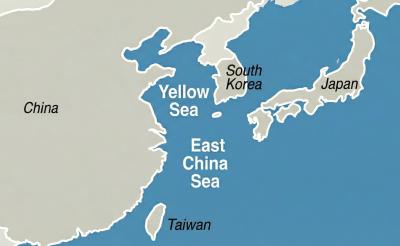
China has reserved offshore airspace in the Yellow Sea and East China Sea from March 27 to May 6, issuing alerts usually used to warn of military exercises, although no such exercises have been announced, the Wall Street Journal (WSJ) reported yesterday. Reserving such a large area for 40 days without explanation is an “unusual step,” as military exercises normally only last a few days, the paper said. These alerts, known as Notice to Air Missions (Notams), “are intended to inform pilots and aviation authorities of temporary airspace hazards or restrictions,” the article said. The airspace reserved in the alert is

More than 6,000 Taiwanese students have participated in exchange programs in China over the past two years, despite the Mainland Affairs Council’s (MAC) “orange light” travel advisory, government records showed. The MAC’s publicly available registry showed that Taiwanese college and university students who went on exchange programs across the Strait numbered 3,592 and 2,966 people respectively. The National Immigration Agency data revealed that 2,296 and 2,551 Chinese students visited Taiwan for study in the same two years. A review of the Web sites of publicly-run universities and colleges showed that Taiwanese higher education institutions continued to recruit students for Chinese educational programs without

A bipartisan group of US senators has introduced a bill to enhance cooperation with Taiwan on drone development and to reduce reliance on supply chains linked to China. The proposed Blue Skies for Taiwan Act of 2026 was introduced by Republican US senators Ted Cruz and John Curtis, and Democratic US senators Jeff Merkley and Andy Kim. The legislation seeks to ease constraints on Taiwan-US cooperation in uncrewed aerial systems (UAS), including dependence on China-sourced components, limited access to capital and regulatory barriers under US export controls, a news release issued by Cruz on Wednesday said. The bill would establish a "Blue UAS
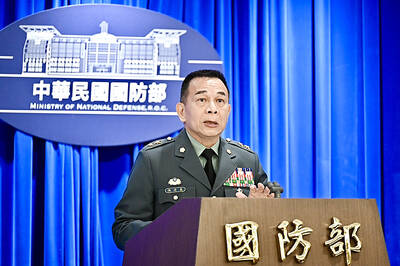
The Republic of China Army Command yesterday relieved Kinmen Defense Battalion commander after authorities indicted the officer on charges connected to using methamphetamine. The Kinmen District Prosecutors’ Office on Wednesday detained Colonel He (何) after the Coast Guard linked him to drug shipments and proceeded to charge him yesterday for using and possessing crystal meth. The man was released on a NT$50,000 bail and banned from leaving Kinmen, the office said. Army Chief of Staff Lieutenant General Chen Chien-yi (陳建義) told a news conference yesterday that He has been removed and another officer is taking over the unit as the acting commander. The military


 RSS
RSS