


The public should pay greater attention to the issue of “digital sexual violence,” and people whose private images have been disseminated without their consent should seek help, the Taipei Women’s Rescue Foundation said yesterday.
“In recent years, with the advancement of Internet technology, ‘digital sexual violence’ has become a new type of crime that knows no bounds,” the foundation said.
People’s private sexual images continue to be distributed without their consent, as shown by media reports, so the foundation in 2015 established a hotline and Web site to help victims, and their family and friends, consult with professionals, it said.

Photo: CNA
From 2015 to June, the hotline served 374 people, foundation chief executive officer Tu Ying-chiu (杜瑛秋) told a news conference at the Ama Museum in Taipei.
The news conference was held to coincide with this year’s Qixi Festival, also known as Lovers’ Day, which is celebrated on the seventh day of the seventh month of the lunar calendar.
People aged 21 to 25 made up the majority, or 24 percent, of callers to the hotline, followed by people aged 26 to 30 at 13 percent, a foundation report said.
Twenty-three percent of the callers declined to disclose their age, or the foundation had no age data for them, the report added.
Nearly 92 percent were female callers, while about 8 percent were male, it said.
For 45 percent of the callers, the party who possessed their private images was a former or current partner, the foundation said.
For 20 percent of the callers, it was an “online friend” who they had never met before, while for 12 percent of them, it was a peer or coworker, it said.
Victim blaming and self-blame are reasons victims often do not seek help, Tu said, citing foundation observations.
The foundation yesterday released a video featuring its charity ambassador, entertainer Huang Lu Tzu-yin (黃路梓茵), also known by her stage name “LuLu,” to encourage victims to seek help and to raise awareness about digital sexual violence.
Using Huang’s influence among adolescents, the foundation hopes to teach them about how to prevent digital sexual violence, it said.
The video, which was recorded in Chinese, is about four-and-a-half minutes long and can be viewed on YouTube.
It takes great courage for victims to seek help, said Albee Chang (張艾筆), executive producer of the video.
The expectations that society places on women and their relationships form a part of their self-identity, foundation chairwoman Theresa Yeh (葉德蘭) said, urging people to work together toward creating a culture where it is “easy for women to refuse” requests for private photographs or videos.

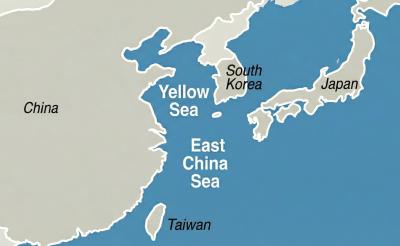
China has reserved offshore airspace in the Yellow Sea and East China Sea from March 27 to May 6, issuing alerts usually used to warn of military exercises, although no such exercises have been announced, the Wall Street Journal (WSJ) reported yesterday. Reserving such a large area for 40 days without explanation is an “unusual step,” as military exercises normally only last a few days, the paper said. These alerts, known as Notice to Air Missions (Notams), “are intended to inform pilots and aviation authorities of temporary airspace hazards or restrictions,” the article said. The airspace reserved in the alert is

South Korea is planning to revise its controversial electronic arrival card, a step Taiwanese officials said prompted them to hold off on planned retaliatory measures, a South Korean media report said yesterday. A Yonhap News Agency report said that the South Korean Ministry of Foreign Affairs is planning to remove the “previous departure place” and “next destination” fields from its e-arrival card system. The plan, reached after interagency consultations, is under review and aims to simplify entry procedures and align the electronic form with the paper version, a South Korean ministry official said. The fields — which appeared only on the electronic form

More than 6,000 Taiwanese students have participated in exchange programs in China over the past two years, despite the Mainland Affairs Council’s (MAC) “orange light” travel advisory, government records showed. The MAC’s publicly available registry showed that Taiwanese college and university students who went on exchange programs across the Strait numbered 3,592 and 2,966 people respectively. The National Immigration Agency data revealed that 2,296 and 2,551 Chinese students visited Taiwan for study in the same two years. A review of the Web sites of publicly-run universities and colleges showed that Taiwanese higher education institutions continued to recruit students for Chinese educational programs without

A bipartisan group of US senators has introduced a bill to enhance cooperation with Taiwan on drone development and to reduce reliance on supply chains linked to China. The proposed Blue Skies for Taiwan Act of 2026 was introduced by Republican US senators Ted Cruz and John Curtis, and Democratic US senators Jeff Merkley and Andy Kim. The legislation seeks to ease constraints on Taiwan-US cooperation in uncrewed aerial systems (UAS), including dependence on China-sourced components, limited access to capital and regulatory barriers under US export controls, a news release issued by Cruz on Wednesday said. The bill would establish a "Blue UAS


 RSS
RSS