


The Ministry of Education yesterday unveiled eight measures designed to ensure the quality of graduate theses following allegations of plagiarism and writing by proxies.
The measures include establishing a mechanism for investigating schools that fail to properly evaluate theses, or fail to hold faculty members involved in thesis-related infractions responsible, and adjusting enrollment at these institutions, either by enforcing lower enrollment or even zero enrollment.
The ministry would also publicly announce the ratio of theses not made public at each institution, as well as the ratio of oral defense evaluation committee members hired through “special circumstances,” as well as the school’s rationale behind hiring committee members through such circumstances.
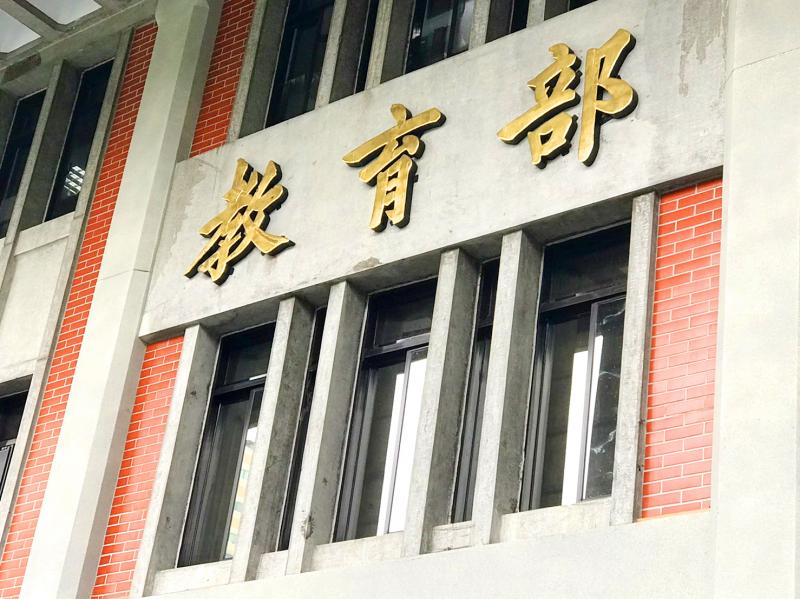
Photo: Rachel Lin, Taipei Times
The ministry introduced the measures following recent cases in which doubts surrounding a number of individuals’ theses brought the issue of academic ethics into question, Higher Education Director-General Chu Chun-chang (朱俊彰) said.
The cases also raised doubts about the quality of education at various institutions, as well as these institutions’ mechanisms for controlling the quality of students’ theses, he said, adding that the ministry hopes to resolve the issue by supervising schools and implementing the eight measures.
The measures, which are to be implemented next year, aim to improve the quality of local degree programs.
If a student’s thesis is called into question, their adviser would also be held accountable, Chu said. Institutions that fail to hold offending students and their advisers accountable would have their enrollment cut or canceled for the year and would have their scholarship programs reduced, among other disciplinary actions, he said.
In some cases, all instructors at the school might be prohibited from supervising graduate students for the year, he added.
The ministry will also work with the National Central Library to develop a system for cross-checking theses, as well as a similar system for journal articles, to prevent plagiarism, he said, adding that the systems would be made available to instructors at all institutions.
Cases where students are suspected of employing proxy writers for their theses would be investigated by the ministry, he said.
The ministry earlier this year established an office to investigate the matter and had already identified 60 theses that were written by proxies, he said.
A number of theses touched upon classified information or patents, which are protected by law and cannot be made public, he said.
On the other hand, some institutions failed to make public theses that are 10 years old or more, which are not protected by law and should be made publicly available, he said, adding that the ministry would order these institutions to look into the matter.

LOUD AND PROUD Taiwan might have taken a drubbing against Australia and Japan, but you might not know it from the enthusiasm and numbers of the fans Taiwan might not be expected to win the World Baseball Classic (WBC) but their fans are making their presence felt in Tokyo, with tens of thousands decked out in the team’s blue, blowing horns and singing songs. Taiwanese fans have packed out the Tokyo Dome for all three of their games so far and even threatened to drown out home team supporters when their team played Japan on Friday. They blew trumpets, chanted for their favorite players and had their own cheerleading squad who dance on a stage during the game. The team struggled to match that exuberance on the field, with
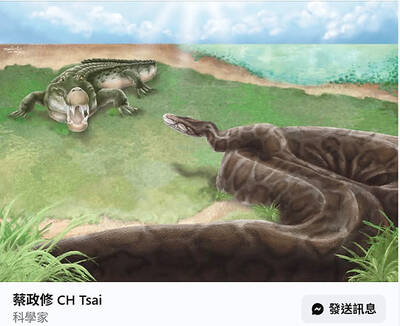
Taiwanese paleontologists have discovered fossil evidence that pythons up to 4m long inhabited Taiwan during the Pleistocene epoch, reporting their findings in the international scientific journal Historical Biology. National Taiwan University (NTU) Institute of Ecology and Evolutionary Biology associate professor Tsai Cheng-hsiu (蔡政修) led the team that discovered the largest snake fossil ever found in Taiwan. The single trunk vertebra was discovered in Tainan at the Chiting Formation, dated to between 400,000 and 800,000 years ago in the Middle Pleistocene, the paper said. The area also produced Taiwan’s first avian fossil, as well as crocodile, mammoth, saber-toothed cat and rhinoceros fossils, it said. Discoveries

Taiwanese paleontologists have discovered fossil evidence that pythons up to 4m long inhabited Taiwan during the Pleistocene epoch, reporting their findings in the international scientific journal Historical Biology. National Taiwan University (NTU) Institute of Ecology and Evolutionary Biology associate professor Tsai Cheng-hsiu (蔡政修) led the team that discovered the largest snake fossil ever found in Taiwan. A single trunk vertebra was discovered in Tainan at the Chiting Formation, dated to between 800,000 to 400,000 years ago in the Middle Pleistocene, the paper said. The area also produced Taiwan’s first avian fossil, as well as crocodile, mammoth, sabre-toothed cat and rhinoceros fossils, it said. Discoveries
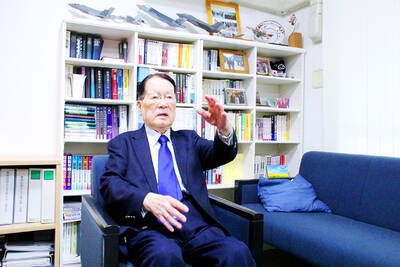
Whether Japan would help defend Taiwan in case of a cross-strait conflict would depend on the US and the extent to which Japan would be allowed to act under the US-Japan Security Treaty, former Japanese minister of defense Satoshi Morimoto said. As China has not given up on the idea of invading Taiwan by force, to what extent Japan could support US military action would hinge on Washington’s intention and its negotiation with Tokyo, Morimoto said in an interview with the Liberty Times (sister paper of the Taipei Times) yesterday. There has to be sufficient mutual recognition of how Japan could provide


 RSS
RSS