


The Taipei City Government should create more facilities to help boost the “rainbow economy,” the economic power driven by demand from the LGBT+ community, Taipei City Councilor Hsu Shu-hua (許淑華) said on Saturday.
Taiwan last year made headlines internationally for legalizing same-sex marriage, but the Taipei City Government has yet to realize the potential for increased tourism that the nation being the first in Asia to legalize same-sex marriage could bring, the Democratic Progressive Party member said.
Hsu said that her constituency, which includes Songshan (松山) and Xinyi (信義) districts, have many tourist attractions that could entice international visitors, so if the city government introduced same-sex elements to promote such areas, it would help attract more international visitors.
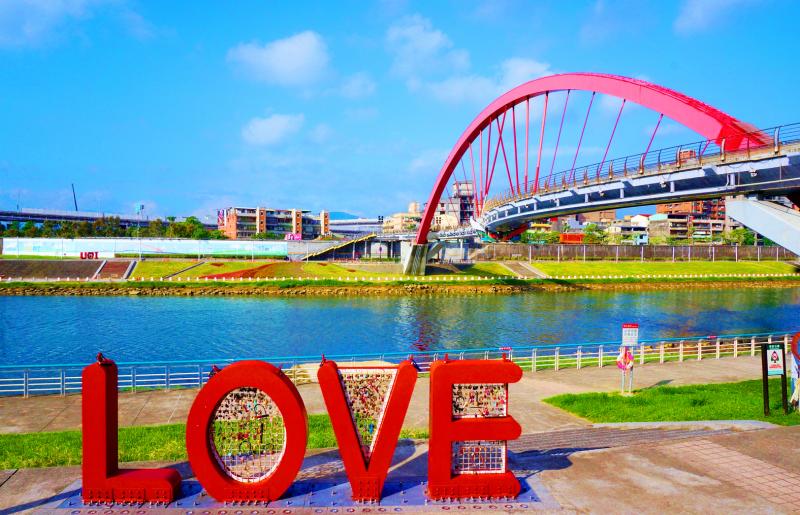
Photo: Ho Shih-chang, Taipei Times
The Taipei Public Works Department could paint the bridge near Rainbow Riverside Park (彩虹河濱公園) in Neihu District (內湖) in rainbow hues to create a unique landmark, Hsu said.
The Taipei Tourism Department should come up with a marketing plan within the month, Hsu said.
The Tourism Department said it had begun focusing on a same-sex theme last year, including designing a rainbow-colored logo, establishing rainbow-themed art in the Ximending (西門町) area and at the 228 Memorial Park.
It installed rainbow-colored lamplights and banners for this year’s Pride Parade, and is planning an art installation at the Taipei City Hall plaza by September.
The Public Works Department said the bridge near Rainbow Riverside Park was repainted in 2017 and its next repainting would be in seven to 10 years, but it would keep Hsu’s suggestions in mind when the time comes for the next paint job.
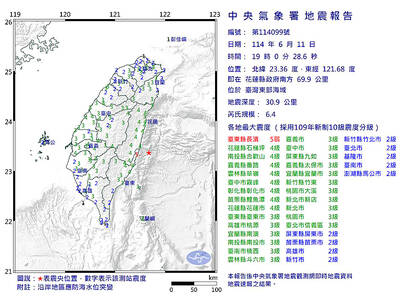
A magnitude 6.4 earthquake struck off the coast of Hualien County in eastern Taiwan at 7pm yesterday, the Central Weather Administration (CWA) said. The epicenter of the temblor was at sea, about 69.9km south of Hualien County Hall, at a depth of 30.9km, it said. There were no immediate reports of damage resulting from the quake. The earthquake’s intensity, which gauges the actual effect of a temblor, was highest in Taitung County’s Changbin Township (長濱), where it measured 5 on Taiwan’s seven-tier intensity scale. The quake also measured an intensity of 4 in Hualien, Nantou, Chiayi, Yunlin, Changhua and Miaoli counties, as well as
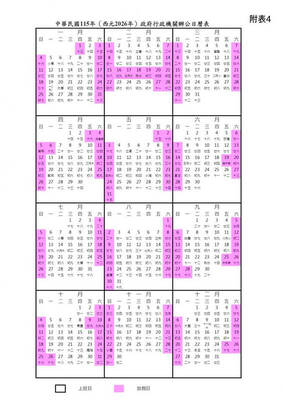
Taiwan is to have nine extended holidays next year, led by a nine-day Lunar New Year break, the Cabinet announced yesterday. The nine-day Lunar New Year holiday next year matches the length of this year’s holiday, which featured six extended holidays. The increase in extended holidays is due to the Act on the Implementation of Commemorative and Festival Holidays (紀念日及節日實施條例), which was passed early last month with support from the opposition Chinese Nationalist Party (KMT) and Taiwan People’s Party. Under the new act, the day before Lunar New Year’s Eve is also a national holiday, and Labor Day would no longer be limited

COMMITMENTS: The company had a relatively low renewable ratio at 56 percent and did not have any goal to achieve 100 percent renewable energy, the report said Pegatron Corp ranked the lowest among five major final assembly suppliers in progressing toward Apple Inc’s commitment to be 100 percent carbon neutral by 2030, a Greenpeace East Asia report said yesterday. While Apple has set the goal of using 100 percent renewable energy across its entire business, supply chain and product lifecycle by 2030, carbon emissions from electronics manufacturing are rising globally due to increased energy consumption, it said. Given that carbon emissions from its supply chain accounted for more than half of its total emissions last year, Greenpeace East Asia evaluated the green transition performance of Apple’s five largest final
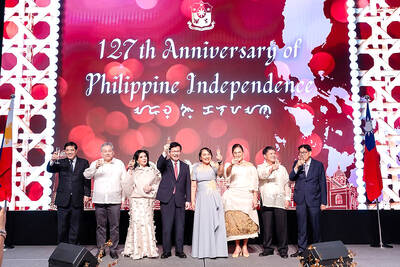
Taiwan is to extend its visa-waiver program for Philippine passport holders for another year, starting on Aug. 1, Minister of Foreign Affairs Lin Chia-lung (林佳龍) said on Friday. Lin made the announcement during a reception in Taipei marking the 127th anniversary of Philippine independence and the 50th anniversary of the establishment of the Manila Economic and Cultural Office (MECO) in Taiwan, the Ministry of Foreign Affairs said. The decision reflected Taiwan’s commitment to deepening exchanges with the Philippines, the statement cited Lin as saying, adding that it was a key partner under the New Southbound Policy launched in 2016. Lin also expressed hope


 RSS
RSS