


The rate of myopia among children in elementary school last year was 44.35 percent, a record low over the past decade, Health Promotion Administration (HPA) data showed.
Given the high rate of myopia, also known as nearsightedness, in Taiwan, the government has in the past few years promoted children’s vision protection, and the HPA launched its “Vision Protection 123” campaign.
The HPA said that vision is like a “bankbook,” and parents should teach children to keep their eyes healthy and protect their vision from a young age, to prevent reduced vision later in life.
The agency’s campaign encourages parents to have their children’s eyes examined one to two times per year.
Children under the age of two should not watch screens, and parents should limit screen time for children over two years old, the HPA said.
Children should spend about two to three hours outdoors every day, and rest their eyes for 10 minutes after every 30 minutes of continuous screen time, it said.
The effort has had some positive effects, as the myopia rate in elementary-school students has fallen by 5 percent from 49.1 percent 10 years ago, it said.
Heavy academic pressure might cause students’ vision to worsen as they get older, as the myopia rate among sixth and seventh graders is 62.75 percent and 69.38 percent respectively, the agency said.
The myopia rate among junior-high school students was 73.59 percent, it added.
Tri-Service General Hospital Ophthalmology Department director Lu Da-wen (呂大文) said it is better to start improving myopia rates with preschool children.
The EU recommends a daily screen time limit of less than one hour for children under the age of six.
HPA Director-General Wang Ying-wei (王英偉) said that myopia prevention should start early, as it is a permanent condition and their diopter level — a unit of measurement of the refractive power of a corrective lens — can even fall by about 0.75 to 1 diopter per year.
Lu said that if elementary-school students with myopia reach 5 diopters by the time they graduate, they likely might have high myopia, at greater than 10 diopters, by the time they reach adulthood.
High myopia carries increased risks of glaucoma, cataracts, macular degeneration and retinal detachment, Lu added.
Most cataract cases were caused by high myopia, and the life-long risk of blindness in Asians with cataracts is about 25 percent, he said.
Commenting on a Nature magazine article that suggested that exposure to sunlight might increase the production of dopamine in the retina and prevent myopia, Lu said the study showed that the degrees of myopia in school-aged children in Australia were lower than those in Singapore, and that Australian children spent about two to three more hours outdoors than Singaporean children.
“However, it is not stimulation from ultraviolet rays [that causes dopamine production], but rather that the children spent less time looking at close objects during outdoor activities, as they would naturally look farther when outdoors, which can improve their nearsightedness,” he said.
Lu said that the myopia situation in Taiwan is getting worse, meaning that people with high myopia are diagnosed with higher diopter numbers at younger ages.
He urged people to learn about vision protection from childhood.
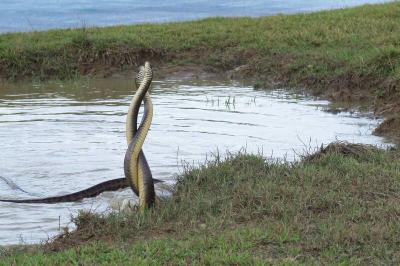
Kenting National Park service technician Yang Jien-fon (楊政峰) won a silver award in World Grand Prix Photography Awards Spring Season for his photograph of two male rat snakes intertwined in combat. Yang’s colleagues at Kenting National Park said he is a master of nature photography who has been held back by his job in civil service. The awards accept entries in all four seasons across six categories: architectural and urban photography, black-and-white and fine art photography, commercial and fashion photography, documentary and people photography, nature and experimental photography, and mobile photography. Awards are ranked according to scores and divided into platinum, gold and
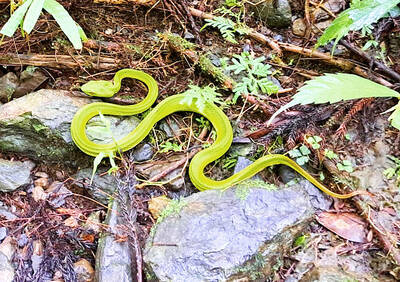
More than half of the bamboo vipers captured in Tainan in the past few years were found in the city’s Sinhua District (新化), while other districts had smaller catches or none at all. Every year, Tainan captures about 6,000 snakes which have made their way into people’s homes. Of the six major venomous snakes in Taiwan, the cobra, the many-banded krait, the brown-spotted pit viper and the bamboo viper are the most frequently captured. The high concentration of bamboo vipers captured in Sinhua District is puzzling. Tainan Agriculture Bureau Forestry and Nature Conservation Division head Chu Chien-ming (朱健明) earlier this week said that the
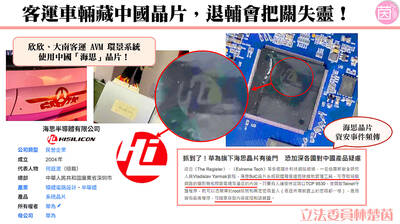
BREACH OF CONTRACT: The bus operators would seek compensation and have demanded that the manufacturer replace the chips with ones that meet regulations Two bus operators found to be using buses with China-made chips are to demand that the original manufacturers replace the systems and provide compensation for breach of contract, the Veterans Affairs Council said yesterday. Democratic Progressive Party Legislator Michelle Lin (林楚茵) yesterday said that Da Nan Bus Co and Shin-Shin Bus Co Ltd have fielded a total of 82 buses that are using Chinese chips. The bus models were made by Tron-E, while the systems provider was CYE Electronics, Lin said. Lin alleged that the buses were using chips manufactured by Huawei subsidiary HiSilicon Co, which presents a national security risk if the

The National Immigration Agency has banned two Chinese from returning to Taiwan, after they published social media content it described as disrespectful to national sovereignty. The agency imposed a two-month ban on a Chinese man surnamed Liang (梁) and a permanent ban on a woman surnamed Yang (楊), an influencer with 23 million followers, in October last year and last week respectively. Minister of the Interior Liu Shyh-fang (劉世芳) yesterday said on the sidelines of a legislative meeting that Chinese visitors to Taiwan are required to comply with the rules and regulations governing their entry permits. The government has handled the ban and


 RSS
RSS