


The Taipei City Government plans to spend nearly NT$600 million (US$20.21 million) to revitalize economy activity in the city, Taipei Deputy Mayor Vivian Huang (黃珊珊) said yesterday.
She made the announcement at a news conference at Taipei City Hall for a new event — “2020 Taipei Shopping Go (2020來台北一起Go)” — to promote commercial activities from July 15 to Aug. 31.
As the central government’s Triple Stimulus Vouchers would be launched on July 15, the city government has been mulling incentives to attract visitors to Taipei and have more people spend their vouchers in the city, she said.

Photo: CNA
The city government came up with two main ideas: holding lotteries to boost sales in shopping districts, as well as at traditional and night markets; and offering an additional NT$1,000 subsidy to city residents who spend their vouchers, using EasyCards for senior citizens and disabled people, she said.
The city would spend more than NT$100 million on the lotteries, Huang said.
People who purchase products or services at stores in Taipei or stay at hotels in the city would have a chance to win prizes — including vehicles worth more than NT$1 million — by registering their receipts online.
Those who spend at one of the 1,000 designated stores in the city or pay with the EasyWallet mobile payment service would have additional chances to win prizes, she added.
Stores with business and tax registration in Taipei that have cashless payment systems, and willing to provide special discounts or souvenirs to customers, can apply with the Taipei Office of Commerce until the end of this month, the office said.
Priority would be given to stores with special local features, it added.
Meanwhile, Huang defended the city government’s use of about NT$8 million from its second reserve fund to finance a video to promote the Taipei Grand Trail (台北大縱走), which cost about NT$15 million.
The Taipei Grand Trail is a special feature of the city, but many people do not know about it, she said.
The city government hopes to develop in-depth tourism to allow foreign visitors to see the beauty of Taipei other than just the famous landmarks, such as Taipei 101 and the National Palace Museum, Huang said.
The money spent on promoting the city’s hiking trails are lower than those spent by other cities and counties, she said, adding that as Taipei Mayor Ko Wen-je (柯文哲) strictly controls how the fund is used, she believes the project has been carefully planned.
The city’s budget for promotions over the past five years has been much lower than those of previous administrations, Huang said.
Budgets allocated to promotion during the administrations of former Taipei mayors Ma Ying-jeou (馬英九) and Hau Lung-bin (郝龍斌) reached “astronomical figures,” she said.

The Centers for Disease Control (CDC) yesterday reported the first case of a new COVID-19 subvariant — BA.3.2 — in a 10-year-old Singaporean girl who had a fever upon arrival in Taiwan and tested positive for the disease. The girl left Taiwan on March 20 and the case did not have a direct impact on the local community, it said. The WHO added the BA.3.2 strain to its list of Variants Under Monitoring in December last year, but this was the first imported case of the COVID-19 variant in Taiwan, CDC Deputy Director-General Lin Ming-cheng (林明誠) said. The girl arrived in Taiwan on

South Korea is planning to revise its controversial electronic arrival card, a step Taiwanese officials said prompted them to hold off on planned retaliatory measures, a South Korean media report said yesterday. A Yonhap News Agency report said that the South Korean Ministry of Foreign Affairs is planning to remove the “previous departure place” and “next destination” fields from its e-arrival card system. The plan, reached after interagency consultations, is under review and aims to simplify entry procedures and align the electronic form with the paper version, a South Korean ministry official said. The fields — which appeared only on the electronic form
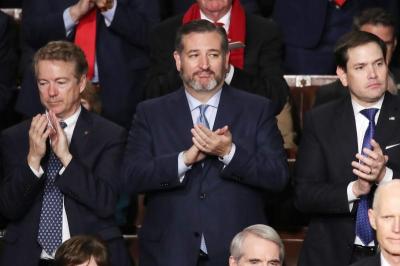
A bipartisan group of US senators has introduced a bill to enhance cooperation with Taiwan on drone development and to reduce reliance on supply chains linked to China. The proposed Blue Skies for Taiwan Act of 2026 was introduced by Republican US senators Ted Cruz and John Curtis, and Democratic US senators Jeff Merkley and Andy Kim. The legislation seeks to ease constraints on Taiwan-US cooperation in uncrewed aerial systems (UAS), including dependence on China-sourced components, limited access to capital and regulatory barriers under US export controls, a news release issued by Cruz on Wednesday said. The bill would establish a "Blue UAS

The Ministry of Foreign Affairs (MOFA) is suspending retaliation measures against South Korea that were set to take effect tomorrow, after Seoul said it is updating its e-arrival system, MOFA said today. The measures were to be a new round of retaliation after Taiwan on March 1 changed South Korea's designation on government-issued alien resident certificates held by South Korean nationals to "South Korea” from the "Republic of Korea," the country’s official name. The move came after months of protests to Seoul over its listing of Taiwan as "China (Taiwan)" in dropdown menus on its new online immigration entry system. MOFA last week


 RSS
RSS