


The Council of Grand Justices ruling yesterday that adultery as a crime is unconstitutional drew praise from some women’s rights groups, who called it a “milestone for the progress of Taiwan’s Constitution and gender justice,” but others said the decision would only result in more adultery.
After the council issued Constitutional Interpretation No. 791 at 4pm, several groups gathered outside the Judicial Yuan in support of the decision, including the Awakening Foundation, the Taipei Women’s Rescue Foundation and the Taiwan Gender Equality Education Association.
In a press release, the Awakening Foundation said that the ruling protects a person’s sexual autonomy, privacy and dignity from being compromised in a marriage.

Photo: George Tsorng, Taipei Times
The interpretation shows that the council took the evolving definitions of an intimate relationship, as well as diversity in modern marriages, into consideration, it said.
The ruling could be a blow to victims of adultery who seek justice by invoking the Criminal Code, but criminal punishment should not be the answer, as it cannot force a person to remain in a marriage against their wishes, the statement said.
Decriminalizing adultery is not tantamount to agreeing with adultery, it added.
Since a marriage starts from the Civil Code, people should only invoke the code in the face of marital disputes, and focus on constructive solutions, such as the distribution of wealth and childcare if a couple chooses to divorce, or counseling should they wish to remain together, it said.
“Hopefully, decriminalizing adultery and allowing marital affairs be dealt with solely by the Civil Code would allow people to handle emotional lows related to marriage in a healthier way,” the foundation said.
Opposition groups said that the council’s decision values sexual autonomy more than marriage and family, calling the interpretation “outrageous, insane and not in line with public opinion.”
Coalition for the Happiness of our Next Generation president Tseng Hsien-ying (曾獻瑩) said that decriminalizing adultery would fuel adultery and create “a world full of adulterers.”
Treating adultery as a crime has preventive effects and helps uphold family values, as well as protect disadvantaged women and children, Tseng said.
Without the support of the Criminal Code, people betrayed by their partners would only be more disadvantaged, as they have fewer resources to claim compensation, he added.
Mothers Shield Alliance deputy secretary-general Shan Hsin-ai (單信愛) said that many mothers would shed tears of sorrow upon hearing the ruling, as it deprives them of the protections afforded by the Criminal Code, and “all the sacrifices and efforts they make for the family could be for nothing.”
The council’s ruling could make women lose faith in marriage and distort young people’s values of marriage, as they might think that they can “cheat with as many people as they want if they have money.”
Treating adultery as a crime helps keep families on track and serves the public interest well, Shan said, adding that the government should introduce complementary measures to safeguard the rights of women.

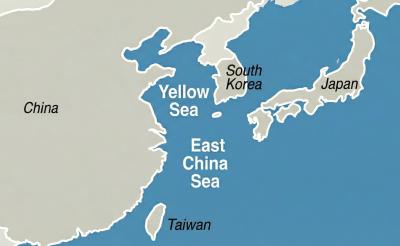
China has reserved offshore airspace in the Yellow Sea and East China Sea from March 27 to May 6, issuing alerts usually used to warn of military exercises, although no such exercises have been announced, the Wall Street Journal (WSJ) reported yesterday. Reserving such a large area for 40 days without explanation is an “unusual step,” as military exercises normally only last a few days, the paper said. These alerts, known as Notice to Air Missions (Notams), “are intended to inform pilots and aviation authorities of temporary airspace hazards or restrictions,” the article said. The airspace reserved in the alert is
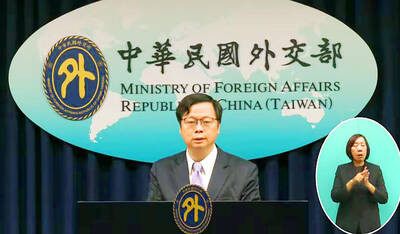
NAMING SPAT: The foreign ministry called on Denmark to propose an acceptable solution to the erroneous nationality used for Taiwanese on residence permits Taiwan has revoked some privileges for Danish diplomatic staff over a Danish permit that lists “Taiwan” as “China,” Eric Huang (黃鈞耀), head of the Ministry of Foreign Affairs’ Department of European Affairs, told a news conference in Taipei yesterday. Reporters asked Huang whether the Danish government had responded to the ministry’s request that it correct the nationality on Danish residence permits of Taiwanese, which has been listed as “China” since 2024. Taiwan’s representative office in Denmark continues to communicate with the Danish government, and the ministry has revoked some privileges previously granted to Danish representatives in Taiwan and would continue to review

More than 6,000 Taiwanese students have participated in exchange programs in China over the past two years, despite the Mainland Affairs Council’s (MAC) “orange light” travel advisory, government records showed. The MAC’s publicly available registry showed that Taiwanese college and university students who went on exchange programs across the Strait numbered 3,592 and 2,966 people respectively. The National Immigration Agency data revealed that 2,296 and 2,551 Chinese students visited Taiwan for study in the same two years. A review of the Web sites of publicly-run universities and colleges showed that Taiwanese higher education institutions continued to recruit students for Chinese educational programs without

A bipartisan group of US senators has introduced a bill to enhance cooperation with Taiwan on drone development and to reduce reliance on supply chains linked to China. The proposed Blue Skies for Taiwan Act of 2026 was introduced by Republican US senators Ted Cruz and John Curtis, and Democratic US senators Jeff Merkley and Andy Kim. The legislation seeks to ease constraints on Taiwan-US cooperation in uncrewed aerial systems (UAS), including dependence on China-sourced components, limited access to capital and regulatory barriers under US export controls, a news release issued by Cruz on Wednesday said. The bill would establish a "Blue UAS


 RSS
RSS