


People can now order rapid HIV self-testing kits online and pick them up at 7-Eleven convenience stores, the Centers for Disease Control (CDC) said yesterday.
The test is easy, requiring a gentle swipe with the test swab on the upper and lower gums, and then the swab is placed in a test tube and the result is available in 15 to 20 minutes, CDC Deputy Director-General Philip Lo (羅一鈞) said.
The online sales that began yesterday are the second wave of the 2020 HIV Home Testing Program that began on May 1, which allowed people to purchase rapid test kits at 362 locations nationwide, including pharmacies, saunas and vending machines, Lo said.
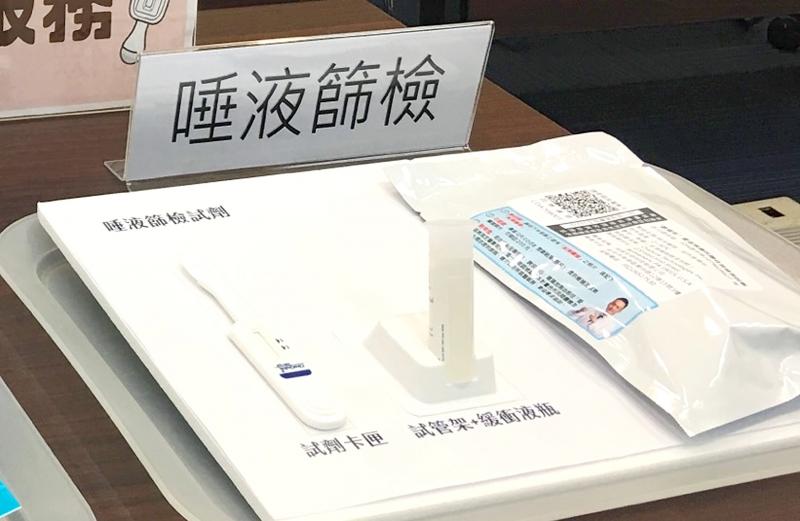
Photo: Lin Hui-chin, Taipei Times
The kits cost NT$245 on delivery — which includes a NT$45 shipping fee — and people can choose the 7-Eleven outlet where they want the kit sent, he said.
However, people willing to register their initial results online with the CDC would receive an electronic coupon for a free test kit, he added.
The selected store will send a package pickup notice and people would then have seven days to pick it up, he said.
Other convenience store chains would be added to the program by the end of this month, Lo said.
The parcel label would not list the contents of the package or the manufacturer, so people do not need to worry about privacy concerns, the CDC said.
People should not panic if their test is positive, but should make an appointment at a designated HIV treatment healthcare facility for a thorough examination as soon as possible, and the CDC would cover the registration fee and the copayment for the outpatient visit, it added.
People who have multiple sex partners, regularly engage in unprotected sex or practice behaviors with high infection risks should be tested for HIV at least once every three to six months, the CDC said.

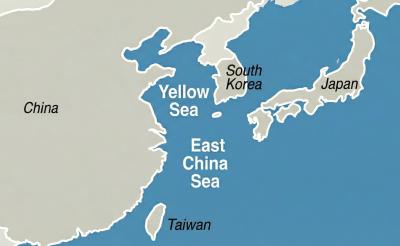
China has reserved offshore airspace in the Yellow Sea and East China Sea from March 27 to May 6, issuing alerts usually used to warn of military exercises, although no such exercises have been announced, the Wall Street Journal (WSJ) reported yesterday. Reserving such a large area for 40 days without explanation is an “unusual step,” as military exercises normally only last a few days, the paper said. These alerts, known as Notice to Air Missions (Notams), “are intended to inform pilots and aviation authorities of temporary airspace hazards or restrictions,” the article said. The airspace reserved in the alert is

NAMING SPAT: The foreign ministry called on Denmark to propose an acceptable solution to the erroneous nationality used for Taiwanese on residence permits Taiwan has revoked some privileges for Danish diplomatic staff over a Danish permit that lists “Taiwan” as “China,” Eric Huang (黃鈞耀), head of the Ministry of Foreign Affairs’ Department of European Affairs, told a news conference in Taipei yesterday. Reporters asked Huang whether the Danish government had responded to the ministry’s request that it correct the nationality on Danish residence permits of Taiwanese, which has been listed as “China” since 2024. Taiwan’s representative office in Denmark continues to communicate with the Danish government, and the ministry has revoked some privileges previously granted to Danish representatives in Taiwan and would continue to review

The first bluefin tuna of the season, brought to shore in Pingtung County and weighing 190kg, was yesterday auctioned for NT$10,600 (US$333.5) per kilogram, setting a record high for the local market. The auction was held at the fish market in Donggang Fishing Harbor, where the Siaoliouciou Island-registered fishing vessel Fu Yu Ching No. 2 delivered the “Pingtung First Tuna” it had caught for bidding. Bidding was intense, and the tuna was ultimately jointly purchased by a local restaurant and a local company for NT$10,600 per kilogram — NT$300 ,more than last year — for a total of NT$2.014 million. The 67-year-old skipper

China has reserved offshore airspace over the Yellow Sea and East China Sea from March 27 to May 6, issuing alerts that are usually used to warn of military exercises, although no such exercises have been announced, the Wall Street Journal (WSJ) reported on Sunday. Reserving such a large area for 40 days without explanation is an “unusual step,” as military exercises normally only last a few days, the paper said. The alerts, known as notice to air missions (NOTAMs), “are intended to inform pilots and aviation authorities of temporary airspace hazards or restrictions,” the article said. The airspace reserved in the alert


 RSS
RSS