


Chinese Nationalist Party (KMT) Legislator Yeh Yu-lan (葉毓蘭) yesterday sparked controversy after she claimed to have nearly caused a fire in her legislative office while attempting to disinfect a mask with an air fryer.
Yeh said that she was on Tuesday attempting to follow instructions from Minister Without Portfolio Audrey Tang (唐鳳), but used an air fryer instead of a rice cooker as Tang had instructed.
The mask burned up, nearly starting a fire that could have burned down the Legislative Yuan’s second building on Taipei’s Qingdao E Road, she said.
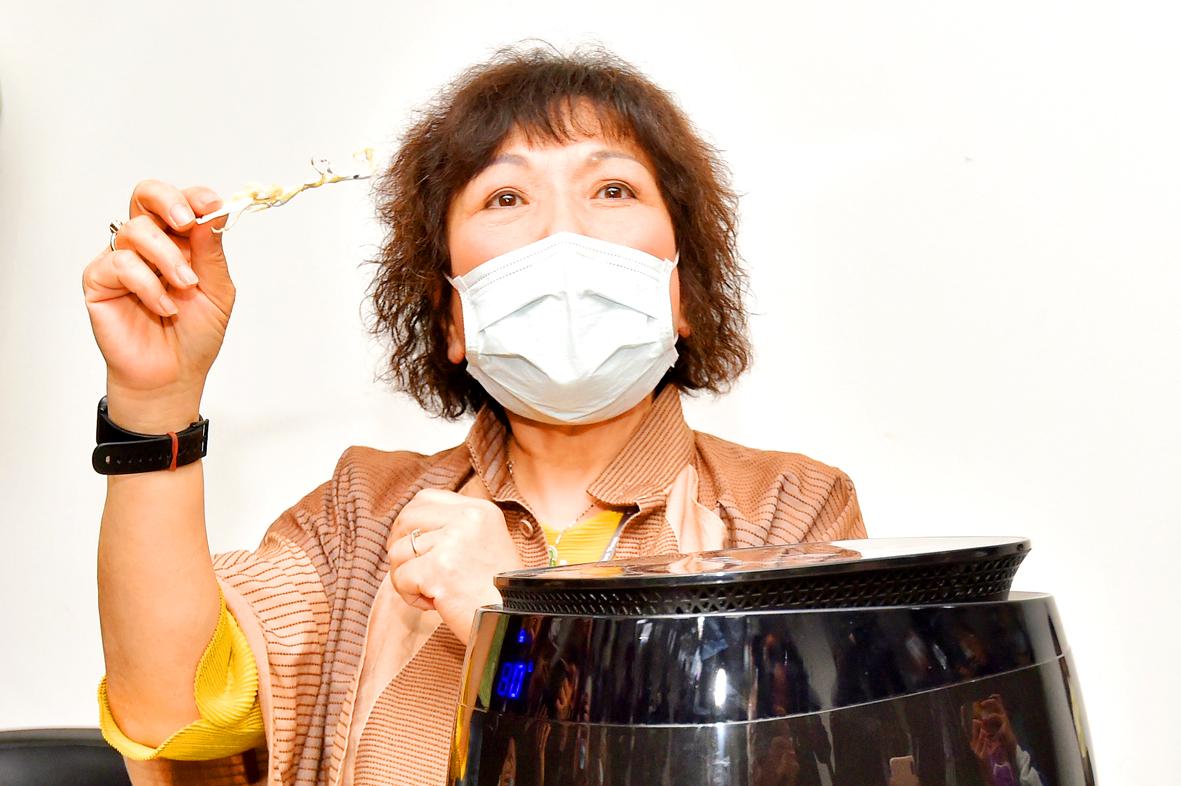
Photo: Tu Chien-jung, Taipei Times
Responding to criticism from other lawmakers over her use of the air fryer, Yeh later in the day admitted fault on Facebook and said that she had not studied physics and chemistry well enough in high school.
“OK, OK, I admit it, and I apologize to my junior-high school and senior-high school chemistry and physics teachers. I did not study well, but if I had I would be working at Academia Sinica, not in the legislature,” she wrote.
Yeh’s office also issued a statement saying that Yeh would appear later in the afternoon with the air fryer to demonstrate its “proper use in making deep-fried tianbula (甜不辣) and shrimp pancakes.”
Yeh disclosed her mishap at a meeting of the Legislative Yuan’s Internal Administration Committee earlier yesterday, saying that she was troubled by an inadequate supply of masks, citing the need to wear one everywhere in public due to the COVID-19 pandemic.
She asked Minister of the Interior Hsu Kuo-yung (徐國勇): “I would like to ask for advice, minister, has anyone here ever steamed a mask before?”
Hsu said that he had not tried the procedure.
Yeh said that the masks she had used for the prior two days had developed an unpleasant smell, and that she hoped to find a way to stretch her limited supply.
Tang has only used six masks since February, Yeh said, adding: “Many people still do not have enough masks.”
She said that she hoped to remind the public to only use a rice cooker if they hope to extend the life of their masks.
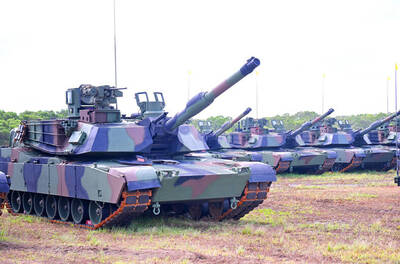
The manufacture of the remaining 28 M1A2T Abrams tanks Taiwan purchased from the US has recently been completed, and they are expected to be delivered within the next one to two months, a source said yesterday. The Ministry of National Defense is arranging cargo ships to transport the tanks to Taiwan as soon as possible, said the source, who is familiar with the matter. The estimated arrival time ranges from late this month to early next month, the source said. The 28 Abrams tanks make up the third and final batch of a total of 108 tanks, valued at about NT$40.5 billion

Two Taiwanese prosecutors were questioned by Chinese security personnel at their hotel during a trip to China’s Henan Province this month, the Mainland Affairs Council (MAC) said yesterday. The officers had personal information on the prosecutors, including “when they were assigned to their posts, their work locations and job titles,” MAC Deputy Minister and spokesman Liang Wen-chieh (梁文傑) said. On top of asking about their agencies and positions, the officers also questioned the prosecutors about the Cross-Strait Joint Crime-Fighting and Judicial Mutual Assistance Agreement, a pact that serves as the framework for Taiwan-China cooperation on combating crime and providing judicial assistance, Liang
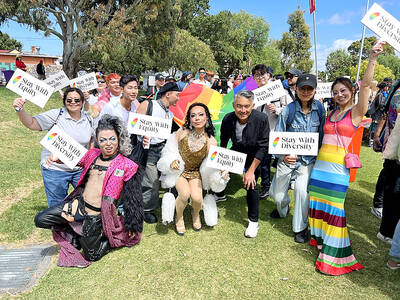
A group from the Taiwanese Designers in Australia association yesterday represented Taiwan at the Midsumma Pride March in Melbourne. The march, held in the St. Kilda suburb, is the city’s largest LGBTQIA+ parade and the flagship event of the annual Midsumma Festival. It attracted more than 45,000 spectators who supported the 400 groups and 10,000 marchers that participated this year, the association said. Taiwanese Designers said they organized a team to march for Taiwan this year, joining politicians, government agencies, professionals and community organizations in showing support for LGBTQIA+ people and diverse communities. As the first country in Asia to legalize same-sex
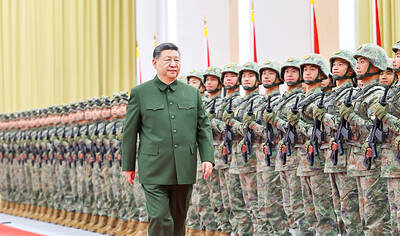
MOTIVES QUESTIONED The PLA considers Xi’s policies toward Taiwan to be driven by personal considerations rather than military assessment, the Epoch Times reports Chinese President Xi Jinping’s (習近平) latest purge of the Chinese People’s Liberation Army (PLA) leadership might have been prompted by the military’s opposition to plans of invading Taiwan, the Epoch Times said. The Chinese military opposes waging war against Taiwan by a large consensus, putting it at odds with Xi’s vision, the Falun Gong-affiliated daily said in a report on Thursday, citing anonymous sources with insight into the PLA’s inner workings. The opposition is not the opinion of a few generals, but a widely shared view among the PLA cadre, the Epoch Times cited them as saying. “Chinese forces know full well that


 RSS
RSS