


An article posted on a US Centers for Disease Control and Prevention Web site has highlighted Taiwan’s early steps to contain the spread of COVID-19, especially its coordination and use of data.
“Of note, the centralized, real-time database of the country’s National Health Insurance (NHI) helped support disease surveillance and case detection,” the article said.
The article, titled “Policy Decisions and Use of Information Technology to Fight 2019 Novel Coronavirus Disease, Taiwan,” on the Web site for the agency’s Emerging Infectious Diseases journal is listed as an “early article” to be published in July.
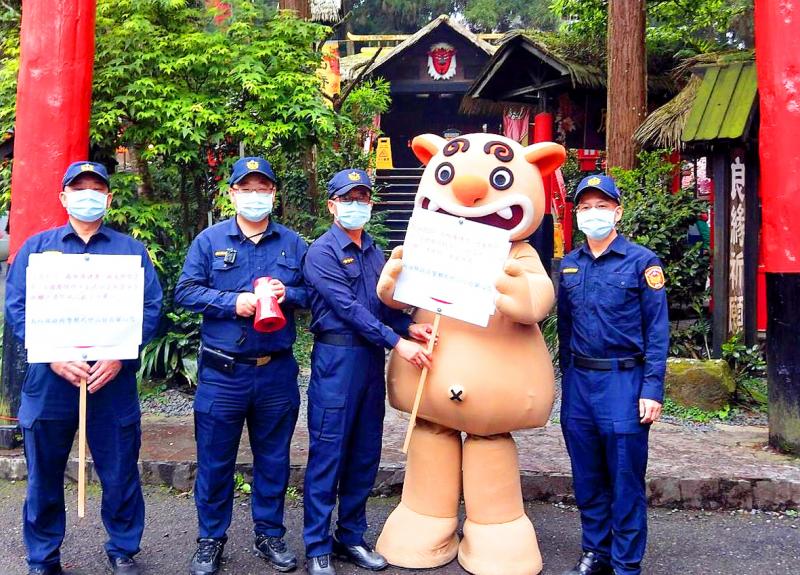
Photo: Hsieh Chieh-yu, Taipei Times
The report, written by a research team that included members of Taiwan’s Centers for Disease Control (CDC), said that the comprehensive response and innovative use of the NHI database by the CDC effectively delayed and contained community transmission in Taiwan, even as the number of confirmed cases surged in neighboring countries starting in mid-February.
As soon as China on Dec. 31 reported an unidentified outbreak of 27 cases of unknown pneumonia in Wuhan to the WHO, Taiwan assembled a task force and began performing health checks of passengers inside planes from Wuhan after they landed in Taiwan, it said.
Thanks to its rapid implementation of disease prevention measures, Taiwan detected and isolated its first coronavirus case on Jan. 20, it said, adding that laboratories in Taiwan developed four-hour test kits and isolated two strains of the virus before February.
The nation then added people’s travel histories to China and all confirmed and suspected case contacts to the NHI database.
Those additions, along with real-time NHI data on people’s health history “helped pinpoint high-risk patients” and gave the CDC “the ability to quickly identify new patterns of symptoms or clustered cases and the source or path of infection,” the article said.
Other factors that led to an effective response were its experiences during the 2003 SARS outbreak, prevalent public awareness, a robust public health network, support from healthcare industries and cross-departmental collaborations.
Despite its proximity to China, where the COVID-19 outbreak originated, Taiwan has reported relatively fewer confirmed cases with five deaths.
Globally, the virus has infected more than 1 million people in 188 nations, and more than 50,000 have died of the disease.
The research team was led by Duke University professor Tu Pi-kuei (涂碧桂) and CDC Director-General Chou Jih-haw (周志浩).
CDC Deputy Director-General Chuang Jen-hsiang (莊人祥) on Friday said that Taiwan faced the outbreak from China with extreme caution because of its proximity and its painful experience in fighting SARS in 2003.
“Unlike some other nations, in which cities and states fought against the outbreak alone, Taiwan strengthened cross-departmental collaboration on quarantines,” Chuang said.
For example, with the assistance of the police administration system, local governments could quickly locate those who had contact with infected patients to stem the spread of the virus, he said.

The manufacture of the remaining 28 M1A2T Abrams tanks Taiwan purchased from the US has recently been completed, and they are expected to be delivered within the next one to two months, a source said yesterday. The Ministry of National Defense is arranging cargo ships to transport the tanks to Taiwan as soon as possible, said the source, who is familiar with the matter. The estimated arrival time ranges from late this month to early next month, the source said. The 28 Abrams tanks make up the third and final batch of a total of 108 tanks, valued at about NT$40.5 billion

Two Taiwanese prosecutors were questioned by Chinese security personnel at their hotel during a trip to China’s Henan Province this month, the Mainland Affairs Council (MAC) said yesterday. The officers had personal information on the prosecutors, including “when they were assigned to their posts, their work locations and job titles,” MAC Deputy Minister and spokesman Liang Wen-chieh (梁文傑) said. On top of asking about their agencies and positions, the officers also questioned the prosecutors about the Cross-Strait Joint Crime-Fighting and Judicial Mutual Assistance Agreement, a pact that serves as the framework for Taiwan-China cooperation on combating crime and providing judicial assistance, Liang

A group from the Taiwanese Designers in Australia association yesterday represented Taiwan at the Midsumma Pride March in Melbourne. The march, held in the St. Kilda suburb, is the city’s largest LGBTQIA+ parade and the flagship event of the annual Midsumma Festival. It attracted more than 45,000 spectators who supported the 400 groups and 10,000 marchers that participated this year, the association said. Taiwanese Designers said they organized a team to march for Taiwan this year, joining politicians, government agencies, professionals and community organizations in showing support for LGBTQIA+ people and diverse communities. As the first country in Asia to legalize same-sex
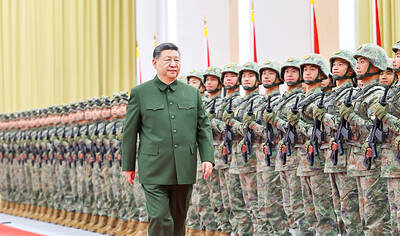
MOTIVES QUESTIONED The PLA considers Xi’s policies toward Taiwan to be driven by personal considerations rather than military assessment, the Epoch Times reports Chinese President Xi Jinping’s (習近平) latest purge of the Chinese People’s Liberation Army (PLA) leadership might have been prompted by the military’s opposition to plans of invading Taiwan, the Epoch Times said. The Chinese military opposes waging war against Taiwan by a large consensus, putting it at odds with Xi’s vision, the Falun Gong-affiliated daily said in a report on Thursday, citing anonymous sources with insight into the PLA’s inner workings. The opposition is not the opinion of a few generals, but a widely shared view among the PLA cadre, the Epoch Times cited them as saying. “Chinese forces know full well that


 RSS
RSS