


The Executive Yuan’s Consumer Protection Committee on Thursday warned people not to fall for dubious advertisements amid the COVID-19 pandemic to avoid becoming a victim of fraud.
As fears of the pandemic spread nationwide, there has been a surge in online advertisements for bargain medical supplies, such as masks, disinfectants and forehead thermometers, but people are often at a loss as to their trustworthiness, the committee said.
These advertisements often come with slogans that almost seem too good to be true, such as “pay upon delivery,” “seven-day hassle-free return,” “zero negative feedback,” “24-hour online customer service” or “almost sold out,” as well as claims that the products have passed certifications, it said.
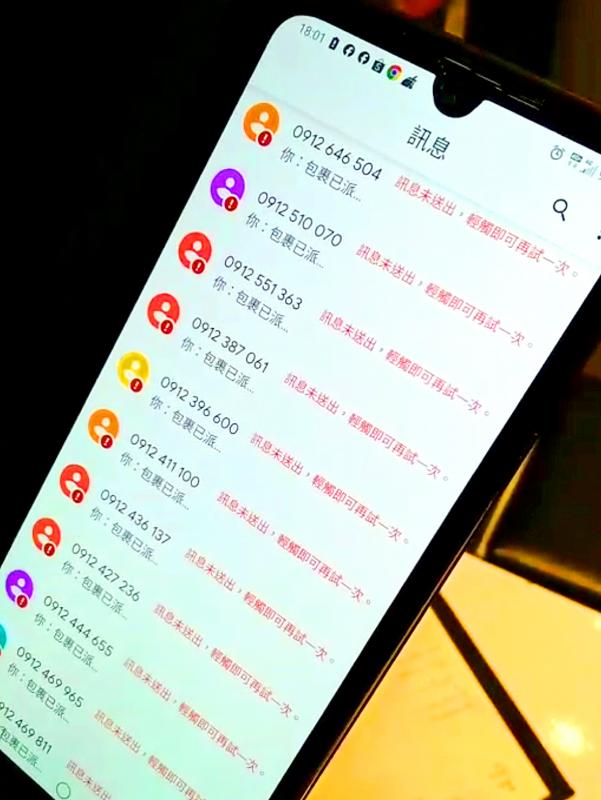
Photo copied by Hsieh Chieh-yu, Taipei Times
When people encounter such advertisements, they should first check whether the telephone number and address provided by the seller is real, the committee said, adding that if the company information cannot be verified, the advertisement is most likely fraudulent.
People who fall for the advertisements often receive substandard products or nothing at all, and the Internet Protocol addresses of these “sellers” are often overseas, it said.
Most fraudulent advertisements seek to exploit humanity’s two greatest weaknesses: greed and fear, it added.
Other fraud schemes have also taken on themes inspired by the pandemic, such as asking people to wire money into accounts purportedly for a “disease prevention fund” established by the government.
People have reported receiving text messages to claim masks they ordered that contain phishing links or that include instructions on how to use an automated teller machine to change their bank account settings to fix an unsuccessful payment for an order of masks, the committee said.
The US Federal Trade Commission has received 78,234 reports of false refunds for trips canceled due to the pandemic, online shopping fraud, text message fraud and scam rings claiming to be the US government, which have made up the bulk of fraud cases it has received this year, the committee said, adding that and the losses incurred total US$4.77 million.
In Japan and Sweden, scam rings have approached elderly citizens with offers to test them for the coronavirus and to “go out shopping” for them, while in some European nations fraudsters have been selling products that purportedly cure or contain COVID-19 which have been proven to be ineffective against the disease, it said.
People should fact-check any dubious advertisement or information about COVID-19 and remember not to pass on any suspicious information if they do not wish to become a “covidiot,” the committee said.
In related news, the Ministry of Justice Investigation Bureau yesterday said that it is investigating two people for allegedly impersonating Minister of Health and Welfare Chen Shih-chung (陳時中) and issuing a bogus message about the pandemic.
They face charges of spreading false information about the pandemic, it said.
The two, who live in New Taipei City and Hualien County, were on Thursday taken in for questioning after allegedly circulating on social media a message purportedly from Chen saying that people should not go outdoors and remain at home this weekend due to the pandemic, the bureau said.
After verifying with Chen that he did not issue such a message, the bureau tracked down the two suspects, who are to be charged with contravening provisions of the Special Act on COVID-19 Prevention, Relief and Recovery (嚴重特殊傳染性肺炎防治及紓困振興特別條例).
Separately yesterday, Hualien Tzu Chi Hospital issued a statement refuting an online rumor that the hospital has shut down due to the pandemic.
The hospital’s hours have only been curtailed for the long holiday weekend, officials said, reminding the public that disseminating misinformation could result in criminal prosecution.
Additional reporting by Jason Pan


EVA Airways today confirmed the death of a flight attendant on Saturday upon their return to Taiwan and said an internal investigation has been launched, as criticism mounted over a social media post accusing the airline of failing to offer sufficient employee protections. According to the post, the flight attendant complained of feeling sick on board a flight, but was unable to take sick leave or access medical care. The crew member allegedly did not receive assistance from the chief purser, who failed to heed their requests for medical attention or call an ambulance once the flight landed, the post said. As sick

A drunk woman was sexually assaulted inside a crowded concourse of Taipei Railway Station on Thursday last week before a foreign tourist notified police, leading to calls for better education on bystander intervention and review of security infrastructure. The man, surnamed Chiu (邱), was taken into custody on charges of sexual assault, taking advantage of the woman’s condition and public indecency. Police discovered that Chiu was a fugitive with prior convictions for vehicle theft. He has been taken into custody and is to complete his unserved six-month sentence, police said. On Thursday last week, Chiu was seen wearing a white
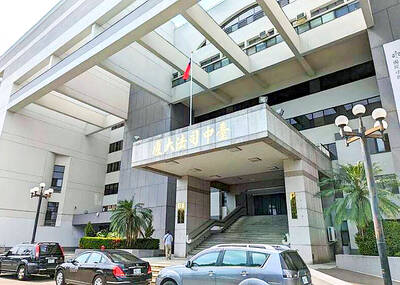
The Taichung District Court yesterday confirmed its final ruling that the marriage between teenage heir Lai (賴) and a man surnamed Hsia (夏) was legally invalid, preventing Hsia from inheriting Lai’s NT$500 million (US$16.37 million) estate. The court confirmed that Hsia chose not to appeal the civil judgement after the court handed down its ruling in June, making the decision final. In the June ruling, the court said that Lai, 18, and Hsia, 26, showed “no mutual admiration before the marriage” and that their interactions were “distant and unfamiliar.” The judge concluded that the couple lacked the “true intention of

EVA Airways, one of the leading international carriers in Taiwan, yesterday said that it was investigating reports that a cabin crew manager had ignored the condition of a sick flight attendant, who died on Saturday. The airline made the statement in response to a post circulating on social media that said that the flight attendant on an outbound flight was feeling sick and notified the cabin crew manager. Although the flight attendant grew increasingly ill on the return flight, the manager did not contact Medlink — a system that connects the aircraft to doctors on the ground for treatment advice during medical


 RSS
RSS