


Premier Su Tseng-chang (蘇貞昌) yesterday reassured the public that the nation has sufficient supplies of fresh produce and tissue paper, and that people can shop without worries.
Su made the remarks at the Legislative Yuan in Taipei in response to media queries about his Facebook post on Thursday, which said that people can buy as much rice, fruit, seafood, processed food and tissue paper as they want, amid reports of panic buying at supermarkets.
The public need not be alarmed over news of panic buying abroad, as supplies of food staples and daily necessities are under control, Su said.

Photo copied by Lee Hsin-fang, Taipei Times
The nation has sufficient food supplies, thanks to its robust agricultural, food processing and fishery industries, he said.
It has more than enough tissue paper, with production running at only about 60 percent of capacity, he said.
If people are afraid of dining out because of concern over the COVID-19 pandemic, they are welcome to buy more fruit and vegetables to boost produce sales, he said.
However, that does not mean people should hoard daily necessities, the premier said, adding that those who engage in profiteering by driving up prices would be promptly and severely punished by law.
Asked if the panic buying could have been triggered by false reports, Su said that people who spread disinformation about food or daily necessities running short would also face penalties.
ZOMBIE MOVIE
Later, at a legislative question-and-answer session, Chinese Nationalist Party (KMT) Legislator Lo Ming-tsai (羅明才) said that photographs of people waiting in long lines to check out groceries on Thursday resembled a doomsday scene from a zombie movie.
He asked Su to reassure the public that there is no need to engage in panic buying.
Su said that judging by their current output, toilet paper manufacturers can immediately increase production if required.
He added that the government has 900,000 tonnes of rice in reserve and that the harvesting season is near.
Asked if there is no shortage of food and daily commodities, the premier said: “Correct.”
Democratic Progressive Party Legislator Chao Tien-lin (趙天麟) asked Minister of Justice Tsai Ching-hsiang (蔡清祥) whether there is any truth in reports that disinformation online sparked the panic buying.
The government has taken action to curb the spread of false information and the culprits would be held to account, Chao said.
Tsai said that the ministry had located the sources of disinformation, which are likely domestic, and would take legal action against them.

Yangmingshan National Park authorities yesterday urged visitors to respect public spaces and obey the law after a couple was caught on a camera livestream having sex at the park’s Qingtiangang (擎天崗) earlier in the day. The Shilin Police Precinct in Taipei said it has identified a suspect and his vehicle registration number, and would summon him for questioning. The case would be handled in accordance with public indecency charges, it added. The couple entered the park at about 11pm on Thursday and began fooling around by 1am yesterday, the police said, adding that the two were unaware of the park’s all-day live

A former soldier and an active-duty army officer were yesterday indicted for allegedly selling classified military training materials to a Chinese intelligence operative for a total of NT$79,440. The Taipei District Prosecutors’ Office indicted Chen Tai-yin (陳泰尹) and Lee Chun-ta (李俊達) for contravening the National Security Act (國家安全法) and the Anti-Corruption Act (貪污治罪條例). Chen left the military in September 2013 after serving alongside then-staff sergeant Lee, now an army lieutenant, at the 21st Artillery Command of the army’s Sixth Corps from 2011 to 2013, according to the indictment. Chen met a Chinese intelligence operative identified as “Wang” (王) through a friend in November

Minister of Digital Affairs Lin Yi-ching (林宜敬) yesterday cited regulatory issues and national security concerns as an expert said that Taiwan is among the few Asian regions without Starlink. Lin made the remarks on Facebook after funP Innovation Group chief executive officer Nathan Chiu (邱繼弘) on Friday said Taiwan and four other countries in Asia — China, North Korea, Afghanistan and Syria — have no access to Starlink. Starlink has become available in 166 countries worldwide, including Ukraine, Malaysia, the Philippines and Vietnam, in the six years since it became commercial, he said. While China and North Korea block Starlink, Syria is not
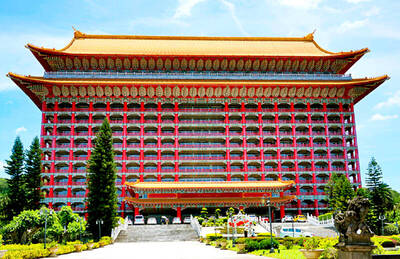
The Grand Hotel Taipei has rejected media reports claiming that the hotel had prevented CBS from broadcasting coverage of the Beijing summit between U.S. President Donald Trump and Chinese President Xi Jinping (習近平) on its premises. Media reports alleging that the hotel owner, dissatisfied with CBS’s coverage, prohibited the network from broadcasting political content on the hotel premises, are not true, the hotel said in a statement issued last night. The reports were “inconsistent with how the hotel actually handled the matter,” it said. The hotel said it received a refund request from a


 RSS
RSS