


A suspended bridge near the Double Dragon Waterfalls (雙龍瀑布) in Nantou County is to open to tourists next month, the county government said.
The 342m-long bridge, which hangs 110m above the ground, is currently the tallest and longest suspended bridge open for tourism in Taiwan, the county said, adding that it cost NT$55 million (US$1.82 million) to construct.
People crossing the bridge can see the waterfall and surrounding scenery, a view that the county government hopes would attract more visitors to the region to stimulate the economy, particularly local hostels, it said.
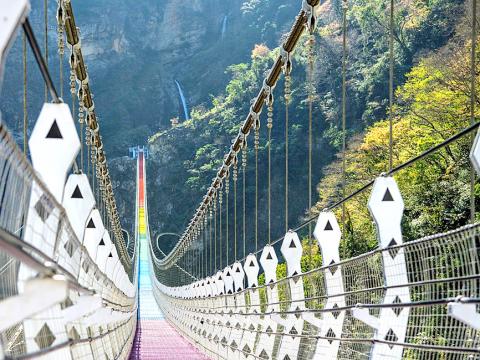
Photo: Liu Pin-chuan, Taipei Times
As part of local efforts to prevent the spread of COVID-19, shuttle buses to the area would be thoroughly disinfected and all travelers would be required to wear masks, it said, adding that it would deny entry to any visitor with a fever.
The county government said that it would provide more details about its disease prevention efforts closer to the bridge’s opening.
The bridge and other nearby attractions are to employ e-ticketing systems and visitors are able to pre-purchase their tickets, it said.
People driving to the bridge must park their cars near the entrance and then take a shuttle inside, the county said.
Ticket prices for adults are NT$100, with shuttle fees included, it added.
The bridge and the surrounding park area would be limited to 1,500 visitors on weekdays and weekends, the county government said.
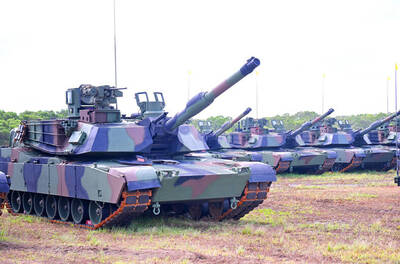
The manufacture of the remaining 28 M1A2T Abrams tanks Taiwan purchased from the US has recently been completed, and they are expected to be delivered within the next one to two months, a source said yesterday. The Ministry of National Defense is arranging cargo ships to transport the tanks to Taiwan as soon as possible, said the source, who is familiar with the matter. The estimated arrival time ranges from late this month to early next month, the source said. The 28 Abrams tanks make up the third and final batch of a total of 108 tanks, valued at about NT$40.5 billion

Two Taiwanese prosecutors were questioned by Chinese security personnel at their hotel during a trip to China’s Henan Province this month, the Mainland Affairs Council (MAC) said yesterday. The officers had personal information on the prosecutors, including “when they were assigned to their posts, their work locations and job titles,” MAC Deputy Minister and spokesman Liang Wen-chieh (梁文傑) said. On top of asking about their agencies and positions, the officers also questioned the prosecutors about the Cross-Strait Joint Crime-Fighting and Judicial Mutual Assistance Agreement, a pact that serves as the framework for Taiwan-China cooperation on combating crime and providing judicial assistance, Liang
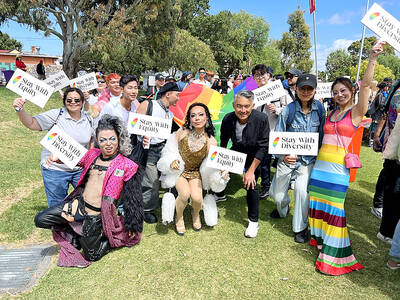
A group from the Taiwanese Designers in Australia association yesterday represented Taiwan at the Midsumma Pride March in Melbourne. The march, held in the St. Kilda suburb, is the city’s largest LGBTQIA+ parade and the flagship event of the annual Midsumma Festival. It attracted more than 45,000 spectators who supported the 400 groups and 10,000 marchers that participated this year, the association said. Taiwanese Designers said they organized a team to march for Taiwan this year, joining politicians, government agencies, professionals and community organizations in showing support for LGBTQIA+ people and diverse communities. As the first country in Asia to legalize same-sex
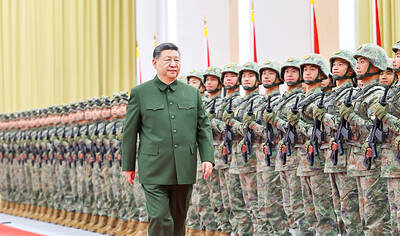
MOTIVES QUESTIONED The PLA considers Xi’s policies toward Taiwan to be driven by personal considerations rather than military assessment, the Epoch Times reports Chinese President Xi Jinping’s (習近平) latest purge of the Chinese People’s Liberation Army (PLA) leadership might have been prompted by the military’s opposition to plans of invading Taiwan, the Epoch Times said. The Chinese military opposes waging war against Taiwan by a large consensus, putting it at odds with Xi’s vision, the Falun Gong-affiliated daily said in a report on Thursday, citing anonymous sources with insight into the PLA’s inner workings. The opposition is not the opinion of a few generals, but a widely shared view among the PLA cadre, the Epoch Times cited them as saying. “Chinese forces know full well that


 RSS
RSS