


The offshore Penghu archipelago is more strategically important than the former frontline islands of Kinmen and Matsu, a Taiwanese academic has said, while calling on the government to bolster Penghu’s defenses to prevent a Chinese invasion, as losing the islands would imperil the whole nation.
In a Jan. 21 article titled “The Strategic Role of Penghu in the Defense of Taiwan” in the Institute for National Defense and Security Research’s Defense Situation Monthly, Paul Huang (黃恩浩), an assistant research fellow at the government-funded institute, called on the nation’s armed forces to beef up Penghu’s defenses, which play a crucial role in national defense.
Penghu, or the Pescadores, are an archipelago of 90 islands in the Taiwan Strait that have long been a strategic location since the 17th century, with the Dutch, French and Japanese all launching campaigns against the islands, Huang said.
From a global perspective, Penghu is the first line of defense in the first island chain, which refers to the major archipelagos on the East Asian continental coast: Taiwan, the Kuril Islands, the archipelago of Japan, the Ryukyu Islands, the northern Philippines and Borneo.
Their strategic location means that China’s People’s Liberation Army (PLA) would have to take the islands in any invasion of Taiwan.
Penghu is far more important for Taiwan’s defense than the islands of Kinmen and Matsu, Huang said.
Their proximity to China makes it extremely difficult for Taiwan to defend Kinmen and Matsu, which at their closest are only 2km from China’s Fujian Province, Huang added.
In contrast, Penghu, which is about 140km from China, has a more strategic role to play in national defense, he said.
The archipelago is the most heavily guarded of the outlying islands, Huang said, adding that troops are stationed on 16 of Penghu’s 90 islets.
About 70 of the military’s 460 M60A3 tanks are deployed in Penghu, as well as a Kidd-class destroyer at sea, which could be armed with RIM-66A Standard missiles, while the islands’ air defenses are boosted by the Indigenous Defense Fighter and the Tien Kung III surface-to-air missile system.
If Chinese military vessels invaded, troops in Penghu could also fire Hsiung Feng II anti-ship missiles, Huang said.
The 300km range of the radar station in Penghu’s Xiyu Township (西嶼鄉) allows the early detection of PLA aircraft and vessel movements in the area, covering most of the Taiwan Strait and southeastern coastal areas of China.
The loss of Penghu in the event of a cross-strait military crisis could jeopardize the security of all of Taiwan, Huang said.
As Taiwan is taking steps to build its own submarines, Huang called on the military to deploy submarines in the waters around Penghu to further deter a Chinese invasion, which would help prevent the PLA from crossing the first island chain.

The military has spotted two Chinese warships operating in waters near Penghu County in the Taiwan Strait and sent its own naval and air forces to monitor the vessels, the Ministry of National Defense (MND) said. Beijing sends warships and warplanes into the waters and skies around Taiwan on an almost daily basis, drawing condemnation from Taipei. While the ministry offers daily updates on the locations of Chinese military aircraft, it only rarely gives details of where Chinese warships are operating, generally only when it detects aircraft carriers, as happened last week. A Chinese destroyer and a frigate entered waters to the southwest

A magnitude 6.1 earthquake struck off the coast of Yilan County at 8:39pm tonight, the Central Weather Administration (CWA) said, with no immediate reports of damage or injuries. The epicenter was 38.7km east-northeast of Yilan County Hall at a focal depth of 98.3km, the CWA’s Seismological Center said. The quake’s maximum intensity, which gauges the actual physical effect of a seismic event, was a level 4 on Taiwan’s 7-tier intensity scale, the center said. That intensity level was recorded in Yilan County’s Nanao Township (南澳), Hsinchu County’s Guansi Township (關西), Nantou County’s Hehuanshan (合歡山) and Hualien County’s Yanliao (鹽寮). An intensity of 3 was

Japanese Prime Minister Sanae Takaichi’s comment last year on Tokyo’s potential reaction to a Taiwan-China conflict has forced Beijing to rewrite its invasion plans, a retired Japanese general said. Takaichi told the Diet on Nov. 7 last year that a Chinese naval blockade or military attack on Taiwan could constitute a “survival-threatening situation” for Japan, potentially allowing Tokyo to exercise its right to collective self-defense. Former Japan Ground Self-Defense Force general Kiyofumi Ogawa said in a recent speech that the remark has been interpreted as meaning Japan could intervene in the early stages of a Taiwan Strait conflict, undermining China’s previous assumptions
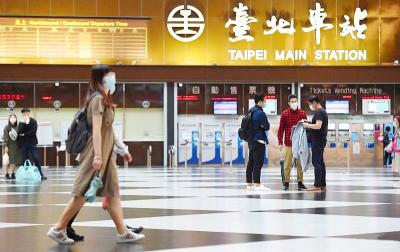
Taiwan Railways Corp (TRC) today announced that Shin Kong Mitsukoshi has been selected as the preferred bidder to operate the Taipei Railway Station shopping mall, replacing the current operator, Breeze Development Co Ltd. Among eight qualified firms that delivered presentations and were evaluated by a review committee, Shin Kong Mitsukoshi was ranked first, while Breeze was named the runner-up, the rail company said in a statement. Contract negotiations are to proceed in accordance with regulations, it said, adding that if negotiations with the top bidder fail, it could invite the second-ranked applicant to enter talks. Breeze in a statement today expressed doubts over


 RSS
RSS