


Checking the legality of foreign caregivers in hospitals should not be a priority as the nation works to prevent the spread of COVID-19, Minister of Health and Welfare Chen Shih-chung (陳時中) reiterated yesterday.
His position was backed up by Minister Without Portfolio Lin Wan-i (林萬億).
“I do not care about the [legal] status of foreign caregivers in hospitals, I only care if they are healthy, if they comply with the hospitals’ policies and if they understand the hospitals’ rules, so that they do not create a burden for the hospitals,” said Chen, who also heads the Central Epidemic Command Center (CECC).
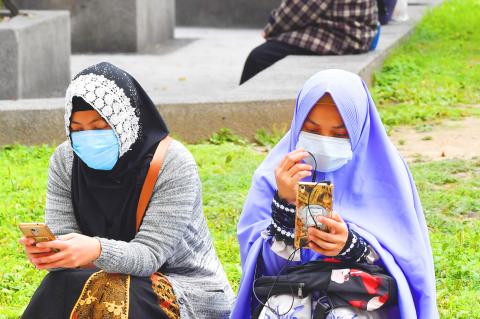
Photo: CNA
“There are different types of illegal foreign workers, but if they are related to the COVID-19 situation, the CECC is not going to interfere with the duties of the competent authority,” he told reporters who quizzed him about comments he made on Saturday, when he said he was opposed to launching a crackdown on undocumented migrant caregivers at a time when the nation’s healthcare workers are already heavily burdened with efforts to contain COVID-19.
An Indonesian working illegally as caregiver on Wednesday tested positive for COVID-19, becoming the nation’s 32nd case and triggering fears that the nearly 50,000 undocumented migrant workers in the nation could create a loophole in the epidemic-prevention system.
The woman, who has overstayed her visa, had worked as a caregiver to an elderly man in a hospital who became the nation’s 27th case.
“I disagree with the need to strengthen reporting of undocumented workers at present. For hospitals, it does not matter if one is a documented or undocumented migrant worker or a family member of a patient,” Chen said on Saturday. “What matters to us is whether they have any questionable travel history, or illnesses, and if they know how to look after the patient.”
Although he “of course discourages” the hiring of undocumented caregivers, cracking down on these workers at this moment would only create an acute shortage of people to look after patients and place more strain on healthcare professionals, he said.
Lin said that migrant workers’ legal status should not be a government priority in its efforts to prevent the spread of COVID-19, and a complete disease-prevention system can only be built when all migrant workers, legal or not, receive adequate COVID-19 information.
Focusing on reporting channels and punishment for undocumented migrant workers would only prompt them to go into hiding rather than pay attention to prevention promotions, creating more uncertainties, Lin said.
The Ministry of Labor on Friday said it that it had created a search system in collaboration with the National Immigration Agency to track down undocumented migrant workers and would soon put it in practice.
Workforce Development Agency Director-General Tsai Meng-liang (蔡孟良) said the system would be able to check the employment or residency status of migrant workers who accompany their employers seeking care at hospitals.
A total of 48,545 undocumented migrant workers were believed to be in the nation at the end of January, with 290 in detention centers, National Immigration Agency statistics showed.
Additional reporting by Lee I-chia


China has reserved offshore airspace in the Yellow Sea and East China Sea from March 27 to May 6, issuing alerts usually used to warn of military exercises, although no such exercises have been announced, the Wall Street Journal (WSJ) reported yesterday. Reserving such a large area for 40 days without explanation is an “unusual step,” as military exercises normally only last a few days, the paper said. These alerts, known as Notice to Air Missions (Notams), “are intended to inform pilots and aviation authorities of temporary airspace hazards or restrictions,” the article said. The airspace reserved in the alert is
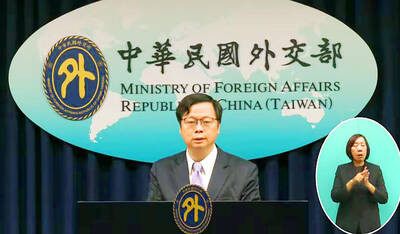
NAMING SPAT: The foreign ministry called on Denmark to propose an acceptable solution to the erroneous nationality used for Taiwanese on residence permits Taiwan has revoked some privileges for Danish diplomatic staff over a Danish permit that lists “Taiwan” as “China,” Eric Huang (黃鈞耀), head of the Ministry of Foreign Affairs’ Department of European Affairs, told a news conference in Taipei yesterday. Reporters asked Huang whether the Danish government had responded to the ministry’s request that it correct the nationality on Danish residence permits of Taiwanese, which has been listed as “China” since 2024. Taiwan’s representative office in Denmark continues to communicate with the Danish government, and the ministry has revoked some privileges previously granted to Danish representatives in Taiwan and would continue to review

More than 6,000 Taiwanese students have participated in exchange programs in China over the past two years, despite the Mainland Affairs Council’s (MAC) “orange light” travel advisory, government records showed. The MAC’s publicly available registry showed that Taiwanese college and university students who went on exchange programs across the Strait numbered 3,592 and 2,966 people respectively. The National Immigration Agency data revealed that 2,296 and 2,551 Chinese students visited Taiwan for study in the same two years. A review of the Web sites of publicly-run universities and colleges showed that Taiwanese higher education institutions continued to recruit students for Chinese educational programs without

A bipartisan group of US senators has introduced a bill to enhance cooperation with Taiwan on drone development and to reduce reliance on supply chains linked to China. The proposed Blue Skies for Taiwan Act of 2026 was introduced by Republican US senators Ted Cruz and John Curtis, and Democratic US senators Jeff Merkley and Andy Kim. The legislation seeks to ease constraints on Taiwan-US cooperation in uncrewed aerial systems (UAS), including dependence on China-sourced components, limited access to capital and regulatory barriers under US export controls, a news release issued by Cruz on Wednesday said. The bill would establish a "Blue UAS


 RSS
RSS