


Ministry of Justice’s Investigation Bureau (MJIB) officials and police yesterday raided six locations in the greater Taipei area as part of an investigation into suspected fraud and money laundering by a top executive of Cheng Mei Materials Technology (CMMT).
CMMT, which manufactures polarizers and other optoelectronics components, is a subsidiary of Chi Mei Group.
Taipei prosecutors coordinated the raids with the bureau and police and served summons to 13 people, including CMMT vice chairperson Yeh Mei-li (葉美麗), for questioning regarding the alleged transfer of about NT$260 million (US$8.43 million at the current exchange rate) into private hands.
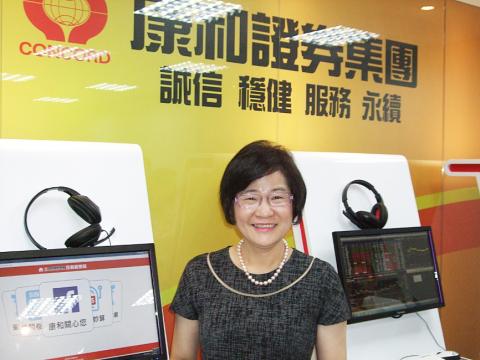
Photo: Chen Yung-chi, Taipei Times
Yeh’s residence and the offices of companies that she controls were among the sites searched.
Yeh and four others have been listed as suspects in the case, and would face charges of breach of trust, money laundering and contravening provisions of the Business Entity Accounting Act (商業會計法) and the Securities and Exchange Act (證券交易法), prosecutors said.
Nine people were questioned as witnesses by prosecutors, who scheduled bail hearings for the suspects last night.
The investigation is focused on Yeh’s actions as chairperson of Mao Fong Trading, an international trading unit of CMMT, and the transfer in September last year of NT$88.26 million to Hong Kong-based Bao Dui International, reportedly to pay for supplies.
Prosecutors said Bao Dui is a shell company, registered in the name of Kuo Ya-wen, who is reportedly Yeh’s daughter.
Kuo and Bao Dui were named in the Panama Papers in 2015, with Bao Dui allegedly being used to launder money from criminal activities, they said.
Prosecutors and other officials are also investigating Yeh’s purchase of shares in Jun Hong Optronics in January last year.
Yeh reportedly paid NT$42 million for 1,000 Jun Hong Optronics shares, which she then sold to a third person before the shares were bought for NT$90 million by Mao Fong Trading and Mao Yu Investment, another firm she controlled.
Prosecutors said they received complaints from other shareholders that these were fraudulent transactions aimed at siphoning off about NT$48 million in corporate assets from Mao Fong Trading.
They said Yeh might have made about NT$260 million from the deals and then laundered the money through her daughter’s bank accounts in Hong Kong.
Yeh in January tried to gain control of CMMT when an illness prevented CMMT chairman Ho Jau-yang (何昭陽) from attending a company meeting. She called an emergency board of directors meeting on Jan. 14, where she directed the board to dismiss Ho and name her chairperson, which it did.
Ho, a founding member of Chi Mei Group and former general manager of Chi Mei Optoeletronics, fought the move in court and won reinstatement.
The court ruled that Yeh’s calling of the emergency meeting and the decisions taken by the board at the meeting had contravened business laws.

Considering that most countries issue more than five denominations of banknotes, the central bank has decided to redesign all five denominations, the bank said as it prepares for the first major overhaul of the banknotes in more than 24 years. Central bank Governor Yang Chin-lung (楊金龍) is expected to report to the Legislative Yuan today on the bank’s operations and the redesign’s progress. The bank in a report sent to the legislature ahead of today’s meeting said it had commissioned a survey on the public’s preferences. Survey results showed that NT$100 and NT$1,000 banknotes are the most commonly used, while NT$200 and NT$2,000

The Centers for Disease Control (CDC) yesterday reported the first case of a new COVID-19 subvariant — BA.3.2 — in a 10-year-old Singaporean girl who had a fever upon arrival in Taiwan and tested positive for the disease. The girl left Taiwan on March 20 and the case did not have a direct impact on the local community, it said. The WHO added the BA.3.2 strain to its list of Variants Under Monitoring in December last year, but this was the first imported case of the COVID-19 variant in Taiwan, CDC Deputy Director-General Lin Ming-cheng (林明誠) said. The girl arrived in Taiwan on

South Korea is planning to revise its controversial electronic arrival card, a step Taiwanese officials said prompted them to hold off on planned retaliatory measures, a South Korean media report said yesterday. A Yonhap News Agency report said that the South Korean Ministry of Foreign Affairs is planning to remove the “previous departure place” and “next destination” fields from its e-arrival card system. The plan, reached after interagency consultations, is under review and aims to simplify entry procedures and align the electronic form with the paper version, a South Korean ministry official said. The fields — which appeared only on the electronic form

The Ministry of Foreign Affairs (MOFA) is suspending retaliation measures against South Korea that were set to take effect tomorrow, after Seoul said it is updating its e-arrival system, MOFA said today. The measures were to be a new round of retaliation after Taiwan on March 1 changed South Korea's designation on government-issued alien resident certificates held by South Korean nationals to "South Korea” from the "Republic of Korea," the country’s official name. The move came after months of protests to Seoul over its listing of Taiwan as "China (Taiwan)" in dropdown menus on its new online immigration entry system. MOFA last week


 RSS
RSS