

The Taiwan Railways Administration (TRA) yesterday said it is seeking compensation from the manufacturer of a Puyuma train model involved in a deadly derailment in October last year and a third-party quality certification provider.
The Japanese manufacturer, Nippon Sharyo, a subsidiary of Central Japan Railway Co, is responsible for the train’s design flaws, while British certification provider Lloyd’s Register Quality Assurance failed to pinpoint the problems, a TRA official said.
TRA’s lawyers are drafting a letter to Sumitomo Corp, the bidder for the procurement project, asking it to pass the information to Nippon Sharyo, said Sung Hung-kang (宋鴻康), head of the TRA’s Rolling Stock Department.
Photo: Cheng Wei-chi, Taipei Times
The TRA plans is to take the same action against Lloyd’s, Sung said, adding that the letters are expected to be sent by the end of this month.
If the two companies accept their share of responsibility, the TRA would proceed to seek compensation, Sung said.
Nippon Sharyo has admitted a design flaw in all 19 of the Puyuma trains it sold to Taiwan, which prevents the train’s alert system from contacting the control station.
As a result, train dispatchers are not aware when the automatic train protection (ATP) system, which prevents trains from speeding, is turned off, unless the driver informs them.
The defective system played an important role in the Oct. 21 crash, when Puyuma Express No. 6432 derailed in Yilan County, while traveling at nearly twice the permissible speed limit as it entered a curve, leaving 18 people dead and 200 people injured.
The tragedy was a result of many factors, the worst being Puyuma driver Yu Chen-chung (尤振仲) turning off the ATP while trying to accelerate the train after detecting power problems he believed to have been caused by a malfunctioning air compressor, investigators have said.
Yu was at the time too distracted dealing with the power problem to report what he had done in a timely manner, the investigators said, adding that the accident could have been avoided if the ATP had been properly connected to the central control room.
Lloyd’s is also to blame for failing to examine the trains and their maintenance manuals thoroughly, and did a poor job in finding out inconsistencies in the Chinese translation of mechanical terms, Sung said.
Sung added that the TRA has kept a NT$300 million (US$9.7 million) performance bond on hold since the delivery of the trains in 2012, because some of the glitches remain unresolved.
While the crash resulted in administrative punishments for 20 former TRA officials and indirectly led to the resignation of then-minister of transportation and communication Wu Hong-mo (吳宏謀) in December, his successor, Lin Chia-lung (林佳龍), reopened the case last month, saying he felt that the penalties were too light.
A second round of recommended punishments were completed by the Railway Bureau later that month, but Lin rejected them again because the content was the same.
Lin then assigned Deputy Minister of Transportation and Communications Wang Kwo-tsai (王國材) to come up with a new list, which Wang yesterday said has been completed and is awaiting approval by the ministry and the Executive Yuan before being made public.

A Hualien pomelo farmer refused to sell to China after the country announced it would permit more Taiwanese pomelo imports, prompting widespread support from Taiwanese consumers, who rallied to buy his fruit. China’s Taiwan Affairs Office last month said that China’s General Administration of Customs registered an additional 79 Taiwanese pomelo orchards and packing facilities in Hualien County, allowing more Taiwanese producers to export pomelos to China. “I am a Hualien fruit farmer and I refuse to sell to China,” Liu Tzu-hao (劉子豪) from Ruisui Township (瑞穗) said in an online post. Liu is a well-known farmer in the community and has served
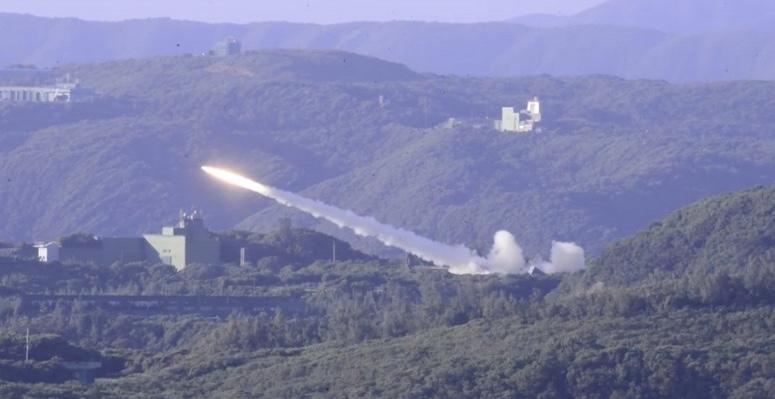
A Chinese military drone was spotted conducting reconnaissance off Taitung County as President William Lai (賴清德) visited Pingtung County this morning to inspect a drill of the armed forces’ precision-strike capabilities, prompting the military to closely monitor its actions. Today was the final day of a three-day military exercise at Jioupeng Base (九鵬基地) to test the joint combat capabilities of the armed forces and coast guard. The exercise began on Wednesday simulating air defense interception and yesterday tested long-range strike capabilities and new air defense weapons. This morning, the military conducted a final exercise involving air defense, anti-ship and drone operations. Military sources said

OCT. 31: The antiviral drugs Tamiflu and Eraflu have been distributed to about 4,000 medical facilities nationwide for people in seven groups who develop flu-like symptoms As the domestic influenza epidemic enters its peak season and continues to escalate, the Centers for Disease Control (CDC) yesterday announced that publicly funded influenza antiviral drugs for seven eligible groups have been extended to Oct. 31, allowing those who develop flu-like symptoms to receive the medication without undergoing a rapid influenza test. The CDC has extended the expanded use of flu antiviral drugs to seven groups: healthcare and influenza-prevention personnel; residents and staff at nursing homes, long-term care facilities and similar institutions; kindergarten and daycare workers and home-based caregivers; students from kindergarten through high school, vocational high school and the
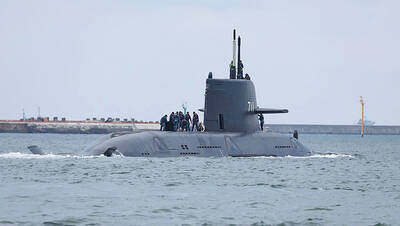
UPDATE: The submarine would need to undergo combined systems testing and crew training for navy personnel before it is ready for mission, an expert said Taiwan’s first domestically built submarine, the Hai Kun (Narwhal, 海鯤), could be delivered to the navy as early as next month, military expert and Taiwan Association for Security and Development chairman Chi Tung-yun (紀東昀) said yesterday. The submarine was yesterday morning observed departing for its 21st sea trial and its 15th submerged test. The vessel missed the initial delivery deadline of November last year due to “testing delays,” its primary contractor, shipbuilder CSBC Corp, Taiwan, said in June. The contractor also cited “political pressure from China” in procuring critical equipment. All testing operations are in the final stages, with the


 RSS
RSS