


Former president Ma Ying-jeou (馬英九) yesterday defended the Cross-Strait Service Trade Agreement with China that sparked the Sunflower movement and his “new three noes” policy at the launch of a book recounting his eight years in office.
The Sunflower movement protesters had called for an act to supervise cross-strait agreements, but nothing was done after President Tsai Ing wen’s (蔡英文) administration took office, Ma said, adding that the cross-strait service trade agreement was also left untouched.
At the time, the service sector was a major focus of the Chinese Communist Party’s 12th five-year plan and Taiwan’s service sector was superior to China’s, he said.
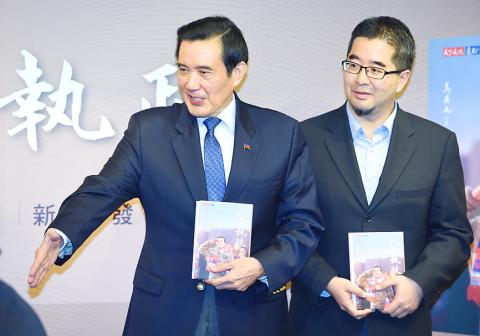
Photo: Liao Chen-huei, Taipei Times
If Taiwan had seized the opportunity and signed the pact, its service sector would have greatly benefited, he said, adding that this opportunity is gone forever.
At the question-and-answer session, Ma said that the “three noes” policy — no unification, no independence and no use of force — that he proposed during his time in office has since been adjusted to a “new three noes” policy — no exclusion of the possibility of unification, no independence and no use of force.
Unification is a goal set out in the Constitution, but the Constitution does not set a time frame or outline the conditions under which unification would occur, he said.
While he does not rule out unification, it can only be carried out under appropriate conditions and at an appropriate time, he said.
Unification needs to be carried out peacefully, the process must be democratic and it must occur at a time that Taiwanese can accept, he said.
Taiwan is maintaining the “status quo,” but if the conditions are good, discussion of unification is not impossible, he said, adding that this stance gives Taiwan more flexibility.
Ma said he hopes that this adjustment will enable Taiwan to respond to recent changes in cross-strait relations.
The memoir is written by former Presidential Office deputy secretary-general Hsiao Hsu-tsen (蕭旭岑) and based on Ma’s oral accounts.
Responding to Ma’s comments about not ruling out unification, Presidential Office spokesman Alex Huang (黃重諺) said that Ma sends a wrong message to the world at a time when the international community and Taiwan are looking for various ways to respond to Chinese suppression and interference in domestic affairs.
Ma’s statement makes it look as if Taiwan does not mind — and even approves of — Chinese suppression, he said.
The right of Taiwanese to decide their future should not be used as a bargaining chip for goodwill from China, he added.
This story has been corrected since it was first published to show that the Cross-Strait Service Trade Agreement was not a proposal, but a signed treaty, although it was not ratified by the Legislative Yuan.
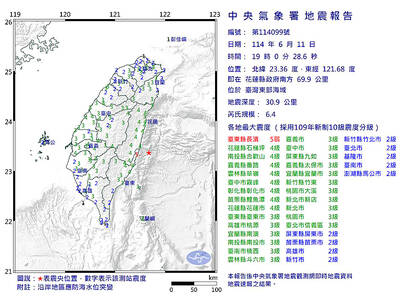
A magnitude 6.4 earthquake struck off the coast of Hualien County in eastern Taiwan at 7pm yesterday, the Central Weather Administration (CWA) said. The epicenter of the temblor was at sea, about 69.9km south of Hualien County Hall, at a depth of 30.9km, it said. There were no immediate reports of damage resulting from the quake. The earthquake’s intensity, which gauges the actual effect of a temblor, was highest in Taitung County’s Changbin Township (長濱), where it measured 5 on Taiwan’s seven-tier intensity scale. The quake also measured an intensity of 4 in Hualien, Nantou, Chiayi, Yunlin, Changhua and Miaoli counties, as well as
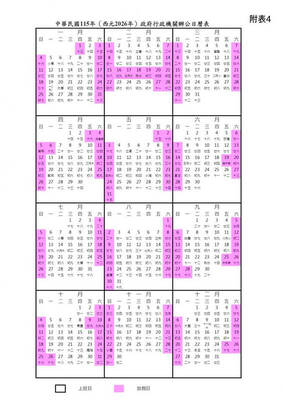
Taiwan is to have nine extended holidays next year, led by a nine-day Lunar New Year break, the Cabinet announced yesterday. The nine-day Lunar New Year holiday next year matches the length of this year’s holiday, which featured six extended holidays. The increase in extended holidays is due to the Act on the Implementation of Commemorative and Festival Holidays (紀念日及節日實施條例), which was passed early last month with support from the opposition Chinese Nationalist Party (KMT) and Taiwan People’s Party. Under the new act, the day before Lunar New Year’s Eve is also a national holiday, and Labor Day would no longer be limited

COMMITMENTS: The company had a relatively low renewable ratio at 56 percent and did not have any goal to achieve 100 percent renewable energy, the report said Pegatron Corp ranked the lowest among five major final assembly suppliers in progressing toward Apple Inc’s commitment to be 100 percent carbon neutral by 2030, a Greenpeace East Asia report said yesterday. While Apple has set the goal of using 100 percent renewable energy across its entire business, supply chain and product lifecycle by 2030, carbon emissions from electronics manufacturing are rising globally due to increased energy consumption, it said. Given that carbon emissions from its supply chain accounted for more than half of its total emissions last year, Greenpeace East Asia evaluated the green transition performance of Apple’s five largest final
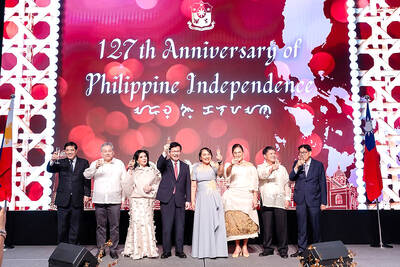
Taiwan is to extend its visa-waiver program for Philippine passport holders for another year, starting on Aug. 1, Minister of Foreign Affairs Lin Chia-lung (林佳龍) said on Friday. Lin made the announcement during a reception in Taipei marking the 127th anniversary of Philippine independence and the 50th anniversary of the establishment of the Manila Economic and Cultural Office (MECO) in Taiwan, the Ministry of Foreign Affairs said. The decision reflected Taiwan’s commitment to deepening exchanges with the Philippines, the statement cited Lin as saying, adding that it was a key partner under the New Southbound Policy launched in 2016. Lin also expressed hope


 RSS
RSS