


Twelve of Taiwan’s diplomatic allies on Tuesday sent a joint letter to UN Secretary-General Antonio Guterres in support of Taiwan’s request to play a more active role in the international organization.
In the letter, the diplomatic allies called on the UN to respond positively to Taiwan’s three demands, the Ministry of Foreign Affairs said.
The three demands are that the UN practice the principle of true universality by not rejecting Taiwan, that it end measures that prevent Taiwanese from entering UN meetings, and that it include the nation in the organization because of Taiwan’s achievements in realizing UN sustainable development goals.
The letter was accepted by UN Deputy Secretary-General Amina Mohammed of Nigeria and was to be delivered to Guterres later on Tuesday, after the general debate at the General Assembly had concluded on Monday.
The 12 allies that sent the letter were Nauru, Belize, the Marshall Islands, Saint Vincent and the Grenadines, Swaziland, the Solomon Islands, Saint Kitts and Nevis, Tuvalu, Kiribati, Burkina Faso, Haiti and El Salvador.
After handing over the joint letter, Lois Michele Young, the permanent representative of Belize to the UN, questioned why Taiwanese could not step inside UN headquarters, as Republic of China (ROC) passport holders enjoy visa-free travel or travel privileges to 165 countries and territories that are all UN members.
There is no reason Taiwan, the world’s 22nd-largest economy, should be excluded from discussions on global affairs, she added.
Sehon Marshall, the permanent representative to the UN of Saint Vincent and the Grenadines, said he plans to continue to persuade and encourage the UN to lift all restrictions on the ROC.
Three other allies — Nicaragua, Paraguay and Honduras — each sent individual letters to the UN Secretariat on Taiwan’s behalf.
Monsignor Tomasz Grysa, deputy head of the Permanent Observer Mission of the Holy See to the UN, was one of 10 allies that signed another joint letter delivered to the UN.
Expressing its gratitude to the nation’s allies for their support, the ministry reiterated its appeal that the UN take action to accept Taiwan’s participation in UN-related organizations.

Taiwanese can file complaints with the Tourism Administration to report travel agencies if their activities caused termination of a person’s citizenship, Mainland Affairs Council Minister Chiu Chui-cheng (邱垂正) said yesterday, after a podcaster highlighted a case in which a person’s citizenship was canceled for receiving a single-use Chinese passport to enter Russia. The council is aware of incidents in which people who signed up through Chinese travel agencies for tours of Russia were told they could obtain Russian visas and fast-track border clearance, Chiu told reporters on the sidelines of an event in Taipei. However, the travel agencies actually applied
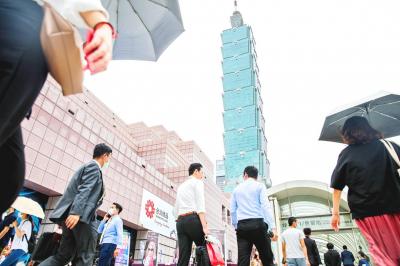
Japanese footwear brand Onitsuka Tiger today issued a public apology and said it has suspended an employee amid allegations that the staff member discriminated against a Vietnamese customer at its Taipei 101 store. Posting on the social media platform Threads yesterday, a user said that an employee at the store said that “those shoes are very expensive” when her friend, who is a migrant worker from Vietnam, asked for assistance. The employee then ignored her until she asked again, to which she replied: "We don't have a size 37." The post had amassed nearly 26,000 likes and 916 comments as of this
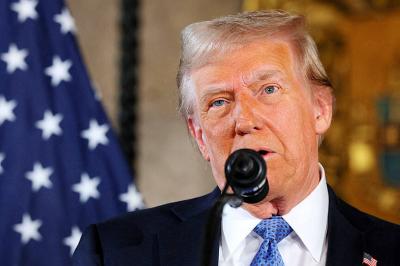
US President Donald Trump said "it’s up to" Chinese President Xi Jinping (習近平) what China does on Taiwan, but that he would be "very unhappy" with a change in the "status quo," the New York Times said in an interview published yesterday. Xi "considers it to be a part of China, and that’s up to him what he’s going to be doing," Trump told the newspaper on Wednesday. "But I’ve expressed to him that I would be very unhappy if he did that, and I don’t think he’ll do that," he added. "I hope he doesn’t do that." Trump made the comments in

New measures aimed at making Taiwan more attractive to foreign professionals came into effect this month, the National Development Council said yesterday. Among the changes, international students at Taiwanese universities would be able to work in Taiwan without a work permit in the two years after they graduate, explainer materials provided by the council said. In addition, foreign nationals who graduated from one of the world’s top 200 universities within the past five years can also apply for a two-year open work permit. Previously, those graduates would have needed to apply for a work permit using point-based criteria or have a Taiwanese company


 RSS
RSS