


The Taipei Department of Environmental Protection yesterday unveiled a noise-activated camera to photograph motorists who make excessive noise at night.
The system, comprising a single-lens camera and a sound level meter, was jointly developed by the department and a local firm, the department’s Sanitation Inspection Division head Chen Chao-chou (陳沼舟) said.
The system sends images and decibel levels to a laptop computer operated by inspectors who are sent to roadsides between 10:30pm and 3:30am, he said.
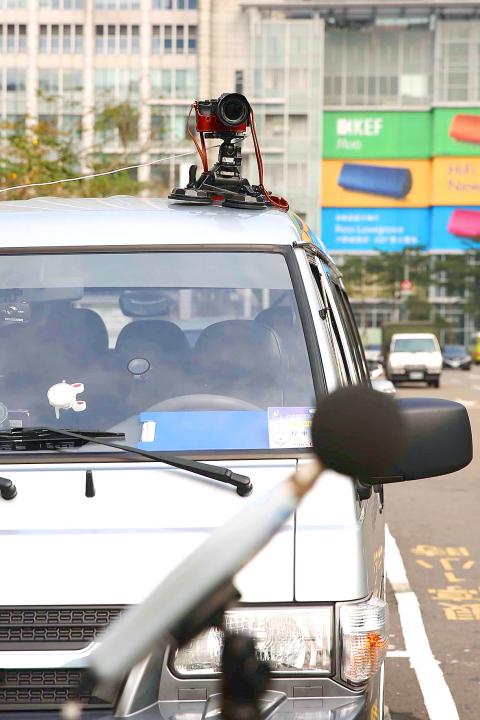
Photo: CNA
The camera is activated when noise recordings reach 84 decibels or more, which is considered excessive under the Motor Vehicle Noise Control Standards (機動車輛噪音管制標準), he said.
In comparison with manual means of apprehending loud motorists, the camera is capable of capturing high-resolution images that clearly show license plate numbers even in dim light, with decibel levels, date and time recorded on the photographs, he said.
Not including the sound meter, the system cost NT$190,000.
The department plans to alternate use of the system along 10 road sections in Taipei where it has received the most complaints about noisy motorists, including Neihu Road and the intersection of Civic Boulevard and Fuxing S Road, and decide whether to buy more systems based on the results, he said.
After people are sent the photographs, they will have one month to go to a designated motor vehicle office to have their vehicle inspected, he said.
Those whose vehicles are found to be louder than the legal standard will be fined between NT$1,800 and NT$3,600 depending on the decibel levels, he said.
Those who fail to show up for inspections will have their licenses suspended after six weeks, and revoked after three months, he said.
“Generally, people will restore their vehicles, for example their exhaust pipes, to stock condition before an inspection. This is what we hope to achieve by enforcing the act,” department commissioner Liou Ming-lone (劉銘龍) said.
“We are not opposed to people driving supercars or riding motorcycles. We just hope people will not modify their vehicles in ways that would disturb others,” he said.
The system is to begin operations this weekend, he said.

Fast food chain McDonald's is to raise prices by up to NT$5 on some products at its restaurants across Taiwan, starting on Wednesday next week, the company announced today. The prices of all extra value meals and sharing boxes are to increase by NT$5, while breakfast combos and creamy corn soup would go up by NT$3, the company said in a statement. The price of the main items of those meals, if ordered individually, would remain the same. Meanwhile, the price of a medium-sized lemon iced tea and hot cappuccino would rise by NT$3, extra dipping sauces for chicken nuggets would go up
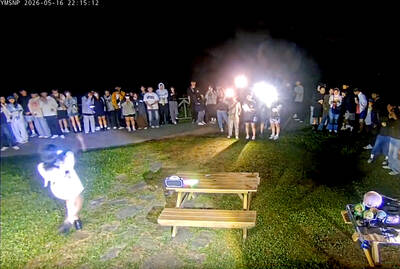
Yangmingshan National Park’s Qingtiangang (擎天崗) nature area has gone viral after a park livestream camera observed a couple in the throes of intimate congress, which was broadcast live on YouTube, drawing large late-night crowds and sparking a backlash over noise, bright lights and disruption to wildlife habitat. The area’s livestream footage appeared to show a couple engaging in sexual activity on a picnic table in the park on Friday last week, with the uncensored footage streamed publicly online. The footage quickly spread across social media, prompting a tide of visitors to travel to the site to “check in” and recreate the

Minister of Digital Affairs Lin Yi-ching (林宜敬) yesterday cited regulatory issues and national security concerns as an expert said that Taiwan is among the few Asian regions without Starlink. Lin made the remarks on Facebook after funP Innovation Group chief executive officer Nathan Chiu (邱繼弘) on Friday said Taiwan and four other countries in Asia — China, North Korea, Afghanistan and Syria — have no access to Starlink. Starlink has become available in 166 countries worldwide, including Ukraine, Malaysia, the Philippines and Vietnam, in the six years since it became commercial, he said. While China and North Korea block Starlink, Syria is not
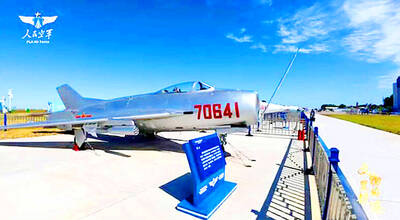
GROUNDED: A KMT lawmaker proposed eliminating drone development programs and freezing funding for counterdrone systems, despite China’s adoption of the technology China has deployed attack drones at air bases near the Taiwan Strait in a strategy aimed at overwhelming Taiwan’s air defense systems through saturation attacks, the Mainland Affairs Council (MAC) said. The council’s latest quarterly report on China said that satellite imagery and open-source intelligence indicate that the Chinese People’s Liberation Army (PLA) had converted retired J-6 fighter jets into J-6W drones, which the PLA has stationed at six air bases near Taiwan, five in China’s Fujian Province and one in Guangdong Province. The report cited J. Michael Dahm, a senior fellow at the US-based Mitchell Institute, as saying that China has


 RSS
RSS