


The Local Government Act (地方制度法) should be amended to ban city and county councilors from “recommending” budget allocations, civic groups said on Saturday, adding that most “recommended allocations” are used for pork-barrel projects and political patronage.
“‘Recommended allocations’ have already become an electoral tool to tie down voters using patronage — rather than serving a councilor’s real recommendations for local infrastructure,” Congress Watch Foundation chairman Yao Li-ming (姚立明) said.
While national and local legislative bodies are in theory only empowered to cut or freeze budgets drafted by their respective executive branches of government, there is a long history of local governments granting councilors special funds,” he said, adding that only Taipei has abolished the practice.
“This originally served as a way for local governments to buy off councilors,” he said, adding that with the exception of Kaohsiung, most local governments have ignored Directorate -General of Budget, Accounting and Statistics directives to publish figures on all “recommended allocations” for fear of sparking a backlash from local councilors.
“If you do not obey the central government’s directive, your budget will not be cut — but councilors can give you a hard time, so why create trouble?” he said, adding that amendments to the Local Government Act were necessary to force compliance.
Kaohsiung Civil Servant Citizen Watch president Chen Ming-pin (陳銘彬) said that while Kaohsiung had abolished individual councilor allocation “quotas” after publicizing fund usage, his groups investigation had found that more than 70 percent of funds continued to be used for questionable “non-urgent” projects.
Education appropriations made up the majority of funds allocated based on councilors recommendations, creating an allocation of school funding, he said, citing minimal guaranteed funding for individual school libraries, with most book-buying funds allocated based on councilor recommendations.
“It is really unreasonable, some principals are better at speaking with councilors, so they get more resources, while those who do not can end up with no subsidies at all,” he said.
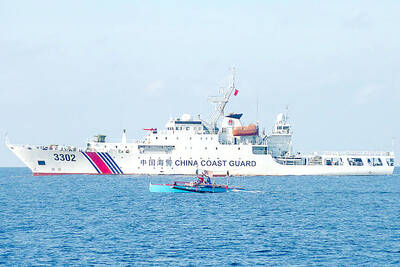
EXPANSIONIST: China deploys an average of 40 to 50 warships and coast guard vessels daily in the South China Sea, despite pledges not to militarize the region, an official said China is attempting to expand its influence across the First Island Chain and increase pressure on Japan by sending coast guard vessels into waters off of Taiwan under the pretext of maritime negotiations with Japan and the Philippines, a national security official said yesterday. China’s recent actions in the waters east of Taiwan and Japan and the Philippines’ exclusive economic zones (EEZ) are attempts to establish dominance in First Island Chain waters, said the official who declined to be named, adding that this is “expansion disguised as law enforcement.” Framing China’s actions solely as a cross-strait issue is a serious misjudgment that
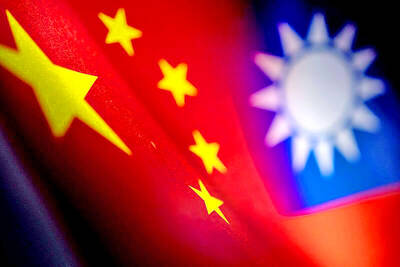
BAIT AND SWITCH: Allowing KMT-run counties to sell to China while the threat of abrupt cancelations hangs overhead is another form of coercion, officials said Beijing is using agricultural purchase offers announced during the Straits Forum to deepen Taiwan’s dependence on the Chinese market, a Taiwanese official said yesterday as they criticized the Taitung County commissioner’s participation in the initiative. During the Straits Forum held in Xiamen on Saturday, Chinese officials announced a sales and purchase agreement for agricultural products from some counties led by the Chinese Nationalist Party (KMT). Taitung County Commissioner Yao Ching-ling (饒慶鈴), who was barred from attending the event in person by the Mainland Affairs Council, participated via video. Under the agreement, China would purchase atemoyas, pomeloes, tea and grouper harvested in Taitung,
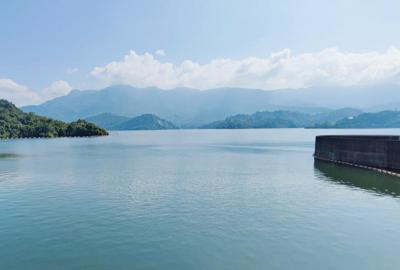
Several major reservoirs are estimated to have received 590 million tonnes of water inflow from June 4 to this morning, with storage levels at Wushantou Reservoir exceeding 50 percent and Zengwen Reservoir approaching 30 percent as of 9am today, data from the Water Resources Agency showed. Of the estimated 590 million tonnes, 450 million have already been stored in reservoirs, the data showed. As of 9am today, Baoshan Reservoir storage levels reached 100 percent, while Baoshan Second Reservoir, Yongheshan Reservoir and Techi Reservoir all exceeded 90 percent, data on the Water Resources Agency’s Web site showed. In addition, the Shimen Reservoir is at

SHIFTING FIRE: While the tempo of purely military exercises around Taiwan has gone down somewhat, Beijing is working to isolate Lai diplomatically from support abroad Chinese President Xi Jinping (習近平) is shifting tactics in his campaign to pressure Taiwan, ramping up diplomatic isolation of the nation while dialing down provocative displays of military aggression. Taiwan recorded a daily average of five Chinese military aircraft crossing the Taiwan Strait’s buffer line with China through May this year — half the number logged in the same period last year. In March, Beijing did not send a single fighter jet near Taiwan for seven days, the longest absence on record outside of typhoon season. In comparison, China sent 153 planes near Taiwan during one day at its peak in


 RSS
RSS