


Labor activists yesterday rallied to protest a meeting between Democratic Progressive Party (DPP) presidential candidate Tsai Ing-wen (蔡英文) and representatives from major manufacturing and business groups, billing it as a “job interview” that indicates the “servility” of the nation’s politicians to corporations and their indifference to workers’ rights.
More than 30 protesters from the Workers’ Struggle Alliance — a coalition of labor groups, including the National Alliance for Workers of Closed Factories, the National Highway Toll Collectors’ Self-Help Association and others — protested outside the meeting at the Howard Plaza Hotel in Taipei.
“The ‘Ing clique’ gives workers phony forms, the job interview is servile,” the protesters chanted.
Workers’ Struggle member Lu Chih-hung (盧其宏) said that Tsai’s labor platform is “hollow,” and that Tsai and her party have repeatedly ignored the demands of labor groups, citing as an example the DPP’s absence from the Workers’ National Conference last month and the faltering negotiations over the presidential debate on Monday next week.
“She has no time for us, but she makes time immediately if seven business representatives want to see her,” Lu said.
In spite of being the largest opposition party in the legislature, the DPP and the Chinese Nationalist Party (KMT) have been “co-conspirators” over a biased agenda favoring big business, while retaining a “noncommittal attitude” on key labor issues, National Alliance for Workers of Closed Factories secretary-general Chen Hsiu-lian (陳秀蓮) said.
DPP Legislator Lee Ying-yuan (李應元) told the protesters that the DPP supports the legal rights of workers and that when the DPP becomes the ruling party, it would mediate between employees and employers to solve labor disputes.
“The DPP supports the five-day working week,” Lee said.
The standoff was not resolved until Lee promised to arrange a meeting between Tsai and the labor groups in two weeks’ time.
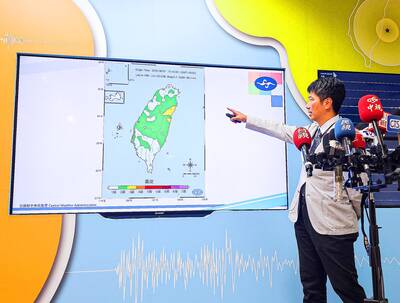
Aftershocks from a magnitude 6.2 earthquake that struck off Yilan County at 3:45pm yesterday could reach a magnitude of 5 to 5.5, the Central Weather Administration (CWA) said. Seismological Center technical officer Chiu Chun-ta (邱俊達) told a news conference that the epicenter of the temblor was more than 100km from Taiwan. Although predicted to measure between magnitude 5 and 5.5, the aftershocks would reach an intensity of 1 on Taiwan’s 7-tier scale, which gauges the actual effect of an earthquake, he said. The earthquake lasted longer in Taipei because the city is in a basin, he said. The quake’s epicenter was about 128.9km east-southeast

The Taipei Summer Festival is to begin tomorrow at Dadaocheng Wharf (大稻埕), featuring four themed firework shows and five live music performances throughout the month, the Taipei Department of Information and Tourism said today. The festival in the city’s Datong District (大同) is to run until Aug. 30, holding firework displays on Wednesdays and the final Saturday of the event. The first show is scheduled for tomorrow, followed by Aug. 13, 20 and 30. To celebrate the 30th anniversary of Disney Pixar's movie Toy Story, the festival has partnered with Walt Disney Co (Taiwan) to host a special themed area on
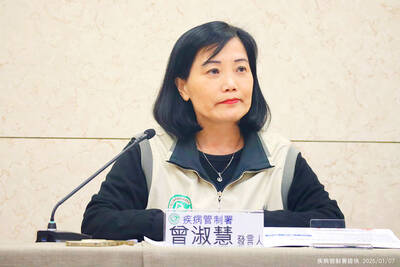
BE CAREFUL: The virus rarely causes severe illness or death, but newborns, older people and those with medical conditions are at risk of more severe illness As more than 7,000 cases of chikungunya fever have been reported in China’s Guangdong Province this year, including 2,892 new cases last week, the Centers for Disease Control (CDC) yesterday said it is monitoring the situation and considering raising the travel notice level, which might be announced today. The CDC issued a level 1 travel notice, or “watch,” for Guangdong Province on July 22, citing an outbreak in Foshan, a manufacturing hub in the south of the province, that was reported early last month. Between July 27 and Saturday, the province reported 2,892 new cases of chikungunya, reaching a total of 7,716
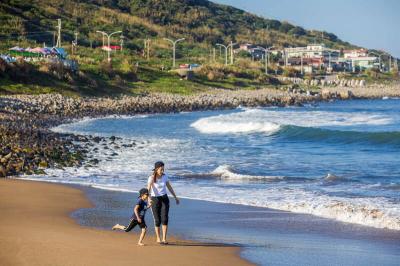
The New Taipei City Government today warned about the often-overlooked dangers of playing in water, and recommended safe swimming destinations to cool off from the summer heat. The following locations in the city as safe and fun for those looking to enjoy the water: Chienshuiwan (淺水灣), Baishawan (白沙灣), Jhongjiao Bay (中角灣), Fulong Beach Resort (福隆海水浴場) and Sansia District’s (三峽) Dabao River (大豹溪), New Taipei City Tourism and Travel Department Director-General Yang Tsung-min (楊宗珉) said. Outdoor bodies of water have variables outside of human control, such as changing currents, differing elevations and environmental hazards, all of which can lead to accidents, Yang said. Sudden


 RSS
RSS