


The retraction of an article calling for the impeachment of President Ma Ying-jeou (馬英九) on an independent online platform has caused other columnists to withdraw their articles in protest and stirred up debate over media censorship.
Academia Sinica associate researcher Huang Cheng-yi (黃丞儀) published an article in the online CommonWealth Magazine’s Independent Opinion section, calling on the legislature to initiate impeachment proceedings against Ma in the wake of the announcement of a meeting between him and Chinese President Xi Jinping (習近平).
The article was taken offline a few hours after its publication.
According to Huang, who disclosed the incident on Facebook, his editor said that the article “has been taken offline because the bosses are worried that the readers might mistake it for the magazine’s official stance.”
“Is it not clear enough that the Independent Opinion section, since its launch, has clearly indicated that it is a platform contributed to by independent commentators and has a disclaimer at the bottom of each page saying that the opinions expressed are solely those of the authors?” Huang asked.
“If the platform has to be worried about every article published being mistaken for the stance of CommonWealth Magazine, it probably should not have bothered to set up this platform in the first place,” he added.
CommonWealth magazine later issued a statement apologizing for the “displeasure the retraction has caused to the author,” saying that despite the disclaimer, articles “are often interpreted differently.”
“Extra discretion is required for handling the issue of cross-strait relationship, which is key to Taiwan’s fate,” it said. “The Ma-Xi meeting is a major public issue, [the platform] believes the public is entitled to a comprehensive understanding of the matter so we are to invite more articles of different viewpoints to be displayed in juxtaposition with each other.”
The incident has prompted an exodus of a group of intellectuals from the platform in protest, who each publicly announced their disapproval of the retraction, as well as their decision to stop writing on the platform and the request to have their previous articles removed.
The list includes but is not restricted to: Chang Chuan-fen (張娟芬), an advocate of the abolition of the death penalty, Rex How (郝明義), publisher and former national policy adviser, Ku Yu-ling (顧玉玲), former secretary-general of the Taiwan International Workers’ Association, Chiu Hua-mei (邱花妹), assistant professor of sociology at National Sun Yat-sen University, and Academia Sinica Institute of Sociology associate research fellow Wu Jieh-min (吳介民).

POLAM KOPITIAM CASE: Of the two people still in hospital, one has undergone a liver transplant and is improving, while the other is being evaluated for a liver transplant A fourth person has died from bongkrek acid poisoning linked to the Polam Kopitiam (寶林茶室) restaurant in Taipei’s Far Eastern Sogo Xinyi A13 Department Store, the Ministry of Health and Welfare said yesterday, as two other people remain seriously ill in hospital. The first death was reported on March 24. The man had been 39 years old and had eaten at the restaurant on March 22. As more cases of suspected food poisoning involving people who had eaten at the restaurant were reported by hospitals on March 26, the ministry and the Taipei Department of Health launched an investigation. The Food and

The long-awaited Taichung aquarium is expected to open next year after more than a decade of development. The building in Cingshui District (清水) is to feature a large ocean aquarium on the first floor, coral display area on the second floor, a jellyfish tank and Dajia River (大甲溪) basin display on the third, a river estuary display and restaurant on the fourth, and a cafe and garden on the fifth. As it is near Wuci Fishing Port (梧棲漁港), many are expecting the opening of the aquarium to bring more tourism to the harbor. Speaking at the city council on Monday, Taichung City Councilor
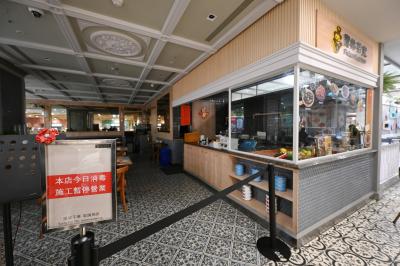
A fourth person has died in a food poisoning outbreak linked to the Xinyi (信義) branch of Malaysian restaurant chain Polam Kopitiam (寶林茶室) in Taipei, Deputy Minister of Health and Welfare Victor Wang (王必勝) said on Monday. It was the second fatality in three days, after another was announced on Saturday. The 40-year-old woman experienced multiple organ failure in the early hours on Monday, and the family decided not to undergo emergency resuscitation, Wang said. She initially showed signs of improvement after seeking medical treatment for nausea, vomiting and diarrhea, but her condition worsened due to an infection, he said. Two others who

Taiwanese should be mindful when visiting China, as Beijing in July is likely to tighten the implementation of policies on national security following the introduction of two regulations, a researcher said on Saturday. China on Friday unveiled the regulations governing the law enforcement and judicial activities of national security agencies. They would help crack down on “illegal” and “criminal” activities that Beijing considers to be endangering national security, according to reports by China’s state media. The definition of what constitutes a national security threat in China is vague, Taiwan Thinktank researcher Wu Se-chih (吳瑟致) said. The two procedural regulations are to provide Chinese


 RSS
RSS