


The Taipei District Court on Monday ruled in favor of Japanese pornographic film studio MAX-A in an international lawsuit that accused Web site portals in Taiwan and other Taiwanese companies of making profits on films MAX-A produced through unauthorized distribution for online viewing and downloading.
MAX-A filed the lawsuit in 2010 against 12 Taiwanese companies, including Yamedia Inc (天空傳媒), alleging illegal distribution and copyright infringement and seeking compensation of NT$115 million (US$3.75 million).
The decision has been hailed as a landmark, since it is the first time a court in Taiwan backed copyright protection for pornography, with evidence indicating that Taiwanese suppliers and video download service providers signed no deals with MAX-A.
In past judgements, judges have ruled that pornographic films, known as AV (adult video) in Japan and Taiwan, do not warrant copyright protection, saying the materials violate sexual morality, contravene social order and are not in the public’s interest.
Monday’s ruling read: “Copyright law is to protect all forms of human ideas and expressions, and should protect the spirit of creativity. AV products are a manifestation of human civilization, a part of expressed speech and opinions, and therefore are protected under the Constitution.”
“Copyright law protects the intellectual creations by individuals and of their investment. It does not pass judgement on morality, social customs or if the product was good or bad... Therefore AV products are protected under copyright law,” it read.
The accused, Yamedia Inc, a Taiwanese portal best known for its yam.com (蕃薯藤) Web site, said it signed contracts and paid copyright fees to Taiwanese AV suppliers.
Taiwanese AV suppliers said they did not break the law because past judgements ruled that AV products lack copyright protection.
However, despite the ruling, MAX-A will not be able to receive financial compensation, because the court agreed with Taiwanese companies’ claim of not knowing they were breaking the law.
The ruling can be appealed.
MAX-A president Wataru Ishii came to Taiwan to testify.
Ishii said his company’s AV products are all registered with Japanese video industry authorities, each with a registered serial number, and all have copyright protection in Japan.
“We did not authorize AV product distribution to Taiwanese companies, and we have no authorizing mechanism in Taiwan. Therefore, it was not possible for Taiwanese AV suppliers and other companies to receive authorization from us,” Ishii said.

Yangmingshan National Park authorities yesterday urged visitors to respect public spaces and obey the law after a couple was caught on a camera livestream having sex at the park’s Qingtiangang (擎天崗) earlier in the day. The Shilin Police Precinct in Taipei said it has identified a suspect and his vehicle registration number, and would summon him for questioning. The case would be handled in accordance with public indecency charges, it added. The couple entered the park at about 11pm on Thursday and began fooling around by 1am yesterday, the police said, adding that the two were unaware of the park’s all-day live

A former soldier and an active-duty army officer were yesterday indicted for allegedly selling classified military training materials to a Chinese intelligence operative for a total of NT$79,440. The Taipei District Prosecutors’ Office indicted Chen Tai-yin (陳泰尹) and Lee Chun-ta (李俊達) for contravening the National Security Act (國家安全法) and the Anti-Corruption Act (貪污治罪條例). Chen left the military in September 2013 after serving alongside then-staff sergeant Lee, now an army lieutenant, at the 21st Artillery Command of the army’s Sixth Corps from 2011 to 2013, according to the indictment. Chen met a Chinese intelligence operative identified as “Wang” (王) through a friend in November

Minister of Digital Affairs Lin Yi-ching (林宜敬) yesterday cited regulatory issues and national security concerns as an expert said that Taiwan is among the few Asian regions without Starlink. Lin made the remarks on Facebook after funP Innovation Group chief executive officer Nathan Chiu (邱繼弘) on Friday said Taiwan and four other countries in Asia — China, North Korea, Afghanistan and Syria — have no access to Starlink. Starlink has become available in 166 countries worldwide, including Ukraine, Malaysia, the Philippines and Vietnam, in the six years since it became commercial, he said. While China and North Korea block Starlink, Syria is not
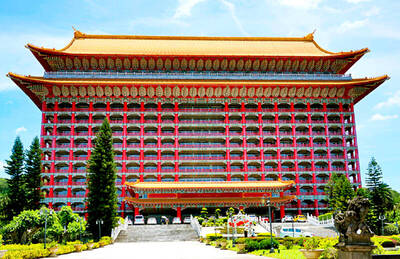
The Grand Hotel Taipei has rejected media reports claiming that the hotel had prevented CBS from broadcasting coverage of the Beijing summit between U.S. President Donald Trump and Chinese President Xi Jinping (習近平) on its premises. Media reports alleging that the hotel owner, dissatisfied with CBS’s coverage, prohibited the network from broadcasting political content on the hotel premises, are not true, the hotel said in a statement issued last night. The reports were “inconsistent with how the hotel actually handled the matter,” it said. The hotel said it received a refund request from a


 RSS
RSS