


New Taipei City’s Public Health Department yesterday issued a NT$60,000 fine on a stinky tofu manufacturer in the municipality’s Shenkeng District (深坑), citing an unhygienic production process.
“The department received an anonymous complaint on Nov. 25 that an unnamed tofu factory and a stinky tofu producer named Shenkeng Wang’s Uniquely Stinky Hometown (深坑王家獨臭之鄉) in the district appeared filthy and unsanitary,” the department said in a news release.
Following inspections of the two factories on Nov. 27, Nov. 28 and Dec. 16, the agency said it found that they belonged to the same operator and violated eight regulations stipulated in the Food Good Hygienic Practices.
The violations were identified as a damaged ceiling and filthy extractor fan; failure to store food ingredients above the floor; lack of an anti-dust screen at the entrance; improper management of food additives; failure to offer records of employees’ physical exams; inability to present their water towers’ cleaning records; lack of sterilization records; and unshaded light bulbs.
“As the factories failed to make the necessary improvements within the given deadline, the department imposed the NT$60,000 fine and demanded that they improve the conditions to a legally required extent within seven days or face a mandatory suspension,” the agency said.
The department issued the release hours after the Chinese-language Apple Daily newspaper published an article on a series of unsanitary practices by employees.
“The factory’s floor and wall were covered with filth and stains. Ingredients and utensils were dirty and scattered around the site, emitting an acidic smell. Some of the employees smoked while making tofu with their bare hands and did nothing when cigarette ash fell off and ended up ruining the foods,” the article said. “Because there was no water in the bathroom, the workers just washed their hands in a large barrel of water that they used to clean tofu.”
Neither factory has a registration certificate, the agency said, and on Dec. 2 it asked the municipality’s Economic Development Department to handle the issue.

STAY AWAY: An official said people should avoid disturbing snakes, as most do not actively attack humans, but would react defensively if threatened Taitung County authorities yesterday urged the public to stay vigilant and avoid disturbing snakes in the wild, following five reported snakebite cases in the county so far this year. Taitung County Fire Department secretary Lin Chien-cheng (林建誠) said two of the cases were in Donghe Township (東河) and involved the Taiwan habus, one person was bit by a Chinese pit viper near the South Link Railway and the remaining two were caused by unidentified snakes. He advised residents near fields to be cautious of snakes hiding in shady indoor areas, especially when entering or leaving their homes at night. In case of a
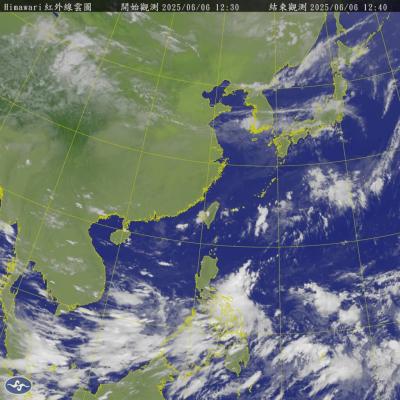
A tropical disturbance off the southeastern coast of the Philippines might become the first typhoon of the western Pacific typhoon season, the Central Weather Administration (CWA) said. The system lacks a visible center and how it would develop is only likely to become clear on Sunday or Monday, the CWA said, adding that it was not yet possible to forecast the potential typhoon's effect on Taiwan. The American Meteorological Society defines a tropical disturbance as a system made up of showers and thunderstorms that lasts for at least 24 hours and does not have closed wind circulation.

ENERGY RESILIENCE: Although Alaska is open for investments, Taiwan is sourcing its gas from the Middle East, and the sea routes carry risks, Ho Cheng-hui said US government officials’ high-profile reception of a Taiwanese representative at the Alaska Sustainable Energy Conference indicated the emergence of an Indo-Pacific energy resilience alliance, an academic said. Presidential Office Secretary-General Pan Men-an (潘孟安) attended the conference in Alaska on Thursday last week at the invitation of the US government. Pan visited oil and gas facilities with senior US officials, including US Secretary of the Interior Doug Burgum, US Secretary of Energy Chris Wright, Alaska Governor Mike Dunleavy and US Senator Daniel Sullivan. Pan attending the conference on behalf of President William Lai (賴清德) shows a significant elevation in diplomatic representation,

Credit departments of farmers’ and fishers’ associations blocked a total of more than NT$180 million (US$6.01 million) from being lost to scams last year, National Police Agency (NPA) data showed. The Agricultural Finance Agency (AFA) said last week that staff of farmers’ and fishers’ associations’ credit departments are required to implement fraud prevention measures when they serve clients at the counter. They would ask clients about personal financial management activities whenever they suspect there might be a fraud situation, and would immediately report the incident to local authorities, which would send police officers to the site to help, it said. NPA data showed


 RSS
RSS