


Taiwan has the second-highest religious diversity in the world, boasting not only some of the world’s major religions, but also a variety of folk religions, according to a recent report published by the Religion and Public Life Project of the Washington-based non-partisan think tank the Pew Research Center.
On a scale of zero to 10, Taiwan scored 8.2 on the project’s Religious Diversity Index, trailing behind only Singapore, which received a score of 9.
According to the US survey, nearly half of Taiwan’s population are folk religion followers (44.2 percent), followed by Buddhists (21.3 percent), other religious adherents (16.2 percent), unaffiliated believers (12.7 percent) and Christians (5.5 percent).
The rankings are based on the percentage of each of the 232 countries’ population of people that follow the major world religions — Christianity, Buddhism, Hinduism, Judaism, Islam and folk religions, as well as unaffiliated religions and other religions — as of 2010.
“The closer a country comes to having equal shares of the eight groups, the higher its score on a 10-point Religious Diversity Index,” the study said.
The study also found that among the 12 countries that have a “very high” degree of religious diversity — which requires a score of seven or higher — six are in the Asia-Pacific region — Singapore, Taiwan, Vietnam (third), South Korea (eighth), China (ninth) and Hong Kong (10th).
On the other hand, the lowest scores are mostly earned by Islamic countries, such as Morocco and Pakistan, while the Vatican comes bottom of the global religious diversity rankings with a score of zero.

The Taipei Summer Festival is to begin tomorrow at Dadaocheng Wharf (大稻埕), featuring four themed firework shows and five live music performances throughout the month, the Taipei Department of Information and Tourism said today. The festival in the city’s Datong District (大同) is to run until Aug. 30, holding firework displays on Wednesdays and the final Saturday of the event. The first show is scheduled for tomorrow, followed by Aug. 13, 20 and 30. To celebrate the 30th anniversary of Disney Pixar's movie Toy Story, the festival has partnered with Walt Disney Co (Taiwan) to host a special themed area on
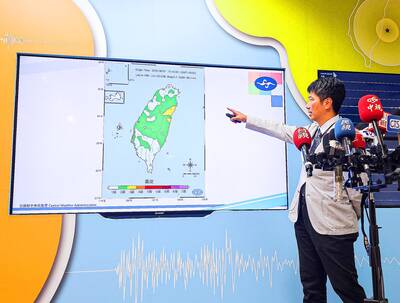
Aftershocks from a magnitude 6.2 earthquake that struck off Yilan County at 3:45pm yesterday could reach a magnitude of 5 to 5.5, the Central Weather Administration (CWA) said. Seismological Center technical officer Chiu Chun-ta (邱俊達) told a news conference that the epicenter of the temblor was more than 100km from Taiwan. Although predicted to measure between magnitude 5 and 5.5, the aftershocks would reach an intensity of 1 on Taiwan’s 7-tier scale, which gauges the actual effect of an earthquake, he said. The earthquake lasted longer in Taipei because the city is in a basin, he said. The quake’s epicenter was about 128.9km east-southeast

BE CAREFUL: The virus rarely causes severe illness or death, but newborns, older people and those with medical conditions are at risk of more severe illness As more than 7,000 cases of chikungunya fever have been reported in China’s Guangdong Province this year, including 2,892 new cases last week, the Centers for Disease Control (CDC) yesterday said it is monitoring the situation and considering raising the travel notice level, which might be announced today. The CDC issued a level 1 travel notice, or “watch,” for Guangdong Province on July 22, citing an outbreak in Foshan, a manufacturing hub in the south of the province, that was reported early last month. Between July 27 and Saturday, the province reported 2,892 new cases of chikungunya, reaching a total of 7,716
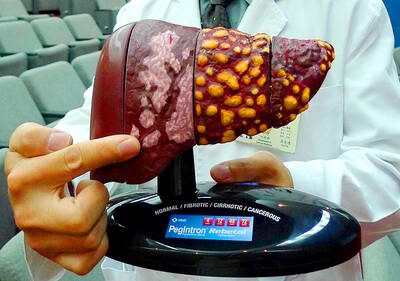
STAY VIGILANT: People should reduce the risk of chronic liver inflammation by avoiding excessive alcohol consumption, smoking and eating pickled foods, the physician said A doctor last week urged people to look for five key warning signs of acute liver failure after popular producer-turned-entertainer Shen Yu-lin (沈玉琳) was reportedly admitted to an intensive care unit for fulminant hepatitis. Fulminant hepatitis is the rapid and massive death of liver cells, impairing the organ’s detoxification, metabolic, protein synthesis and bile production functions, which if left untreated has a mortality rate as high as 80 percent, according to the Web site of Advancing Clinical Treatment of Liver Disease, an international organization focused on liver disease prevention and treatment. People with hepatitis B or C are at higher risk of


 RSS
RSS