

A US-based academic said Taiwan’s chances for growth would be limited if it misses opportunities for economic integration, including the hotly debated service trade agreement with China.
“Taiwan’s demonstrators occupied its legislature to resist a new trade bill with the mainland. Could Taiwan thrive without these trade deals?” asked Dan Steinbock, research director of international business at the US-based India, China, and America Institute in an article dated Monday last week.
Steinbock, who is also a visiting fellow at the Shanghai Institutes for International Studies and the EU Center (Singapore), said that China and Hong Kong accounted for more than 40 percent of Taiwan’s exports in 2012.
Without the two, Taiwan’s export-led growth would collapse, he said in the article, titled “Time to couple Taiwan’s export-led growth with regional integration.”
Steinbock called the services pact a “vital follow-up” to the Economic Cooperation Framework Agreement (ECFA) Taiwan and China signed in 2010, which cut tariffs and other barriers to boost bilateral trade to US$197 billion last year, according to the article.
Services are vital to the more advanced stages of development, making the pact to remove investment barriers in Taiwan’s and China’s service sectors all the more important for boosting Taiwan’s competitiveness, he wrote.
Beyond the China market, the pact “paves [the] way for Taiwan’s further economic integration in Asia, which is critical to its future,” Steinbock wrote.
“In the past, Taiwan’s rapid growth relied on globalization. Today it must thrive with regionalization,” he wrote, highlighting intensifying regional integration such as talks for the Trans-Pacific Partnership and bilateral free-trade deals between Asian countries and the EU.
Yet “political uncertainty has increased with the trade pact debacle,” he wrote, referring to the aggressive resistance to the pact that has seen student-led protesters occupy the legislature since March 18.
In an effort to end the standoff between the government and protesters, as well as the one between the Chinese Nationalist Party (KMT) and the Democratic Progressive Party, the KMT government has conceded to a draft law that will lend closer scrutiny to agreements signed with China — a move that Steinbock called into question.
“President Ma [Ying-jeou (馬英九)] gave in to demands to increase scrutiny of future pacts signed with the mainland... The anti-climax did not bring closure to the trade friction, but more uncertainty to Taiwan,” he said.
He wrote of the need for a political consensus to support growth, adding that “political determination without sufficient economic growth will result in stagnation.”
Taiwan’s future growth “requires trade pacts with the mainland, the emerging Asia and the rest of the world,” he said.
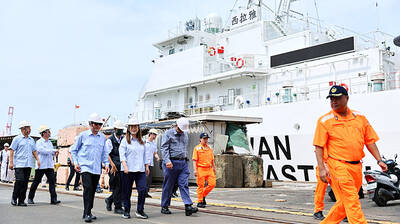
Ocean Affairs Council (OAC) Minister Kuan Bi-ling (管碧玲) on Wednesday said decommissioned coast guard vessels were given to the Philippines to enhance regional rescue capacity and would not affect Taiwanese fishers’ rights and benefits. Kuan made the remarks after confirmation on Tuesday that a 500-tonne Coast Guard Administration (CGA) patrol and rescue vessel would be given to the Philippine Coast Guard. The donation ceremony was reportedly done in Manila, but whether the vessel — previously numbered “CG123” and named Kinmen (金門) — has been handed over has yet to be confirmed. China’s Taiwan Affairs Office (TAO) on Wednesday criticized the donation for “taking
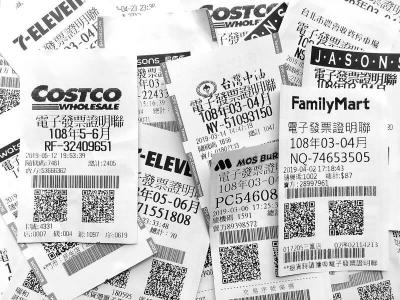
The Ministry of Finance today announced the winning numbers for the July-August uniform invoice lottery. The winning number for the NT$10 million (US$314,663) special prize is 89996565, while the winning number for the NT$2 million grand prize is 91098182. Three numbers were drawn for the NT$200,000 first prize: 54348835, 44991397 and 06595111. Those with receipts matching the last seven digits of any of the first-prize numbers can claim the NT$40,000 second prize, while those matching the last six digits qualify for the NT$10,000 third prize. Those whose receipts match the last five digits of the first-prize numbers are eligible for the NT$4,000 fourth prize,

The National Police Agency’s Third Special Police Corps yesterday said that from May to July, it intercepted five smuggling operations from China, seizing more than 70,000 counterfeit Beyblades with an estimated infringement value of NT$34.45 million (US$1.08 million). It added that any bootleg unit that reached the local market could present hidden health hazards to players. Beyblades, a line of spinning toy tops used in competitive gaming and developed in Japan by toy company Takara Tomy, have become popular in Taiwan, making them a target for fraudsters. The Third Special Police Corps, dedicated to safeguarding maritime borders and trade lines,
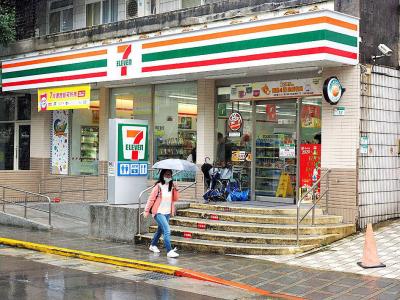
Five customers who made purchases at 7-Eleven stores across Taiwan won the top NT$10 million (US$313,716) special prize in the July-August uniform invoice lottery, including one who spent just NT$27 on photocopying, the convenience store chain said today. The five special prize winners made their purchases at stores in Taoyuan, Taipei, Taichung and Kaohsiung, 7-Eleven operator President Chain Store Corp said. The five winning purchases included NT$29 spent on snacks at a store in Taoyuan's Zhongli District (中壢), NT$27 on photocopying at a store in Taipei's Zhongzheng District (中正), NT$139 on City Cafe coffee and daily necessities at a store in Taipei's


 RSS
RSS