


The Ministry of Economic Affairs (MOEA) yesterday said a test of 129 products on the market revealed that the ingredients in one of Cheng I Food Co Ltd’s (正義) cooking oils do not match the proportions indicated on its packaging.
As a result, Cheng I is no longer allowed to put a Good Manufacturing Practice (GMP) certificate on any of its products, Vice Minister of Economic Affairs Woody Duh (杜紫軍) told a press conference.
The ministry said Cheng I claimed that its so-called canola-olive blended oil comprises 30 percent canola oil, 30 percent olive oil and 40 percent blended cooking oil. However, the ministry discovered that the product contains very little canola or olive oil.
The ministry contracted food specialists to check the contents of products from 14 cooking oil companies that have been required to submit documents about the items’ ingredients. Specialists found that Cheng I used very small amounts of canola oil and olive oil to make their canola-olive oil, and the ingredients’ proportion did not match the amounts on its label.
While the offending product is not harmful to one’s health, the ministry said it is revoking Cheng I’s rights to use GMP certificates on its products as part of the government’s bid to ensure firms produce high-quality products that adhere to GMP guidelines.
The ministry yesterday also took away Ting Hsin International Group’s (頂新集團) right to use GMP labels, after the Pingtung County Government on Thursday ruled that Ting Hsin violated the Act Governing Food Sanitation (食品衛生管理法) by mixing up to 21 of its cooking oils with Chang Chi Foodstuff Factory Co’s (大統長基) adulterated oil.
Sing-lin Foods Corp (興霖) is also not allowed to use the GMP certification anymore because the instant noodle maker’s products were found to contain sodium copper chlorophyllin — a food colorant — which is in violation of the act as the coloring agent is only allowed in certain categories of foods, the ministry said.
“The ministry is working on a way to revive consumers’ confidence in GMP-labeled products,” Duh said.
Separately yesterday, Ministry of Health and Welfare spokesman Wang Che-chao (王哲超) said the government will impose the heaviest possible penalty on violators caught adulterating and mislabeling edible oils, adding that the suppliers of such products will be referred to prosecutors for possible prosecution on fraud charges.
At present, the maximum fine for adulterating food products is NT$15 million (US$510,000) and NT$200,000 for mislabeling.
The Food and Drug Administration launched a nationwide investigation into local edible oil products in the middle of last month after Chang Chi, which sells edible oils under the Tatung brand, was found to have added cheaper cottonseed oil and sodium copper chlorophyllin to some of its products to save costs.
On Nov. 1, the ministry launched an intensive week-long inspection of edible oils sold around the country, which Wang said was aimed at pushing suppliers to be responsible and to voluntarily correct any product irregularities.
Random checks have been planned and any manufacturers found to have mislabeled their products will face serious consequences starting yesterday, he said.
The ministry is also planning to take similar actions regarding other food items that it thinks are likely to be mislabeled, such as soy sauce, tea leaves, fruit juices and milk, Wang said.
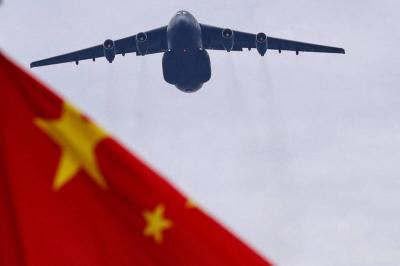
Beijing could eventually see a full amphibious invasion of Taiwan as the only "prudent" way to bring about unification, the US Department of Defense said in a newly released annual report to Congress. The Pentagon's "Annual Report to Congress: Military and Security Developments Involving the People's Republic of China 2025," was in many ways similar to last year’s report but reorganized the analysis of the options China has to take over Taiwan. Generally, according to the report, Chinese leaders view the People's Liberation Army's (PLA) capabilities for a Taiwan campaign as improving, but they remain uncertain about its readiness to successfully seize

Taiwan is getting a day off on Christmas for the first time in 25 years. The change comes after opposition parties passed a law earlier this year to add or restore five public holidays, including Constitution Day, which falls on today, Dec. 25. The day marks the 1947 adoption of the constitution of the Republic of China, as the government in Taipei is formally known. Back then the Chinese Nationalist Party (KMT) governed China from Nanjing. When the KMT, now an opposition party in Taiwan, passed the legislation on holidays, it said that they would help “commemorate the history of national development.” That

Taiwan has overtaken South Korea this year in per capita income for the first time in 23 years, IMF data showed. Per capita income is a nation’s GDP divided by the total population, used to compare average wealth levels across countries. Taiwan also beat Japan this year on per capita income, after surpassing it for the first time last year, US magazine Newsweek reported yesterday. Across Asia, Taiwan ranked fourth for per capita income at US$37,827 this year due to sustained economic growth, the report said. In the top three spots were Singapore, Macau and Hong Kong, it said. South

Snow fell on Yushan (Jade Mountain, 玉山) yesterday morning as a continental cold air mass sent temperatures below freezing on Taiwan’s tallest peak, the Central Weather Administration (CWA) said. Snowflakes were seen on Yushan’s north peak from 6:28am to 6:38am, but they did not fully cover the ground and no accumulation was recorded, the CWA said. As of 7:42am, the lowest temperature recorded across Taiwan was minus-5.5°C at Yushan’s Fengkou observatory and minus-4.7°C at the Yushan observatory, CWA data showed. On Hehuanshan (合歡山) in Nantou County, a low of 1.3°C was recorded at 6:39pm, when ice pellets fell at Songsyue Lodge (松雪樓), a


 RSS
RSS