


The Democratic Progressive Party’s (DPP) first of nine special meetings ended yesterday, during which the party reaffirmed its resolution on Taiwan’s future of 1999 and opposition to the “one China” framework as the core values of the DPP’s China policy.
Party members agreed that the party has to be flexible in its dealings with Beijing to vie for domestic as well as international support.
“The participants agreed that the biggest difference between the DPP and the Chinese Nationalist Party (KMT) is our insistence on safeguarding Taiwan’s sovereignty and protecting the Taiwanese public’s right to determine its own future,” said Cheng Wen-tsang (鄭文燦), spokesperson of the DPP’s China Affairs Committee.
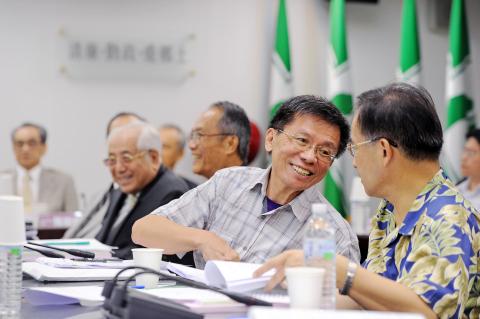
Photo: CNA
About 70 DPP politicians and academics attended the two-hour closed-door meeting, the first of nine on the DPP’s China policy, and engaged in enthusiastic discussions, Cheng said.
Summing up the discussions, Cheng said participants agreed that domestic support would be the most valuable asset for the party; the party should be confident in dealing with Beijing because more than 70 percent of the public identified themselves as Taiwanese, despite the acceleration of cross-strait engagement in recent years; and some people did benefit from bilateral economic exchanges.
Former deputy foreign minister Michael Kau (高英茂) was quoted as saying that the DPP should be patient and flexible in formulating its China policy, since the endgame solution of the cross-strait political dilemma may not arise in this or the next generation.
Therefore, the short to medium-term goal for the DPP should be pursuing peace and lowering tensions across the Strait, Cheng quoted Kau as saying.
Central Executive Committee member Hung Chi-kune (洪智坤) said after the meeting that participants appeared to be split on the party’s general strategy on cross-strait relations, with some favoring an ambiguous approach while others, most of whom are independence supporters, insisting that the strategy should be clear.
However, most attention was directed toward two participants — former premier Frank Hsieh (謝長廷), who had returned from a cross-strait forum in Hong Kong on Wednesday, and former DPP lawmaker Shen Fu-hsiung (沈富雄), whose political view has been leaning toward the pan-blue camp since quitting the DPP.
Cheng and National Dong Hwa University professor Shih Cheng-feng (施正鋒) said that participants who held different views from Hsieh’s refrained from directly criticizing the former premier, who left the meeting early.
However, Shih did pose a question about Hsieh’s remarks in Hong Kong about Taiwan and China as a “community of destiny” and said the remarks were “inappropriate” because China still holds hostility and territorial ambition against Taiwan, they added.
The DPP’s China policy should be acceptable to all Taiwanese, tolerated by Beijing and differ from the KMT’s China policy, Shen said, adding that the KMT’s recent recognition of the “one China” framework proved that its initiatives of the so-called “1992 consensus” and “one China with different interpretations” never existed.
The second meeting, which is to focus on how the DPP should handle the “1992 consensus,” is scheduled to take place on July 25.

LOUD AND PROUD Taiwan might have taken a drubbing against Australia and Japan, but you might not know it from the enthusiasm and numbers of the fans Taiwan might not be expected to win the World Baseball Classic (WBC) but their fans are making their presence felt in Tokyo, with tens of thousands decked out in the team’s blue, blowing horns and singing songs. Taiwanese fans have packed out the Tokyo Dome for all three of their games so far and even threatened to drown out home team supporters when their team played Japan on Friday. They blew trumpets, chanted for their favorite players and had their own cheerleading squad who dance on a stage during the game. The team struggled to match that exuberance on the field, with
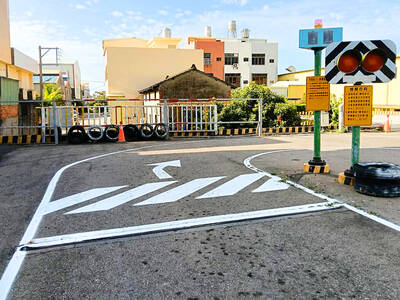
UPDATED TEST: The new rules aim to assess drivers’ awareness of risky behaviors and how they respond under certain circumstances, the Highway Bureau said Driver’s license applicants who fail to yield to pedestrians at intersections or to check blind spots, or omit pointing-and-calling procedures would fail the driving test, the Highway Bureau said yesterday. The change is set to be implemented at the end of the month, and is part of the bureau’s reform of the driving portion of the test, which has been criticized for failing to assess whether drivers can operate vehicles safely. Sedan drivers would be tested regarding yielding to pedestrians and turning their heads to check blind spots, while drivers of large vehicles would be tested on their familiarity with pointing-and-calling

A Taiwanese man apologized on Friday after saying in a social media post that he worked with Australia to provide scouting reports on Taiwan’s team, enabling Australia’s victory in this year’s World Baseball Classic (WBC), saying it was a joke and that he did not hold any position with foreign teams or Taiwan’s sports training center. Chen Po-hao (陳柏豪) drew the rage of many Taiwan baseball fans when he posted online on Thursday night, claiming credit for Australia’s 3-0 win over Taiwan in the opening game for Pool C, saying he worked as a physical therapist with the national team and
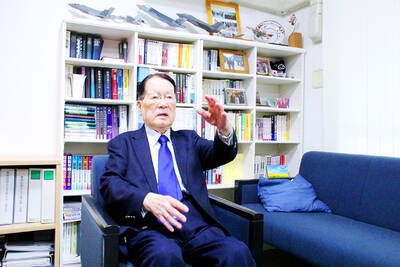
Whether Japan would help defend Taiwan in case of a cross-strait conflict would depend on the US and the extent to which Japan would be allowed to act under the US-Japan Security Treaty, former Japanese minister of defense Satoshi Morimoto said. As China has not given up on the idea of invading Taiwan by force, to what extent Japan could support US military action would hinge on Washington’s intention and its negotiation with Tokyo, Morimoto said in an interview with the Liberty Times (sister paper of the Taipei Times) yesterday. There has to be sufficient mutual recognition of how Japan could provide


 RSS
RSS