

Members of the Wuchiang River Protection Union from Kinmen held a demonstration in front of the Control Yuan in Taipei yesterday and filed a complaint with the government watchdog asking it to investigate and stop the construction of a hotel next to the Taihu Reservoir, an important water source for the outlying island.
The group’s representative, Syril Hung (洪篤欽), said the Taihu Reservoir is an important water source for Kinhu Township (金湖) and has been determined to be a drinking water source quality protection area under the Drinking Water Management Act (飲用水管理條例).
Amid water shortages on the island, existing water resources should be protected, in addition to developing new sources, he said.
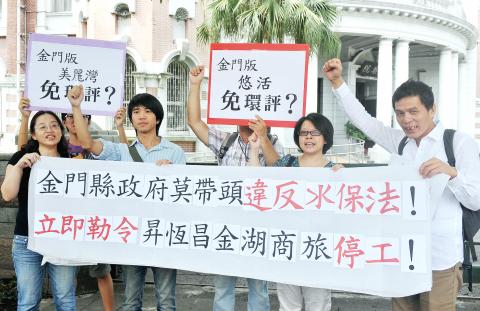
Photo: Chien Jung-fong, Taipei Times
However, a 50-year build-operate-transfer (BOT) agreement with the Kinmen County Government signed in 2009 has allowed Ever Rich DFS Corp (昇恆昌) to build a hotel next to the Taihu Reservoir, he said.
The protesters said they are concerned that the project would affect not only the already limited quantity of water on Kinmen, but that waste water from the hotel may also damage the reservoir’s water quality.
Citing the Drinking Water Management Act, a member of the group surnamed Chang (張) said that hotels located near water source protection areas may only provide fewer than 20 rooms and are banned from any water polluting behavior.
“However, the planned hotel is only about 40m from the reservoir and has 264 rooms. That’s about 13 times the limit,” she said.
She said the group had asked the local environmental protection bureau to reveal the project’s wastewater treatment plan last month, but that was refused on the grounds that the plan is part of the developer’s assets and cannot be revealed.
“The Taihu Reservoir is the largest water source in the area and it has already been found to have the most serious eutrophication problem among Taiwan’s reservoirs, so we are worried that the project will have further negative effects on the area’s water supply and water quality,” she said.
Eutrophication is a process by which a body of water accumulates a high concentration of plant nutrients, such as phosphates and nitrates, promoting excessive growth of algae.
“BOT projects should benefit the public, yet [in this case,] while the hotel may attract tourists, it may also damage the public interest by demanding too much of the already scarce water supply on the island,” Hung said, urging the Control Yuan to look into the matter.
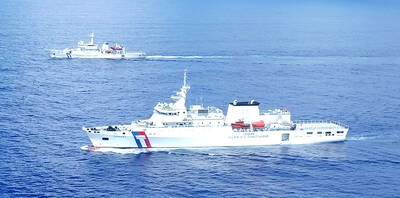
‘FRIENDSHIP FLEET’: A CGA official is scheduled to meet with the president of the Pacific nation, while one of the ships is to host a banquet and National Day event Two Coast Guard Administration (CGA) patrol vessels have docked at Malakal Harbor in Palau as part of an expedition exercise and diplomatic visit, during which a senior official is expected to meet with Palauan President Surangel Whipps Jr, the agency said yesterday. The two vessels, the 4,000-tonne-class Chiayi and the 1,000-tonne-class Penghu, set sail for Palau from Taiwan last week and arrived on Tuesday at Malakal Harbor, the CGA’s Fleet Branch said in a statement. The journey marks the second time the CGA has dispatched a “friendship fleet” to another country, after it sent its first-ever goodwill fleet, comprising the Hualien and
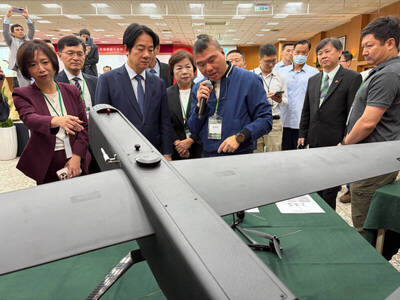
Two executives of drone supplier Jiin Ming Industry Co (錦明實業) have been detained and held incommunicado over the company's alleged use of prohibited China-made chips and camera lenses in drones supplied under recent military contracts, the Taoyuan District Prosecutors' Office said today. In a statement, prosecutors said they raided the offices of Jiin Ming — headquartered in Taoyuan — as well as those of its subsidiaries and its suppliers on Thursday last week. The raids followed a report that the company had breached its procurement contracts by putting the prohibited components into drones delivered to the military. During the raids, prosecutors summoned
The Coast Guard Administration (CGA) today said that two of its patrol vessels have docked at Palau's Malakal Harbor as part of an expedition exercise and diplomatic visit, during which a senior official is expected to meet with the Palauan president. The two vessels, the 4,000-tonne-class Chiayi (嘉義) and the 1,000-tonne-class Penghu (澎湖), set sail for Palau from Taiwan last week and arrived at Malakal Harbor yesterday, the CGA's Fleet Branch said in a statement. The journey marked the second time the CGA has dispatched a "Friendship Fleet" to another country, after it sent its first-ever goodwill fleet, comprising the Hualien (花蓮)
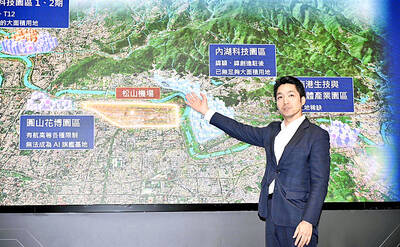
DETAILED PLAN NEEDED: Relocating the airport would affect not just travelers, but also undermine national defense and emergency medical services, a legislator said Taipei Mayor Chiang Wan-an (蔣萬安) yesterday proposed relocating Taipei International Airport (Songshan airport) and turning the site into an artificial intelligence (AI) park, drawing opposition from politicians across party lines. Chiang’s plan would turn the 300 hectares into an AI park featuring tech clusters, residential communities and green space. The industrial cluster would host 200 domestic enterprises, generate NT$12 trillion (US$376.47 billion) in output, and accommodate 65,000 jobs and 35,000 residents, he said. Cabinet spokeswoman Michelle Lee (李慧芝) said the Executive Yuan was surprised by the announcement, as the Taipei City Government did not discuss the proposal with the central government before making


 RSS
RSS