


Pollutants in Yunlin County’s Sinhuwei River (新虎尾溪) and Bajiaoting canal (八角亭大排) come primarily from wastewater from pig farms, and the planned installation of 6,300 “pig toilets” next year should help cut back wastewater production, according to a Yunlin County Government official.
Yeh Te-hui (葉德惠), chief of the county government’s Environmental Protection Department, said it aims to gain funding from the Environmental Protection Administration (EPA) to establish biogas centers to reduce the amount of pollutants pumped into local rivers.
Biogas is a fuel produced by the breakdown of organic matter such as feces and kitchen waste, and is a type of bio fuel.
According to the department, Yunlin County is an area where pig farming is a major industry, with twice as many pigs in the county as there are people, and swine producing six times more waste than humans.
As a result the county government is trying hard to balance the regional economy with environmental concerns.
Downstream areas of the Beigang River (北港溪) and the Bajiouting and Dayilun (大義崙) canals are the most heavily polluted, the department said, adding that there is a large concentration of pig farms in the areas where these waterways are located.
Even if wastewater from farms falls within permitted levels, the total amount of wastewater is still sufficient to cause severe pollution, Yeh said.
The innovative “pig toilet” concept and biogas plants to convert waste into either energy or organic fertilizer should hopefully resolve the issue, Yeh said.
The “pig toilet” concept utilizes the fact that swine — contrary to stereotypical views — are animals that like to be clean and have fixed places to defecate.
The concept aims to gather all swine defecation in one location on farms, Yeh said, adding that 95 percent of all swine should — by training or instinct — head to that area when they feel the call of nature.
Training piglets to go to the location to defecate from a young age would also be beneficial, Yeh said.
The centralized gathering of waste makes cleaning much easier, which in turn reduces the chances of pigs becoming sick, Yeh said.
The county government’s Stable Development of Agriculture Fund is funding the first 6,000 sets of “pig toilets,” while the administration would subsidize another 300, Yeh said.
Hopefully these measures would allow the government to balance out environmental concerns with the economy, Yeh said.

The Japan-Taiwan Exchange Association has cautioned Japanese travelers to be vigilant against pickpockets at several popular tourist spots in Taiwan, including Taipei’s night markets, the Yongkang Street area, Zhongshan MRT Station, and Jiufen (九份) in New Taipei City. The advisory, titled “Recent Development of Concerns,” was posted on the association’s Web site under its safety and emergency report section. It urges travelers to keep backpacks fully zipped and carried in front, with valuables placed at the bottom of the bag. Visitors are advised to be especially mindful of their belongings when taking photos or speaking on the phone, avoid storing wallets and
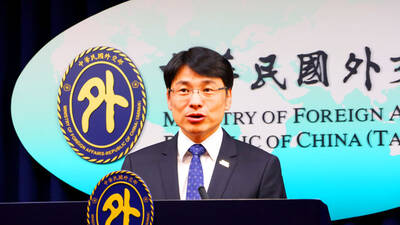
ENDORSING TAIWAN: Honduran presidential candidate Nasry Afura said that Honduras was ‘100 times better off’ when it was allied with Taipei The Ministry of Foreign Affairs yesterday said it would explore the possibility of restoring diplomatic relations with Honduras based on the principle of maintaining national interests and dignity. The ministry made the remarks in response to reporters’ questions regarding an article titled: “Will Taiwan Regain a Diplomatic Ally?” published in The Diplomat on Saturday. The article said Honduras’ presidential election in November could offer Taiwan the chance to regain an ally, as multiple candidates have promoted re-establishing diplomatic relations with Taiwan. Honduras severed diplomatic ties with Taiwan in March 2023 in favor of Beijing, but since switching its diplomatic recognition,
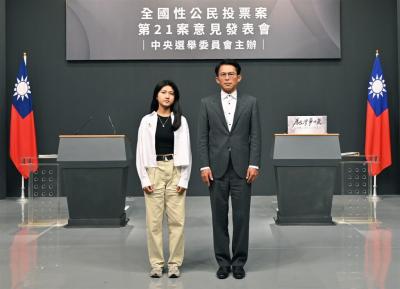
A fourth public debate was held today about restarting the recently decommissioned Ma-anshan Nuclear Power Plant, ahead of a referendum on the controversial issue to be held in less than two weeks. A referendum on Aug. 23 is to ask voters if they agree that “the Ma-anshan Nuclear Power Plant should continue operations upon approval by the competent authority and confirmation that there are no safety concerns.” Anyone over 18 years of age can vote in the referendum. The vote comes just three months after its final reactor shut down, officially making Taiwan nuclear-free. Taiwan People’s Party Chairman Huang Kuo-chang (黃國昌) represented

Scoot announced yesterday that starting in October, it would increase flights between Taipei and Japan’s Narita airport and Hokkaido, and between Singapore and Taipei. The low-cost airline, a subsidiary of Singapore Airlines, also said it would launch flights to Chiang Rai in Thailand, Okinawa and Tokyo’s Haneda airport between December and March next year. Flights between Singapore and Chiang Rai would begin on Jan. 1, with five flights per week operated by an Embraer E190-E2 aircraft, Scoot said. Flights between Singapore and Okinawa would begin on Dec. 15, with three flights per week operated by Airbus A320 aircraft, the airline said. Services between Singapore


 RSS
RSS