


Chinese authorities can no longer maintain a front of internal unity after the dismissal of Bo Xilai (薄熙來), which could trigger an eruption of grassroots discontent, Wang Dan (王丹), an exiled leader of the Tiananmen protests in 1989, said yesterday.
In an interview with Radio Free Asia ahead of the 23rd anniversary of the Tiananmen Square Massacre, Wang, who now lives in Taiwan, said Bo’s removal from major posts has led him to believe that political change in China would be more dramatic this year than in years past, “allowing for all kinds of possibilities.”
Bo, the former party chief in Chongqing, was removed from his post in mid-March after the municipality’s chief of police, Wang Lijun (王立軍), took refuge at the US consulate in Chengdu in February out of fear of retribution from his boss.
Wang Dan said he believed that the case of Wang Lijun — in which he may have turned over incriminating evidence against Bo before being turned over to authorities in Beijing — and Bo’s dismissal reflect a trend.
“The [Chinese] Communist Party, which has wanted to maintain a facade of internal unity and stability in the past, has lost control and can no longer put on a front this year” when it anoints new leaders, Wang Dan said, calling the development “significant.”
He said that many Chinese are generally dissatisfied with the government, but have not fully vented their discontent because they believe the country’s leaders are united. If such unity is seen as a show, it would encourage an eruption of discontent at the grassroots level.
Wang Dan said that without the Wang Lijun scandal, which happened completely by chance, Bo could have well become a member of China’s core nine-member decisionmaking body, the CCP’s politburo Standing Committee, and even a national leader.
“Are there similar cases within the [Chinese] Communist Party? I bet there are, only they’ve been suppressed. This has shown that uncertainty within China’s leadership is very high,” Wang Dan said.
The exiled activist also said that Chinese Premier Wen Jiabao’s (溫家寶) advocacy of political reform has met with strong opposition within the party, but if Wen were to push the concept, it would carry a certain amount of weight.
In addition, the party congress later this year, which will see China’s first leadership transition in a decade, also has “great possibilities,” he said.
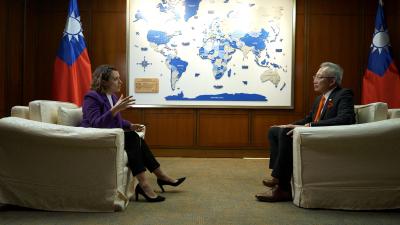
“China is preparing to invade Taiwan,” Deputy Minister of Foreign Affairs Francois Wu (吳志中) said in an exclusive interview with British media channel Sky News for a special report titled, “Is Taiwan ready for a Chinese invasion?” the Ministry of Foreign Affairs said today in a statement. The 25-minute-long special report by Helen Ann-Smith released yesterday saw Sky News travel to Penghu, Taoyuan and Taipei to discuss the possibility of a Chinese invasion and how Taiwan is preparing for an attack. The film observed emergency response drills, interviewed baseball fans at the Taipei Dome on their views of US President

ECONOMIC BENEFITS: The imports from Belize would replace those from Honduras, whose shrimp exports have dropped 67 percent since cutting ties in 2023 Maintaining ties with Taiwan has economic benefits, Ministry of Foreign Affairs officials said yesterday, citing the approval of frozen whiteleg shrimp imports from Belize by the Food and Drug Administration (FDA) as an example. The FDA on Wednesday approved the tariff-free imports from Belize after the whiteleg shrimp passed the Systematic Inspection of Imported Food, which would continue to boost mutual trade, the ministry said. Taiwan’s annual consumption of whiteleg shrimps stands at 30,000 tonnes, far exceeding domestic production, the ministry said. Taiwan used to fill the gap by importing shrimps from Honduras, but purchases slumped after Tegucigalpa severed diplomatic ties with Taiwan
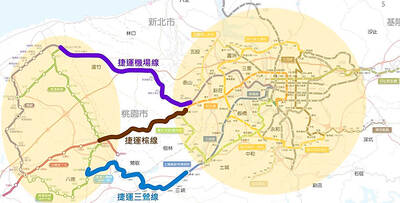
The Executive Yuan yesterday approved a southwestern extension of the Sanying MRT Line from New Taipei to Bade District (八德) in Taoyuan, with a goal of starting construction by late 2026. The 4.03-kilometer extension, featuring three new stations, will run from the current terminus at Yingtao Fude Station (LB12) in New Taipei City to Dannan Station (LB14), where it will connect with Taoyuan’s Green Line, New Taipei City Metro Corp said in a statement. This extension will follow the completion of core Sanying Line, a 14.29-kilometer medium-capacity system linking Tucheng (土城), Sansia (三峽)

CARGO LOSS: About 50 containers at the stern of the ‘Ever Lunar’ cargo ship went overboard, prompting the temporary closure of the port and disrupting operations Evergreen Marine Corp, Taiwan’s largest container shipper, yesterday said that all crew members aboard the Ever Lunar (長月) were safe after dozens of containers fell overboard off the coast of Peru the previous day. The incident occurred at 9:40am on Friday as the Ever Lunar was anchored and waiting to enter the Port of Callao when it suddenly experienced severe rolling, Evergreen said in a statement. The rolling, which caused the containers to fall, might have been caused by factors including a tsunami triggered by an earthquake in Russia, poor winter sea conditions in South America or a sudden influx of waves,


 RSS
RSS