


A series of activities will take place throughout Taiwan to mark the one-year anniversary of Japan’s March 11 earthquake and tsunami, including events to show Japan’s gratitude for Taiwan’s disaster relief efforts, a Japanese official stationed in Taipei said.
A reception will be held tomorrow in Taipei to thank Japan’s “Taiwanese friends” and bring them up to date on reconstruction following the disaster, Interchange Association, Japan, Secretary-General Kenichi Okada said.
The association represents Japanese interests in Taiwan in the absence of official diplomatic ties between the two nations.
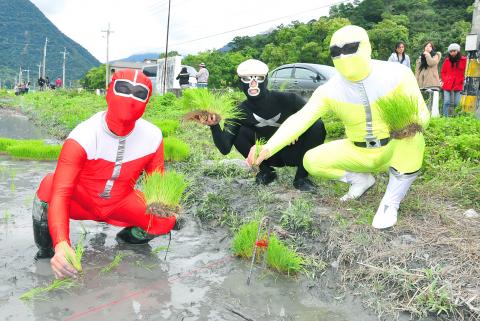
Photo: CNA
Japanese Representative to Taiwan Tadashi Imai is also running a notice in major Taiwanese newspapers today to express Japan’s gratitude for the aid and generous donations from the Taiwanese public, Okada said.
In the wake of the magnitude 9.0 earthquake and subsequent tsunami that battered northeastern Japan and led to a meltdown at the Fukushima Dai-ichi nuclear power plant, Taiwan donated about ¥20 billion (US$260 million) to the victims, 90 percent of which came from private donors.
Two television programs made to thank Taiwan for its help will also be broadcast on two channels in the coming week, Okada said, adding that a commercial thanking Taiwanese will be shown on several local stations.
Citing statistics that showed the number of Japanese visitors to Taiwan reached a record high last year, Okada said the record “just shows that Japanese really love Taiwan and feel grateful for Taiwan’s help.”
Okada, who assumed his post in August last year, said he was touched by the story of six Japanese swimmers who completed a 150km relay across part of the Pacific Ocean as a gesture of gratitude to Taiwanese.
In September last year, the swimmers battled rain and strong currents while a typhoon was approaching, Okada said.
Their determination to complete the swim under such difficult conditions “just proved how grateful the Japanese people are to Taiwan,” Okada said.
Meanwhile, today in Nantou County a foundation will host a series of events at the site of a paper dome from Japan to commemorate the anniversary of the earthquake and tsunami.
A concert, photo exhibition and other events will take place at the Newland Community Education Center in Puli Township (埔里), where the dome is located.
The dome, built from 58 giant cardboard columns, was moved in 2008 from Japan where it had served as a temporary church following the Kobe earthquake in 1995.
According to the New Homeland Foundation, which is organizing the event, the church serves to remind victims of disaster that they can become stronger if they stand united.
A prayer meeting was held at the dome following the disaster last year.
The foundation said Japanese harpist Rikako Fujioka, who held a fundraising concert in her country after an earthquake hit Taiwan on Sept. 21, 1999, will perform with her students and friends at the dome to thank Taiwanese for the concern they showed.
Photos of the disaster areas by Japanese photographer Satoshi Ueda, who lost his mother in the tsunami, will be shown at the dome until April 8 in an exhibition called “Tears of the Earth.”
Several Taiwanese artists will also take part in the commemorative activities by selling their works to raise money to help with reconstruction in the disaster-affected areas.

Yangmingshan National Park authorities yesterday urged visitors to respect public spaces and obey the law after a couple was caught on a camera livestream having sex at the park’s Qingtiangang (擎天崗) earlier in the day. The Shilin Police Precinct in Taipei said it has identified a suspect and his vehicle registration number, and would summon him for questioning. The case would be handled in accordance with public indecency charges, it added. The couple entered the park at about 11pm on Thursday and began fooling around by 1am yesterday, the police said, adding that the two were unaware of the park’s all-day live

A former soldier and an active-duty army officer were yesterday indicted for allegedly selling classified military training materials to a Chinese intelligence operative for a total of NT$79,440. The Taipei District Prosecutors’ Office indicted Chen Tai-yin (陳泰尹) and Lee Chun-ta (李俊達) for contravening the National Security Act (國家安全法) and the Anti-Corruption Act (貪污治罪條例). Chen left the military in September 2013 after serving alongside then-staff sergeant Lee, now an army lieutenant, at the 21st Artillery Command of the army’s Sixth Corps from 2011 to 2013, according to the indictment. Chen met a Chinese intelligence operative identified as “Wang” (王) through a friend in November

Minister of Digital Affairs Lin Yi-ching (林宜敬) yesterday cited regulatory issues and national security concerns as an expert said that Taiwan is among the few Asian regions without Starlink. Lin made the remarks on Facebook after funP Innovation Group chief executive officer Nathan Chiu (邱繼弘) on Friday said Taiwan and four other countries in Asia — China, North Korea, Afghanistan and Syria — have no access to Starlink. Starlink has become available in 166 countries worldwide, including Ukraine, Malaysia, the Philippines and Vietnam, in the six years since it became commercial, he said. While China and North Korea block Starlink, Syria is not
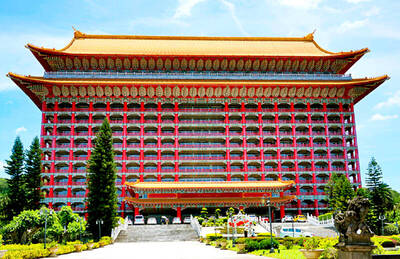
The Grand Hotel Taipei has rejected media reports claiming that the hotel had prevented CBS from broadcasting coverage of the Beijing summit between U.S. President Donald Trump and Chinese President Xi Jinping (習近平) on its premises. Media reports alleging that the hotel owner, dissatisfied with CBS’s coverage, prohibited the network from broadcasting political content on the hotel premises, are not true, the hotel said in a statement issued last night. The reports were “inconsistent with how the hotel actually handled the matter,” it said. The hotel said it received a refund request from a


 RSS
RSS